Table of Contents
This guide provides a practical overview of Guide to Share Drives and Folders in Windows 7 to Share Data in LAN, including its main features, benefits, limitations, and important considerations.
The following article shows you how to share folders in Windows 7.
Step 1: Click on the network icon under the taskbar and select Open Network and Sharing Center .
The Network and Sharing Center window displays you select Change advanced sharing settings .
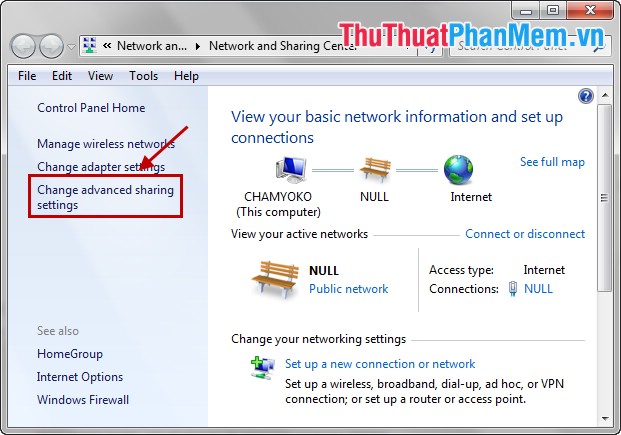
Step 2: The Advanced sharing settings window appears, if you want to share the folder without setting a password, then scroll to the Password protected sharing section and select Turn off password protected sharing .
Then click Save changes to save the settings.

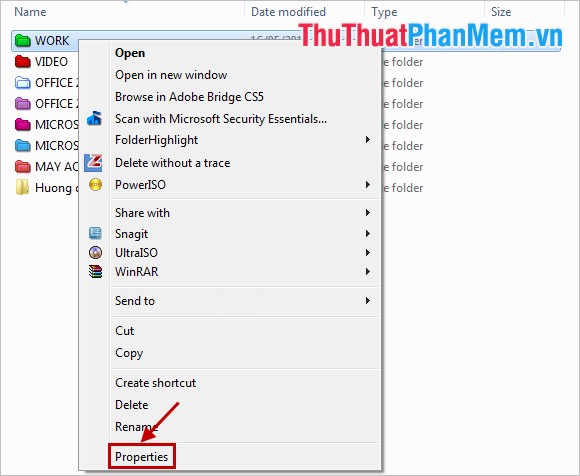
Step 3: Next, select and right-click the folder to share, select Properties .
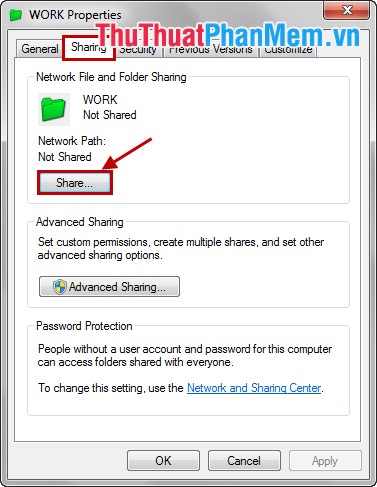
Step 4: In the Properties dialog box, select the Sharing tab and select Share.
Step 5: In the File Sharing window, click the arrow icon next to the word Add and select Everyone. Then click Add to add to the list below.
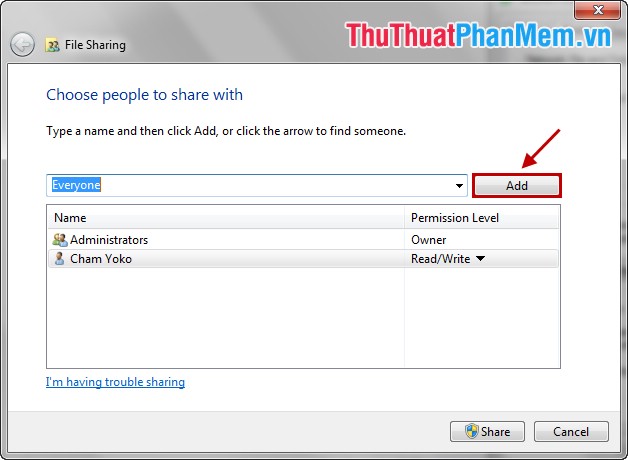
Step 6: At Everyone, select Read / Write in Permission Level and click Share .
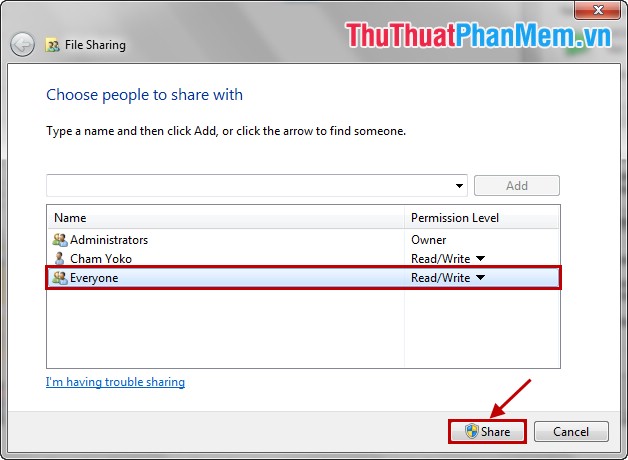
After finishing you click Done .
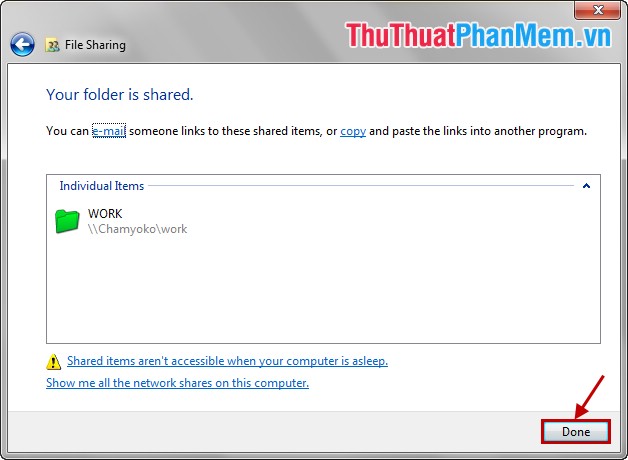
So you've finished sharing the folder in Windows 7. Another computer wants to get data from the computer you just shared, do the following:
1. At the device you want to receive data, press Windows + R (select Start -> Run ) to open the Run dialog box.
2. In the Run dialog box, enter [the IP address of the shared machine] and press OK (or the Enter key). For example: 192.168.23.143
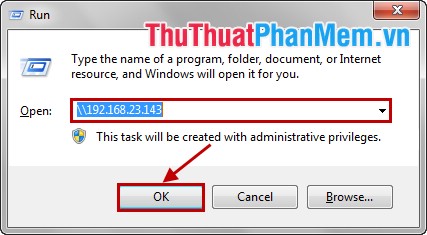
3. Then copy the data to the computer that receives the data.
Thus, the article above has detailed instructions for you to share folders in Windows 7 via Lan network you can refer to. Good luck!
FAQ
What should I know about Guide to Share Drives and Folders in Windows 7 to Share Data in LAN?
Focus on the key features, requirements, limitations, and practical use cases explained in this guide.
How do I get the best results with Guide to Share Drives and Folders in Windows 7 to Share Data in LAN?
Follow the recommended steps, use current software or information, confirm compatibility, and review settings before major changes.
Are there any risks or limitations?
Potential limitations depend on compatibility, data quality, cost, privacy, support, and how the product or method is used.
Related Articles
 How to Share Data, Drives, Folders in Windows 103 minutes read
 How to Share Folders, Drives in Windows3 minutes read
 Tips to Help You Easily Share Folders on Windows with Android4 minutes read
 7 Small Tips with Folders in Windows5 minutes read
 How to Activate and Using Admin Share on Windows 11/10/8/77 minutes read
 How to Activate the Sharing Folder Tab on Windows 104 minutes read
Reader Comments 0
Sign in with email or Google to join the discussion.