Table of Contents
This article examines Select and explains the main developments, practical implications, and context readers should understand.
Select Overview
Step 1 - Select the circle drawing tool ( Ellipse Tool ), draw a circle with a diameter of 10 cm by pressing Ctrl + left click and drag diagonally. 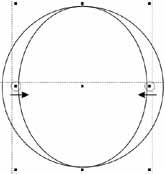
Figure 1
- On the properties bar in the Object box (s) Size, type 10 cm, in the Nonproportional Scaling / Sizing box, select the lock icon (locked). Step 2: Draw meridians and latitudes - Select the circle. - Select Object - Transformations - Position: + Relative Position: select the box in the middle + Click Apply To Duplicate tab. - Select the newly created circle, press Shift + Left click in the second row (right or left), then drag in. We get an Ellipse (Figure 1). - Select Ellipse.
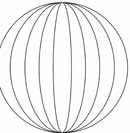 Figure 2
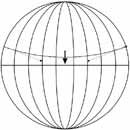 Figure 3
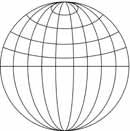 Figure 4
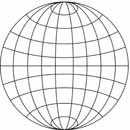 Figure 5
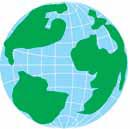 Figure 6
 Figure 7
- Select Object - Transformations - Position : + Relative Position : select the box in the middle + Click Apply To Duplicate tab. - Select the newly created Ellipse, press Shift + Left click in the second row (right or left) and drag in. We get a new Ellipse smaller. - Similar to the previous step, we create two more Ellipse shapes so that the distance between the Ellipse shapes is equal. We now have meridian lines (Figure 2). - Select the straight line drawing tool ( Bezier Tool ), draw a straight line 10 cm long. - In the center of the circles and the Ellipse, we get the equator. - Choose the equator. - Select Object - Transformations - Position : + Relative Position : select the box in the middle + Click Apply To Duplicate tab. - Select the Shape Tool , adjust the two ends of the line above the circle. - Click on the straight line, on the properties bar select Convert Line To Curve , left click on the middle of the straight line, pull down a bit, we get a curve (Figure 3). - Similar to the previous step, we draw 3 more curves then group all of these curves (Figure 4). - Select Object - Transformations - Position : + Relative Position : select the box in the middle + Click Apply To Duplicate tab. - In the properties bar select Mirror Buttons to flip back and move down the equator (Figure 5). Step 3: Draw the globe - Select the line drawing tool ( Bezier Tool ), draw the soil parts. Select the first circle, fill it with light blue, the meridians, the latitude and white, the soil is green (Figure 6). Step 4: Axis and base - Draw a circle with a diameter of 11 cm, cut in half vertically. - Select Object - Transformations - Position : + Relative Position : select the box in the middle + Click Apply To Duplicate tab. - Select the newly created half circle, drag a little bit. Select both halves of the circle, press Ctrl + L. Group it all, then turn to the right 15 degrees (Figure 7, 8). - Select the line drawing tool ( Bezier Tool ), draw the base and the axis. Fill it with black, as shown in Figure 9. 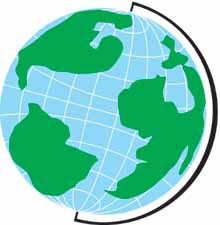
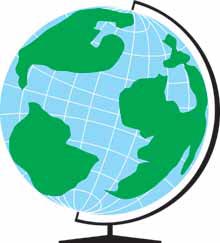
Figure 8
Figure 9
Lam Khe
FAQ
What does Corel Draw 12: Draw the Globe: Select explain?
This article examines Select and explains the main developments, practical implications, and context readers should understand.
Who is most affected by Select?
Select Overview Step 1 - Select the circle drawing tool ( Ellipse Tool ), draw a circle with a diameter of 10 cm by pressing Ctrl + left click and drag diagonally.
What are the key takeaways from this topic?
Figure 1 - On the properties bar in the Object box (s) Size, type 10 cm, in the Nonproportional Scaling / Sizing box, select the lock icon (locked).
Related Articles
 Corel Draw: What Is Corel DRAW - Introduction12 minutes read
 Corel Shortcuts - All Shortcuts in Corel Draw You Need to Know4 minutes read
 Corel Draw: Use the Photo Corner Effect in Corel Draw: Image3 minutes read
 Corel Draw 12 - Draw Patterns in Circles: Figure3 minutes read
 Corel Draw 12: Draw the Butterfly: Figure3 minutes read
 Corel Draw: Draw a Burning Candle: Figure4 minutes read
Reader Comments 0
Sign in with email or Google to join the discussion.