Table of Contents
This article examines Layer and explains the main developments, practical implications, and context readers should understand.
Layer Overview
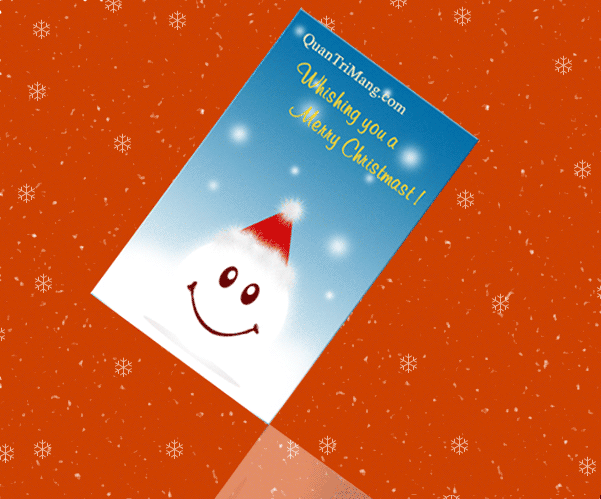
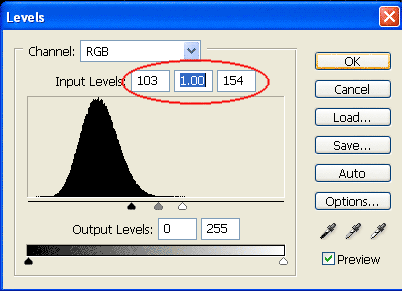
And now let's start practicing with me: Part I: Create greeting card background. Step 1. Ctrl + N opens an invitation document, size (600px x 500px), Background # CE4102 Step 2. Press F7 to open the Layers palette. Step 3. Create a layer whose background is black above the original layer - Layer > New > Layer. Or ( Shift + Ctrl + N ) - Rename the new layer to "Tuyet whip" - Press D to switch the default background color on the toolbar to black - white - Press the X key to reverse the background to white - black - Press Ctrl + Backspace to turn the background layer "whip" into black Step 4. Create snowfall. - Filter > Noise > Add noice ( Amount: 80% - 90%, Gaussian, Monochromatic ) - Filter > Blur > Gaussian blur with Radius of 1.5 Px - Image > Adjustments > Levels or Ctrl + L with the following parameters:
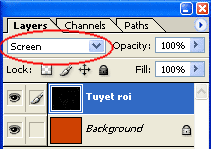
- On the Palette layer, select Blending option: Screen
Result step 4: you have the following picture:

Step 5. Scoring a few snowflakes to make the cards more impressive. - Shift + Ctrl + N to create a new layer> rename this layer to "hoatuyet" - Select brush tool (or press B)> Select brush strokes "snow flower"
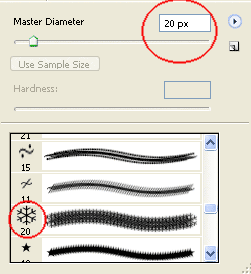
(You can find the snowflake brush on the Assorted brushes file of the pop-up menu on the Palette Brushes ) - Finally, score a few snowflakes on the "snowflakes" layer and set the layer 's Opacity to 60%.
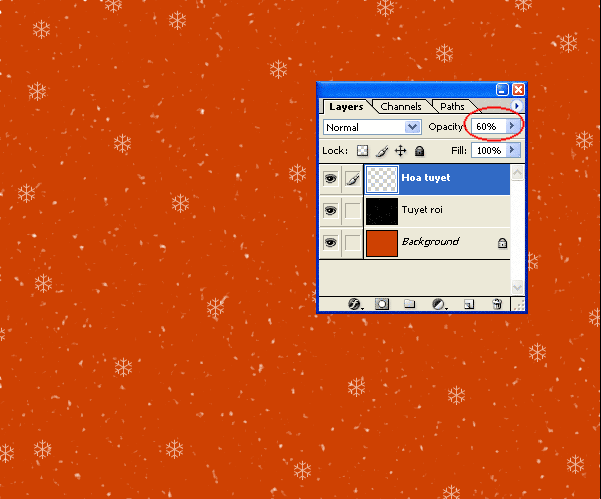
Step 6: Ctrl + Shift + E > combine all the layers into 1. Part II. Greeting card content Step 1: Card frame - Select Rectangular Marquee Tool > size: 250 x 400

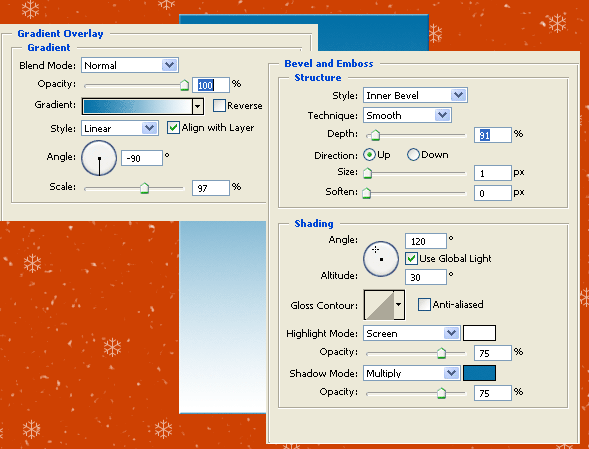
- Click on the corresponding position on the Background layer (card background) - Shift + Ctrl + N to create a new layer called "Frame"> Set the background color of this layer to white - Right-click the "Frame" layer> Blending option > Gradient Overlay with green color (# 0370A7) - white (#fffff)> Bevel and Emboss (Style: inner Bevel, Technique: smooth, Size: 1, Shadow mode: ## 0370A7)
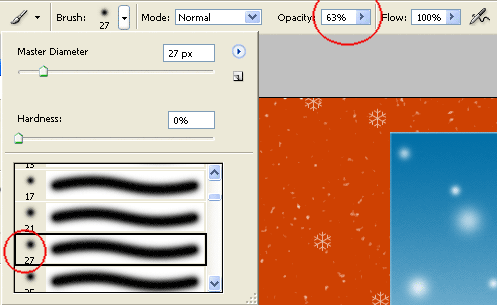
Step 2: Snowflakes - Press Ctrl + click "frame frame" layer> create a selection frame around - Shift + Ctrl + N create new layer> name "Bong tuyet" - Select brush tool> pen stroke Soft Round 27> Set Opacity: 63%
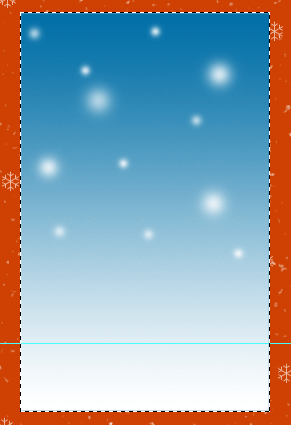
- Mark a few "Bong tuyet" layer brushes. (At this point, the brush will only be filled in the selection) Note: When you paint the brush, change the size to a small and small stroke so that the brush strokes are shaped like the following
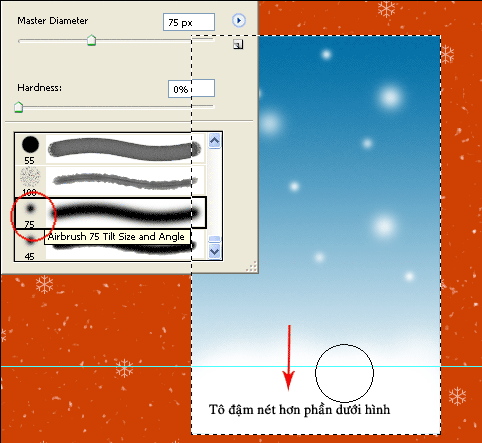
- Choose the Brush with stroke: Airbrush 75 tilt size and angle > set Opacity to 70% - Bring the pen stroke from the top down to the "Bong tuyet" layer, highlight it at the end of the image
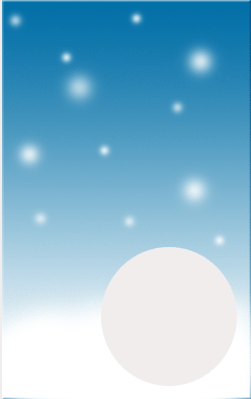
Step 3: "Snowman" - Create "circle 01" layrer with background "# F1EDED"
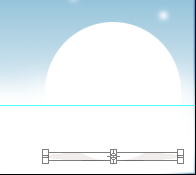
- Ctrl + Click the "Circle 01" layer> Shift + Ctrl + N to duplicate the Layer (with the same circle shape 01)> set the background "#ffffff"> name "circle 02" - Select the layer "Rounded 01"> Ctrl + T> drag the circle into an ellipse
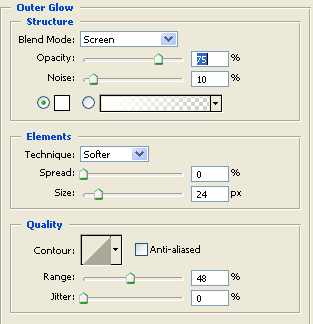
- Select layer "circle 02"> right mouse> Blending option > Outer Glow with the following parameters:
- The next step is to paint the eyes and mouth for the snowman (this drawing is simple, so look at my picture and follow it) - Draw the eyes and mouth, you create a hat for this snowman. + Using Polygon Tool, set sides: 3: to convert into triangles + Draw a triangle in the following figure
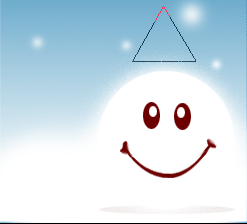
+ Shift + Ctrl + N Create a new layer called "red hat"> Ctrl + Enter to create a triangle selection> set the background color for this red triangle + Use Furrball Brush to fill the hat cap and hat
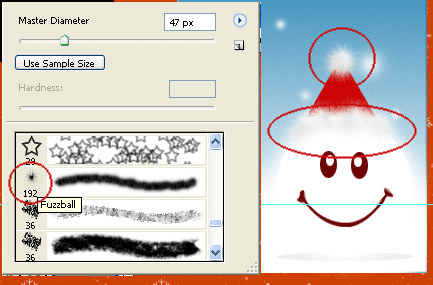
Step 3: Write a text of greetings. This part will probably not guide you anymore. With a simple card, you should only write the text gently, so the card will not be tangled. This is an example of my text.
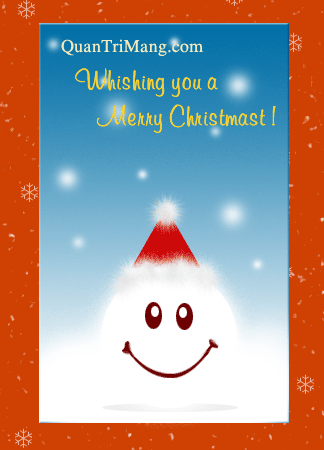
So you have a card already. But don't stop here. Please take a few more minutes to decorate your card more impressively. Step 4. Create layer management file. - Click on the top layer. - Click the " Create a new set " icon below the Palette layer => a layer set named "set 1" appears.
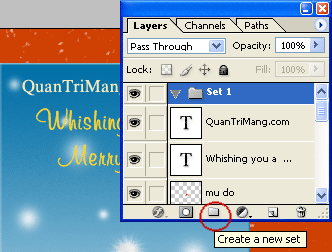
- Click a layer> hold the left mouse button and move the at the time selected layer to "set 1" and release the mouse button
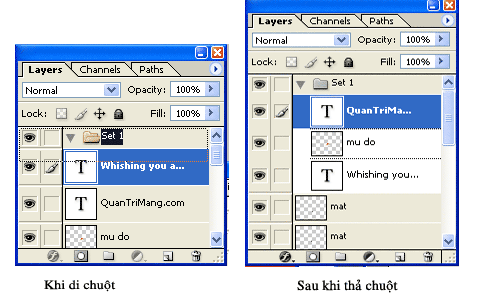
=> Repeat this step with the remaining layers, except for the background layer (background card) => The purpose of this action is to leave all the layers in the set 1. The next step is to imagine more specifically why I did so. Step 5: Rotate the layer set 1 - Select 1> Ctrl + T layer set> Mouse over the corner of the selection> rotate as shown below
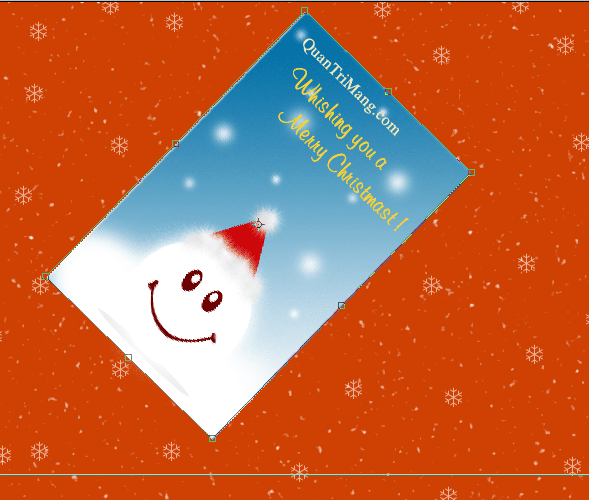
Step 6. Duplicate Layer 1 - Right click "set 1"> Duplicate layer set > we get "set 1 copy" Result
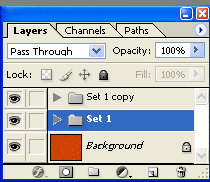
Step 7: Create shadow for layer 1 set. - Click Select 1> Ctrl + T layer set> Move to an angle> Rotate 90 degrees as shown below.
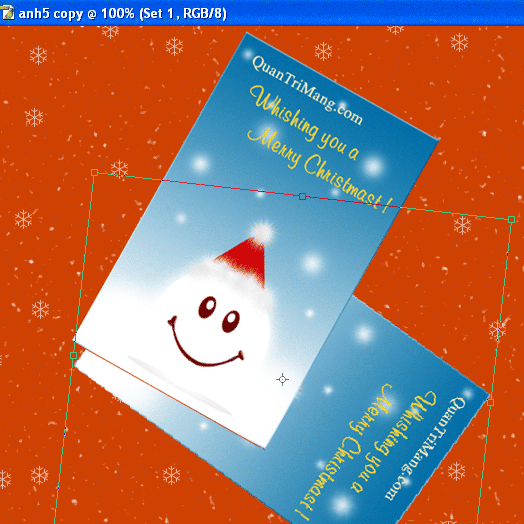
- Drag the 1 set layer so that the corner of the "set 1" layer and the "copy 1 copy" layer are created at a right angle
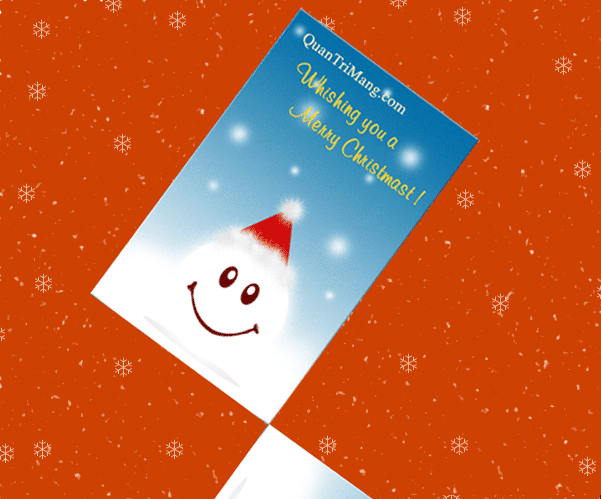
- Reduce the opacity of layer 1 set to 40% Final result
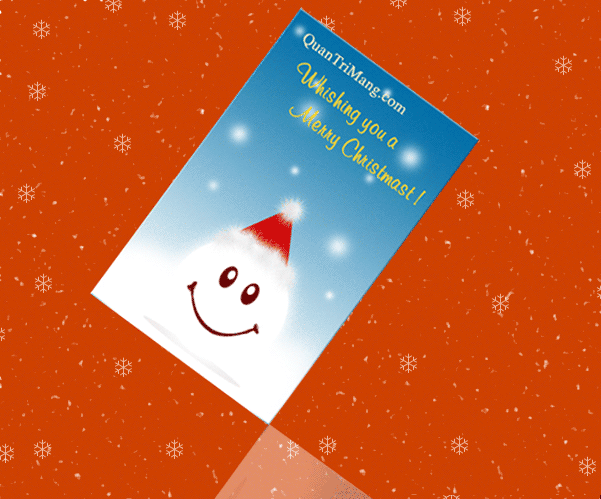
It's also simple, isn't it?! Wish you create your own thoughtful cards for your loved ones and welcome a happy Christmas.
FAQ
What does Photoshop CS: Christmas Cards for Relatives: Layer explain?
This article examines Layer and explains the main developments, practical implications, and context readers should understand.
Who is most affected by Layer?
Layer Overview And now let's start practicing with me: Part I: Create greeting card background.
What are the key takeaways from this topic?
Ctrl + N opens an invitation document, size (600px x 500px), Background # CE4102 Step 2.
Related Articles
 Guide 22 Ways to Make Beautiful Christmas Cards and Very Easy5 minutes read
 Photoshop: Create Your Own Christmas Cards6 minutes read
 Instructions for Using Photoshop CS6 (Part 7): Creating Christmas13 minutes read
 Instructions for Using Photoshop CS6 (Part 5): Create Christmas7 minutes read
 minutes read
 Make a Christmas Card with Fotojet: Christmas Cards3 minutes read
Reader Comments 0
Sign in with email or Google to join the discussion.