Table of Contents
This guide provides a practical overview of Numbering in Excel 2016, including its main features, benefits, limitations, and important considerations.
1. Numbering with the value being a numerical value
During creating a numbered list is an indispensable operation. There are two ways to number with numbers as follows:
- Use drag and drop
For example, you want to number the table. Enter the starting number and next value in the first 2 cells of the ordinal column -> select the 2 recently entered values move to the lower right corner of the selection when the mouse pointer changes to plus sign -> drag and drop to the last position to be numbered:

The result you have numbered in a simple operation:

- Use the Fill feature
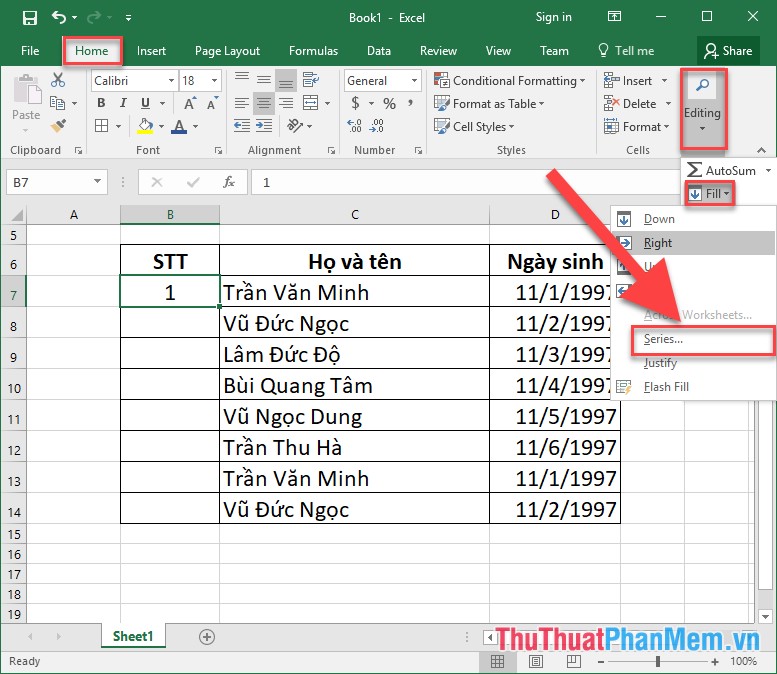
In addition to drag and drop to number, you can use the Fill feature. Enter the first numbered value in the first cell of the ordinal column. For example, here the numbering starts with 1 -> on the Home tab -> Editing -> Fill -> Series:
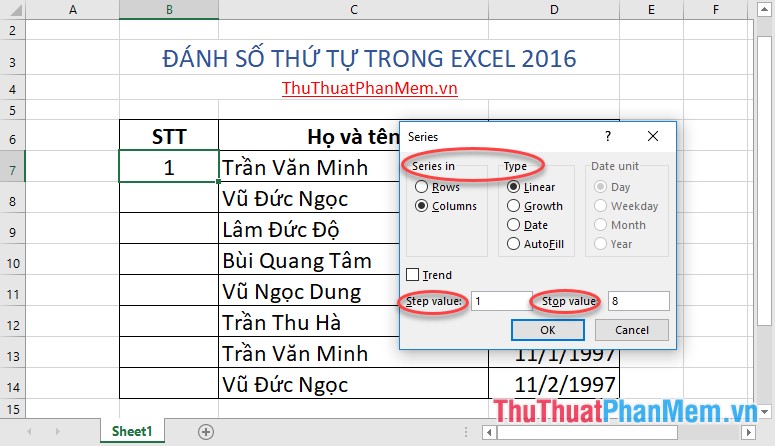
A dialog box appears with the following values selected:
- Series Series item : Select Columns
- Item Type: Select Linear value
- Step Value: Select the value to start numbering
- Stop vlaue: Enter the last value to number
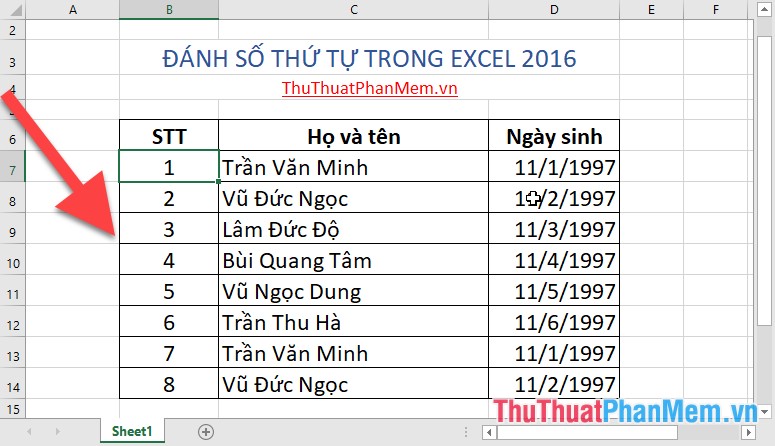
Finally click OK you have numbered as you like:
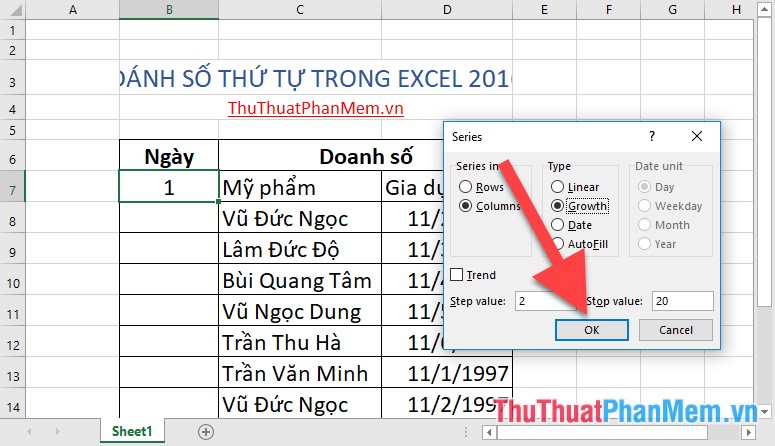
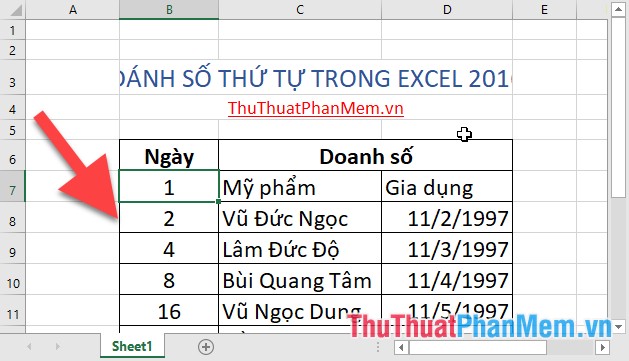
In case you want to number by exponential select the Growth feature in the Type section . Example of numbering in powers of 2 to values less than 20:
The results are numbered in powers:
2. Number the number with the date value
In case you have a monthly revenue report, you need to enter date values, as if you were simply entering data one by one so it takes time. For example, enter date values in the table:
Step 1: Enter the value of the first day to calculate revenue:
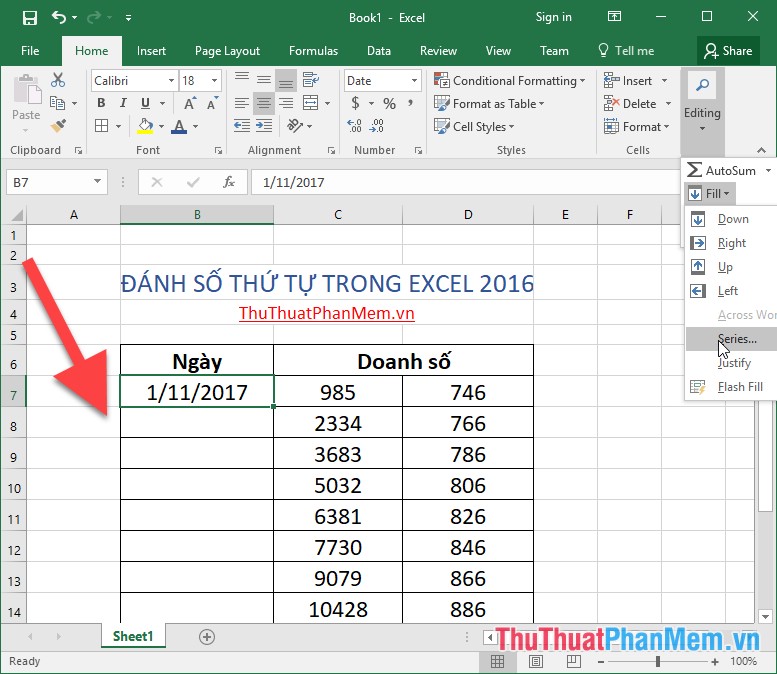
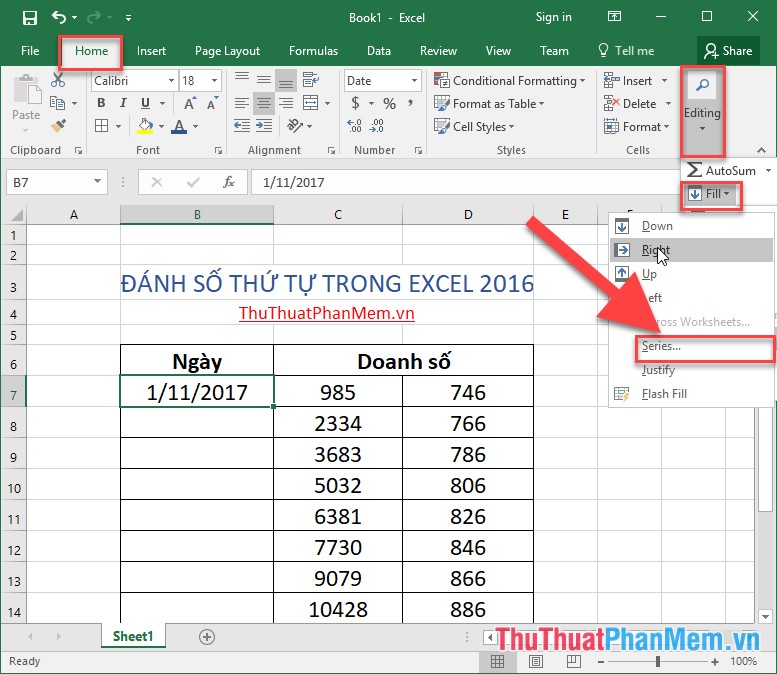
Step 2: Go to the Home tab -> Editing -> Fill -> Series:
Step 3: A dialog box appears with the following options selected:
- Series Series item : Select Columns
- Item Type: Select Date value
- Date unit: select the Day value .
- Step Value: Choose the value to start with numbered
- Stop vlaue: Enter the value of the last day to number
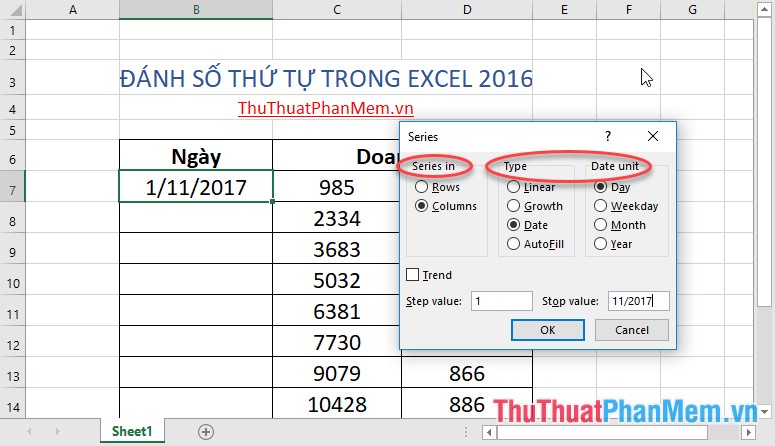
- Click OK results you have numbered by the date:

With simple operation, you have numbered the number of different data types. Above is a detailed guide on numbering in Excel 2016. I wish you success!
FAQ
What should I know about Numbering in Excel 2016?
Focus on the key features, requirements, limitations, and practical use cases explained in this guide.
How do I get the best results with Numbering in Excel 2016?
Follow the recommended steps, use current software or information, confirm compatibility, and review settings before major changes.
Are there any risks or limitations?
Potential limitations depend on compatibility, data quality, cost, privacy, support, and how the product or method is used.
Related Articles
 How to Number Columns Automatically in Excel: Excel Tips5 minutes read
 Numbering in Excel4 minutes read
 Page Numbering Method of Type 1/2 in Excel4 minutes read
 How to Numbering in Excel: Step-by-Step Guide4 minutes read
 Page Numbering in Excel Does Not Start with Number 12 minutes read
 Instructions to Stamp Negative Numbers in Excel4 minutes read
Reader Comments 0
Sign in with email or Google to join the discussion.