Table of Contents
Understanding Microsoft Excel requires more than a headline. The overview below breaks down the key facts, changes, and user impact.
Microsoft Excel Overview
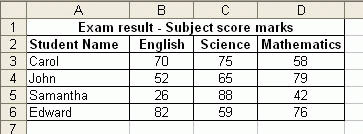
Step 1: Chart type - Click on any data box that contains the information you want to include in the chart, or black out exactly the data to display in the chart. - Click on the Chart Wizard icon on the Standar toolbar. The Chart Wizard dialog box displays:
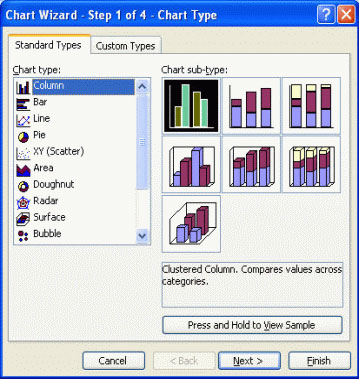
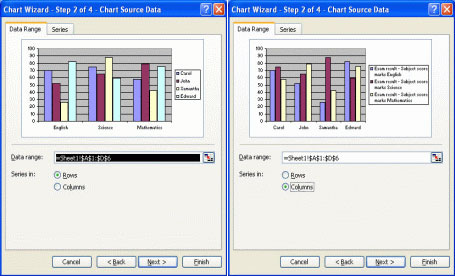
- From Chart type: Select the type of chart you want to create - Then from Chart sub-type: Select the correct format you want to apply to the chart type - To see how to select the chart, click Press and Hold to View Sample in the dialog box. In the above example, we choose which is the default - Click Next to display the next page of the dialog box - Source Data Chart. Step 2: Data source - Data Range allows you to specify data correctly to display in the chart - You can choose how to display Series in Rows or Columns. In the case of the data in the example above, two results are illustrated. Choose Series in Rows.
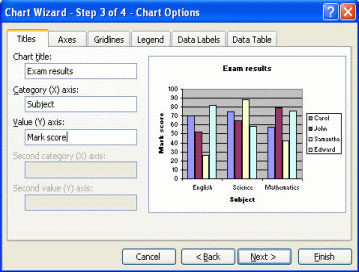
- Click the Next button, the Chart Options dialog box appears Step 3: Options for the chart From the Chart Options dialog box, you can select Titles, Axes, Gridlines, Legend, Data Labels, Data Tables and create necessary changes. Add chart title - In the Chart title: section, name the chart (eg Exam results ). - In Category (X) axis: enter title for X axis (eg Subject ) - In Category (Y) axis: enter title for Y axis (eg Mark score ) - The example above is illustrated as follows:
Adjust the chart axis - From the Chart Options dialog box, click the Axes tab - It allows you to adjust the display axis, you can select or not select the axis on the selection box to see the results on the chart Adjust chart gridlines - From the Chart Options dialog box, click the Gridlines tab - You can choose to display large or small X and Y axes by clicking on the check box Adjust chart captions - From the Chart Options dialog box, click the Legend tab - You can choose to display or not to display chart captions and position the annotations in the chart by clicking on the radio button. Adjust labels for data - From the Chart Options dialog box, click the Data Labels - You can choose to display or not to display data labels by clicking on the radio button Display table data - From the Chart Options dialog box, click on the Data Table tab - You can choose to display or not to display the chart data of the chart by clicking on the check box - Click Next to continue, then the last page of the dialog box appears - Chart Location Step 4: Position the chart Locate chart - You can choose to place the chart on a spreadsheet as an object, or place a chart on a new spreadsheet. There are two options:
- As new sheet: The chart is placed in a new worksheet
- As object in: The chart is placed in the current worksheet

- Click Finish to finish, then the created chart will look like the Chart Wizard.
FAQ
What is the main topic of MS Excel - Lesson 6: Four Steps to Create an Excel Chart?
Understanding Microsoft Excel requires more than a headline.
Why is Microsoft Excel important?
The overview below breaks down the key facts, changes, and user impact.
What should readers remember about Microsoft Excel?
Microsoft Excel Overview Step 1: Chart type - Click on any data box that contains the information you want to include in the chart, or black out exactly the data to display in the chart. - Click on the Chart Wizard icon on the Standar toolbar.
Related Articles
 Steps to Use Pareto Chart in Excel3 minutes read
 Steps to Create Graphs (Charts) in Excel2 minutes read
 Steps to Reset Chart in Excel2 minutes read
 Create Excel Charts That Automatically Update Data with These Three4 minutes read
 How to Create a Bar Chart in Excel4 minutes read
 8 Types of Excel Charts and When You Should Use Them9 minutes read
Reader Comments 0
Sign in with email or Google to join the discussion.