Table of Contents
This article examines Save in and explains the main developments, practical implications, and context readers should understand.
- How to change the default Download path on Windows?
Use Save in Extension
You can do this by using the extension called Save In. This extension allows users to set up folders to save downloaded files, which makes it easy to organize downloads.
The main problem is that you cannot save files outside the directory you specified as the default download folder. However, you can still specify specific folders in the download directory itself and save the files to each folder. Save In is available in both Chrome and Firefox, so don't worry about using the browser.
In Chrome
You can download the extension for free from the Chrome Web Store. After installation, it will create an icon on the extension bar, click on it and select Options to customize.
- Download: Save In for Chrome

In Firefox
Meanwhile, Firefox users can get it from the Firefox add-on page. After installation, you can access the options by clicking on the bars at the top right and selecting Add-ons.
- Download: Save In for Firefox
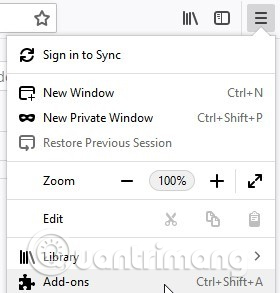
Select Extensions and then select Options next to Save in.

Create a Basic Path
At the basic level, Save In can provide you with different folders that can be saved by right clicking on an item. If this option is right for you, then the Save in setting is very easy. You just need to scroll down the box showing the folders and type the folder you want to save. Don't worry when you enter the name of a folder that hasn't been created yet, Save in will create it for you when you save the first time.
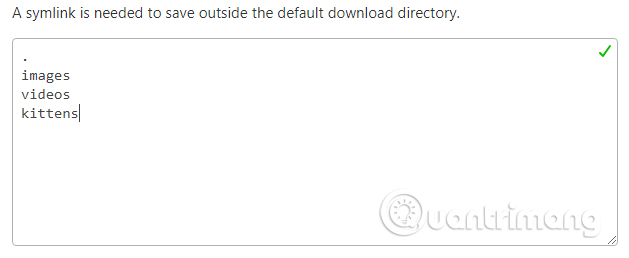
Now, when right-clicking on something in Chrome, Firefox, Save In will display all the folders you have previously set, just select the folder to save and Save In will handle the rest.

Create Advanced Paths
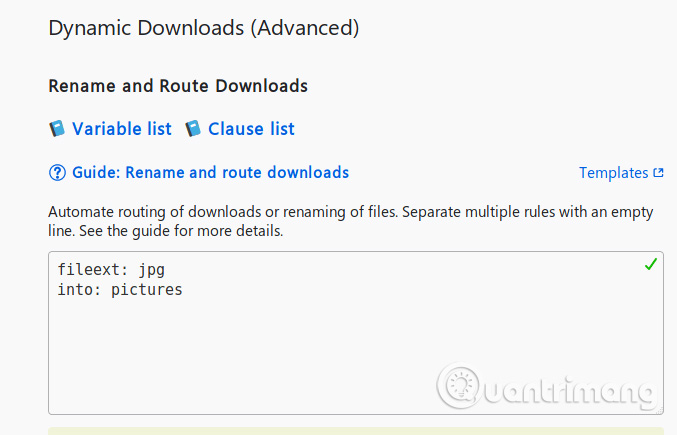
If you scroll down, you'll find a box called ' Dynamic Downloads ', where you can enter more complicated rules and commands. There are many things you can do with Save In when downloading files. The extension has a tutorial, telling you about the syntax for setting rules.
Here are a few things you can do with Save In.
1. You can ask Save In to automatically save files in specific folders depending on its extension. For example, if you want to save all. JPG images in the Pictures folder, you can do the following:
 fileext: jpg
 into: pictures
2. You can set a rule so that when a specific extension is saved, the file name is changed to the current date:
 fileext: gif
 into:: unixdate:.: fileext:

3. You can also set the same thing when saving web pages, it will automatically save as. HTML:
 context: page
 into :: filename: .html
If you want to keep your download directory neat, Save In can help you decide where to download for each file structure.
I wish you all success!
- How to change the file download folder on iTunes
- Move Desktop, Download and Documents to another drive on Windows 10
- How to quickly open the Download folder on Chrome browser
FAQ
How does Save in work?
This article examines Save in and explains the main developments, practical implications, and context readers should understand.
What should you prepare before using this method?
How to change the default Download path on Windows?.
What should you do if the process does not work as expected?
Use Save in Extension You can do this by using the extension called Save In.
Related Articles
 3 Ways to Create Multiple Folders at Once in Windows 10/118 minutes read
 How to Select Multiple Files at Once on Mac4 minutes read
 How to Create Multiple Folders at the Same Time on Windows4 minutes read
 Open Multiple Folders at Once on Windows 10 with Just One4 minutes read
 Steps to Create Multiple Folders at Once on Windows 106 minutes read
 How to Interact with Files and Contacts in Go7 minutes read
Reader Comments 0
Sign in with email or Google to join the discussion.