Table of Contents
This guide provides a clearer, better-organized overview of Instructions on How to Encrypt Files and Folders on Ubuntu. It focuses on the essential facts, practical steps, and common questions readers are most likely to have.
If you are familiar with Ubuntu, you will see that Several things on Ubuntu that are many times better than Windows 7 and 10. Of course we are not talking about games because there is no operating system better suited for gaming than Windows. However, the way To encrypt files and folders on Ubuntu Is different. On Ubuntu Several security methods to help you protect your privacy to the maximum.
Instructions for Encrypting Files and Folders on Ubuntu
Step 1: To encrypt files and folders on Ubuntu, we first need to install Gnupg on Ubuntu, download Gnupg from the official provider.

Step 2: Select the Gnupg folder to extract it on Ubuntu.

Step 3: Continue clicking Install to install this software on Ubuntu. When installation finishes you can close it.

Step 4: If you cannot install Gnupg, select the key combination Ctrl + ALT + T To open the Terminal window, here you type: Sudo apt install gnupg2

Type the password before confirming the installation. When typing the password, the characters will not appear.

Step 5: If the system asks if you want to continue> Select Y Then enter to continue the installation.

Step 6: When installation finishes, to see the list of encryption methods, run the command below: Gpg2 --version
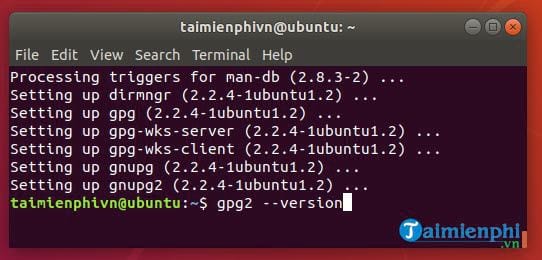
The AES algorithm in this list is AES128 . You can select another encryption algorithm as the default by adding a line to configure the file that GnuPG uses when running. The configuration file is called gpg. conf, located in a hidden folder called. gnupg in the Home directory.
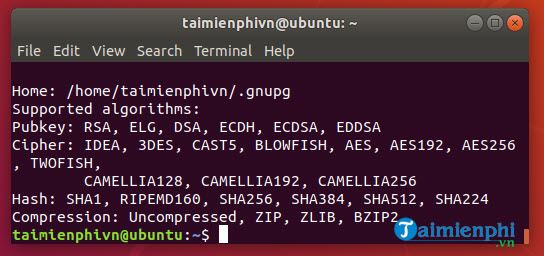
Step 7: The next step now is to edit the configuration file in gedit, run the command below in the Terminal window: Gedit -/. gnupg/gpg. conf

Step 8: When it opens, type Ciphe - Algo AES256 And save it.

Step 9: Now we start encrypting files and folders on Ubuntu, for example encrypting with file -/Documents/TipsMake. vn/TipsMake. vn. txt
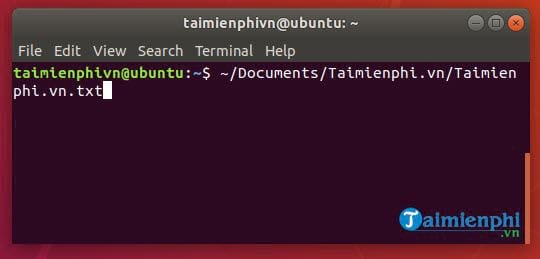
>> Type the command Gpg --symmetric --cipher-algo AES256 -/Documents/TipsMake. vn/TipsMake. vn. txt

Then enter the password twice to confirm the password for that encrypted file.
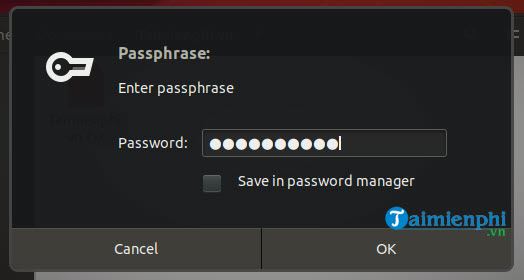
Step 10: After encrypting files and folders on Ubuntu, we can add a password to that encrypted file with the command Gpg --symmetric -/Documents/TipsMake. vn/TipsMake. vn. txt
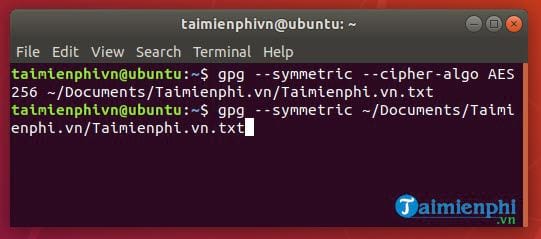
Step 11: Then enter the password to complete the process of encrypting files and folders on Ubuntu.

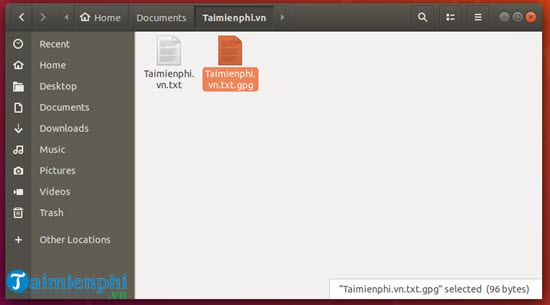
Inside the encrypted folder, you will now see another file appear with the *gpg extension, which means the encryption of Files and folders on Ubuntu has been completed.
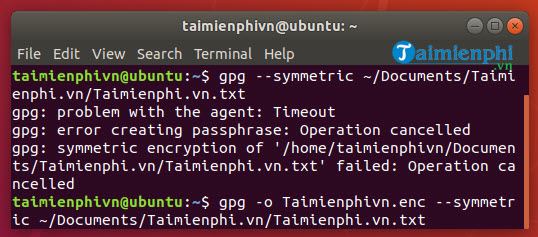
Step 12: To rename the encrypted file, type The command gpg -o TipsMakevn. enc --symmetric -/Documents/TipsMake. vn/TipsMake. vn. txt
Where > TipsMakevn. enc is the new file name.
>>TipsMake. vn. txt is the original file name.
Above is all the information that you need to know when researching file and folder encryption on Ubuntu. With the instructions for encrypting files and folders on Ubuntu, we can encrypt files ourselves as desired. And Several other tips we want to share with you about Ubuntu, but TipsMake would like to see you in the next articles on the TipsMake page.
With the above trick, we know another way to encrypt data in Ubuntu. Indeed, Data encryption Is not as simple as Windows, but in terms of security features, it is not inferior. One thing to note is that readers must check the version of Ubuntu they are using because not all versions support it. To avoid having To check the Ubuntu version , another way is to always update it to the current version.
FAQ
What is the main point of Instructions on How to Encrypt Files and Folders on Ubuntu?
If you are familiar with Ubuntu, you will see that Several things on Ubuntu that are many times better than Windows 7 and 10.
Why might the details change over time?
Software versions, prices, policies, services, and product availability can change. Check the official source before making a purchase or changing important settings.
How can I use this information safely?
Follow official instructions, verify downloads and claims, back up important data, and avoid sharing passwords or sensitive account information.
Related Articles
 How to Setting Password to Protect Files and Folders in Windows8 minutes read
 Instructions for Using EFS to Encrypt Files and Folders on5 minutes read
 How to Use 7zip to Encrypt Files and Folders on Windows 103 minutes read
 How to Encrypt FILE or FOLDERS on Windows 10, 8, 710 minutes read
 How to Easily Encrypt a File Without a Password Using Cloak5 minutes read
 How to Set Password Protection Folder on Mac6 minutes read
Reader Comments 0
Sign in with email or Google to join the discussion.