Table of Contents
This practical guide walks through how to pin files or folders to the 'taskbar' of your, explains the main requirements, and highlights common issues that may appear along the way.
Chrome OS now has a 'hidden' feature that allows you to pin local files and folders right on the taskbar at the bottom of the screen, also known as the taskbar or, rather, 'Shelf' on Chromebooks. This feature is called 'Holding Space', which basically gives you quick access to a local folder or file when needed with just one click.
At the time of writing, the 'Holding Space' feature is only available as Google Chrome's experimental and optional flags.
( Note: Google often hides upcoming upcoming features as 'flags' because they're still in beta and aren't ready for public release yet. try, but do not rule out the possibility that some of them can negatively impact your browser performance.For this Holding Space feature, testing shows whether its activation and use are not. cause any 'side effects' on the system).
To use Holding Space on your Chromebook, you first need to enable the corresponding flag on Chrome.
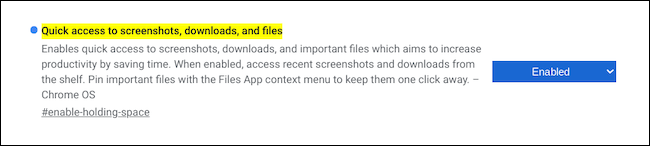
Open Chrome, enter the keyword chrome://flags/#enable-holding-space into your browser's address bar and press enter.

Immediately you will see the corresponding flag appear as shown below. Click the drop-down on the right and choose ' Enabled '.
Next, click on the ' Restart ' button at the bottom of the screen to apply the flag.

Once Chrome web browser restarts, you should see a new button with a stack-like icon in the lower right corner of your Chromebook screen.
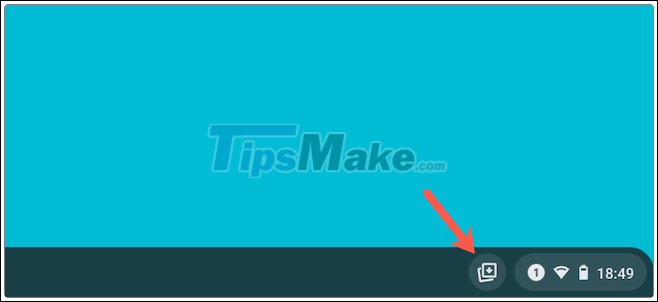
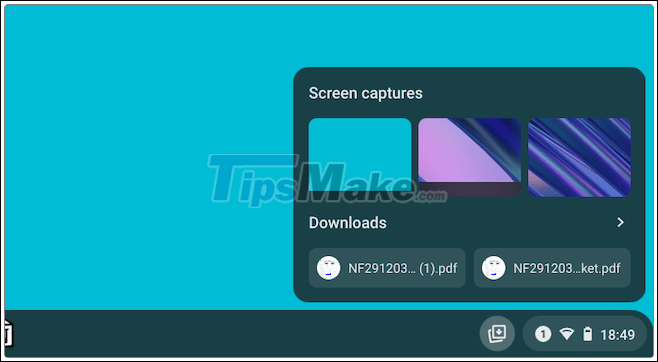
By default, 'Holding Space' allows you to quickly access the most recently downloaded screenshots and files.
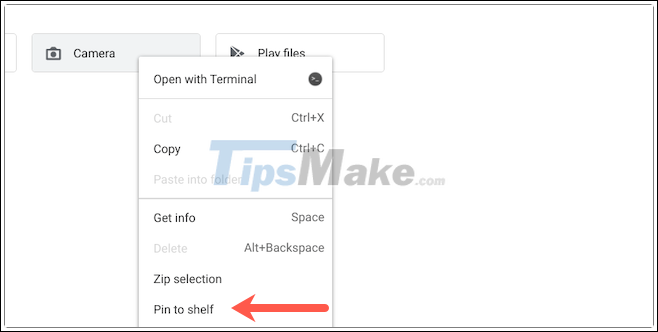
To pin an arbitrary file or folder, open the ' Files ' app on your Chromebook and go to the file location you want to open. (This will also apply to the Play Store and the Linux partition on your Chromebook.)
Right-click on a file or folder and choose ' Pin to Shelf ' from the drop-down menu.
Click the Holding Space icon on the Shelf again to see your newly pinned items, which will usually appear at the top.
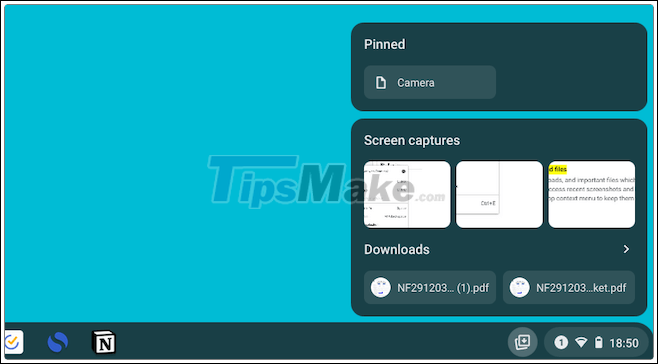
To unpin anything from Holding Space, simply hover your mouse pointer over the file or folder and click the pin icon again.

Key Takeaways
Use the information above as a practical reference for how to pin files or folders to the 'taskbar' of your. Review each step carefully, confirm any requirements, and choose the option that best fits your situation.
FAQ
What does this guide explain about Pin Files or Folders to the 'Taskbar' of Your?
It explains the main concepts, practical considerations, and useful steps related to pin files or folders to the 'taskbar' of your without requiring advanced knowledge.
Who can benefit from learning about Pin Files or Folders to the 'Taskbar' of Your?
This information is useful for readers who want a clear overview, practical guidance, and reliable steps related to pin files or folders to the 'taskbar' of your.
What should I check before applying this information?
Review the requirements, confirm that your device, software, or situation matches the instructions, and back up important data before making major changes.
Related Articles
 How to Hide Files and Folders on a Chromebook3 minutes read
 Instructions for Pinning Folders to Windows Taskbar4 minutes read
 5 Useful Hidden Taskbar Features on Windows 11: Practical Guide6 minutes read
 How to Pin a Folder to the Taskbar on Windows 104 minutes read
 Instructions for Hiding Files and Folders in Windows 10 Search4 minutes read
 3 Ways to Compress and Decompress Files in Chromebook6 minutes read
Reader Comments 0
Sign in with email or Google to join the discussion.