Table of Contents
This practical guide walks through how to lock a chromebook when not in use, explains the main requirements, and highlights common issues that may appear along the way.
Normally, when the device is awakened, the system will ask you to enter the password to access the device again. However in the event that the password is not set, anyone can access your Chromebook (including your Google account) after waking the device from sleep mode. To set up a password for the lock screen on your Chromebook, just follow these steps:
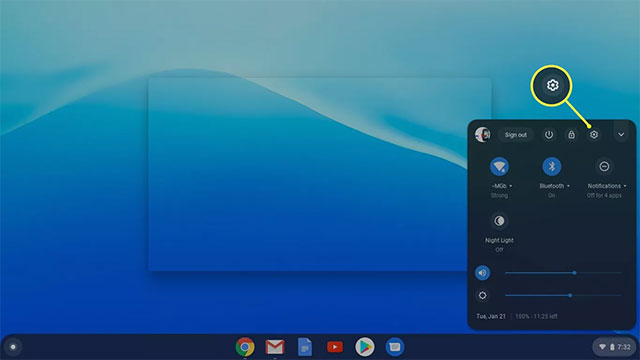
Step 1. Click the battery and time notification item in the bottom right corner of the screen. Then click the gear icon to access the system's ' Settings ' window .
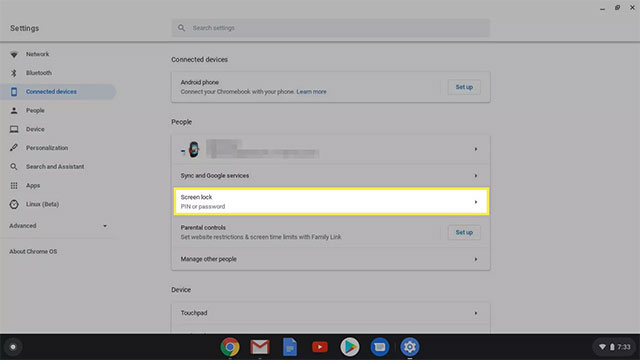
Step 2. Click on Screen Lock to change lock screen settings.
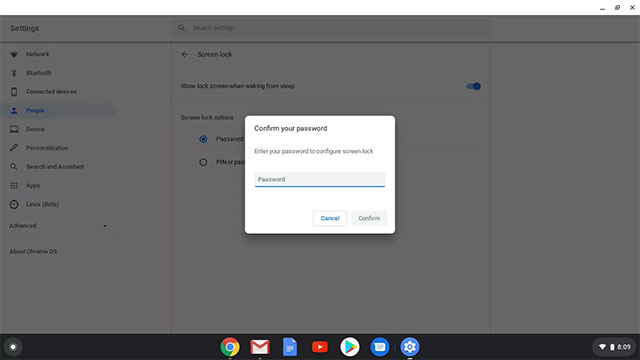
Step 3. Enter the password for your Chromebook.

Step 4. Turn the bar to enable ' Show lock screen when waking from sleep '.

( Note: Here, you can also set a PIN to unlock your Chromebook .)
How to lock your Chromebook
There are six different ways you can lock your Chromebook. Some of these may vary slightly from manufacturer to manufacturer, and the end result will be essentially the same.
- Press and hold the Lock key on the device's keypad. After about 2 seconds, your Chromebook will be locked.
- Press and hold the Power button ( the Power button) on your Chromebook, then choose Lock .
- Press the Magnifying Glass + L key combination on the device's keyboard.
- By default, if your Chromebook is plugged in, the screen turns off after 8 minutes and goes into sleep mode after 30 minutes. If not plugged in, the screen will turn off after 6 minutes and go to sleep after 10 minutes.
- Turning the Chromebook screen down completely can also put the device in the lock state.
- Click the clock in the lower-right corner of the screen, then click Lock .
How to unlock Chromebook using a PIN
Using a PIN is an easy and convenient way to log into your Chromebook because it is usually short and easier to remember than a regular password. Especially when you're using tablet mode on a 2-in-1 Chromebook.
Step 1. Navigate to Settings> Screen lock.
Step 2. Enter your Chromebook password.
Step 3. Click the radio button next to Password or PIN, then click Setup (or Change ) PIN .
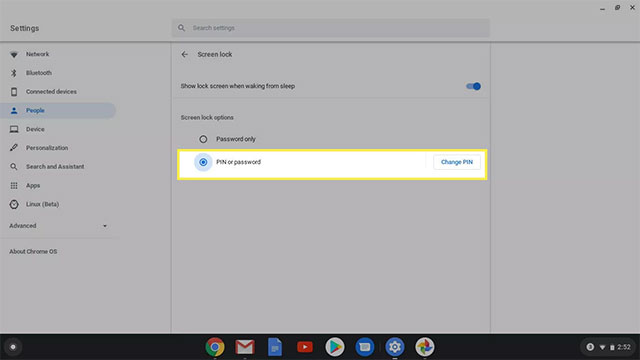
Step 4. Enter the PIN you want to set and confirm.

The next time you log into your Chromebook, you will be asked to enter a PIN or password.
Key Takeaways
Use the information above as a practical reference for how to lock a chromebook when not in use. Review each step carefully, confirm any requirements, and choose the option that best fits your situation.
FAQ
What does this guide explain about Lock a Chromebook When Not in Use?
It explains the main concepts, practical considerations, and useful steps related to lock a chromebook when not in use without requiring advanced knowledge.
Who can benefit from learning about Lock a Chromebook When Not in Use?
This information is useful for readers who want a clear overview, practical guidance, and reliable steps related to lock a chromebook when not in use.
What should I check before applying this information?
Review the requirements, confirm that your device, software, or situation matches the instructions, and back up important data before making major changes.
Related Articles
 The Best Chromebook Models in 20146 minutes read
 HP Chromebook 11 Supports LTE 4G3 minutes read
 What Is a Chromebook and How Is It Different from a Laptop?7 minutes read
 Samsung Updates Chromebook3 minutes read
 How to View Your Chromebook's CPU Information4 minutes read
 The First Chromebook Uses a 15. 6-inch Screen3 minutes read
Reader Comments 0
Sign in with email or Google to join the discussion.