Table of Contents
This practical guide explains how to manage fonts in windows with clear steps and useful context. It also covers common requirements, potential problems, and the details that can help you get better results.
With the Font tool at Settings, you can view fonts, add them by dragging and dropping them. The Control Panel app and the Settings tool work the same in Windows 10, Windows 11.
View Installed Fonts
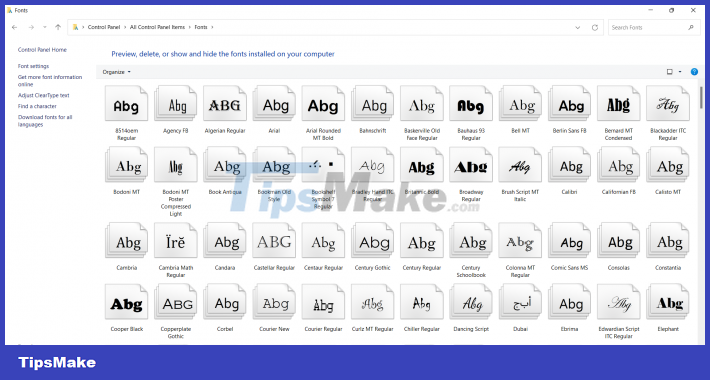
In Windows 10.11 enter Control Panel in the search field / select Fonts. Windows displays all installed fonts.
Font Preview
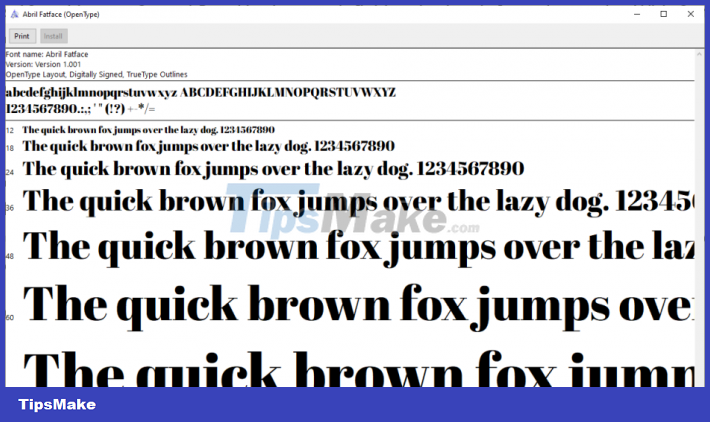
Select a specific font, click Preview, or double-click the font name. The Font Viewer will show you how the font will look in different sizes. You can print the text in the font viewer window if you want a hard copy of the font.
Hide Fonts
To Unhide a font, right-click the font/select Hide from the menu that appears.
You can also automatically hide all fonts that are not designed for your language settings.
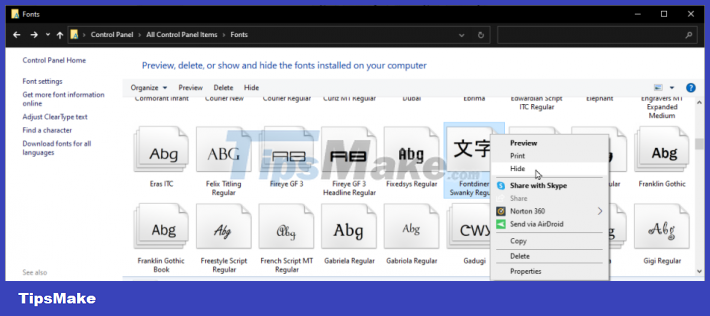
To do this, click on the Font settings link on the left sidebar. In the Font Settings window, check the box to Hide fonts based on language settings.
Font Backup
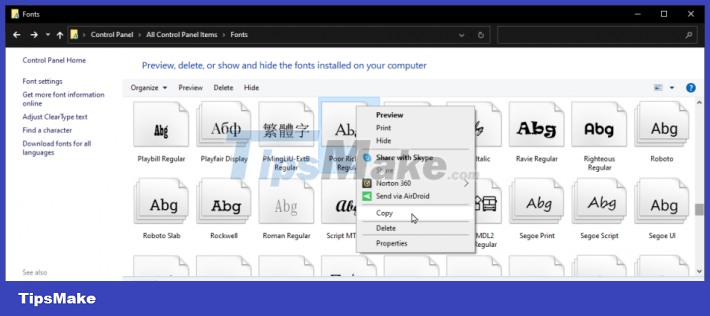
Before you delete a font, you can back it up in case you need it in the future. Let's create a backup folder. Right-click the font (or font family) and select Copy. Paste the font into your backup folder. You can now delete the font.
Reinstall the Font
If you need to reinstall a deleted font, right-click it in the backup folder and select Install.
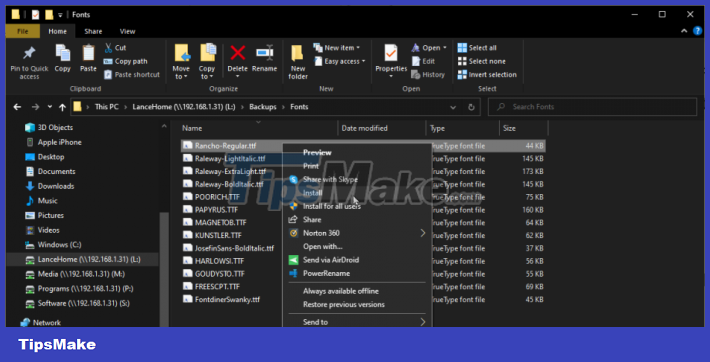
The Fonts application in Control Panel provides many features and commands. In the left pane, click the link to install the Font. You can choose to hide fonts that are not in your default language and install font shortcuts instead of actual fonts to save disk space.
Conclusion
Understanding Font makes it easier to compare options, avoid common mistakes, and apply the information in this guide more effectively. Review the relevant requirements before making changes or choosing a solution.
FAQ
How do you manage fonts in windows?
Follow the steps in this guide in order, confirm the required settings or tools, and verify the result before making additional changes.
Is it safe to manage fonts in windows?
It is generally safe when you follow the recommended instructions, use trusted tools, and avoid changing settings you do not understand.
What should you do if the process does not work?
Recheck the requirements, restart the device or application when appropriate, and review each step for missed settings or compatibility issues.
Related Articles
 How to Install and Remove Fonts on Mac: Install Fonts on Mac11 minutes read
 How to Install and Uninstall Fonts on Windows 11: Step-by-Step Guide5 minutes read
 How to Install and Use Fonts in Linux7 minutes read
 How to Install (and Uninstall) Fonts on Windows 114 minutes read
 How to Download Fonts7 minutes read
 Steps to Install Fonts for Windows 116 minutes read
Reader Comments 0
Sign in with email or Google to join the discussion.