Table of Contents
This guide explains how to restore the Default Font on Windows 10, with clear steps, practical tips, and important checks before you begin.
Method 1: Restore default font with Font Settings
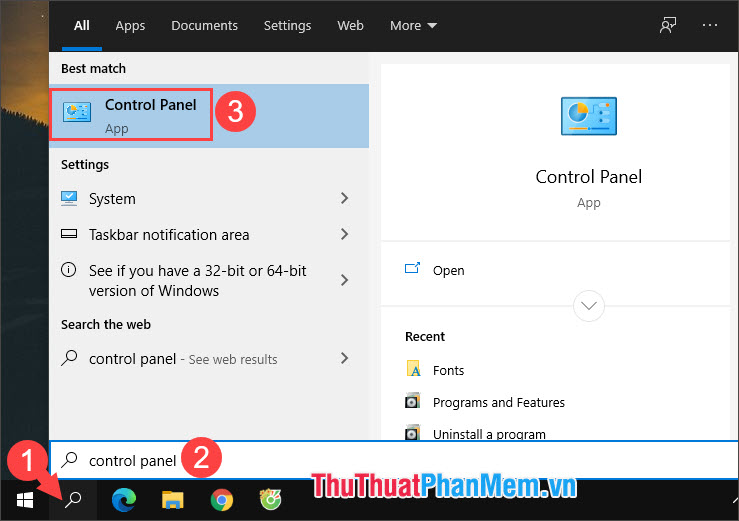
Step 1: You click on the icon Search (1) or press the Windows + S . Next, enter the keyword control panel (2) => click on the Control Panel app (3) in the first result.
Step 2: Click on View by (1) to switch to Large icon (2) . Next, select Fonts (3) .

Step 3: Click on Font settings .

Step 4: Click on Restore default font settings section .

Method 2: Restore default font via registry
In case you miss and the font interface on Windows 10 is changed, you can apply this method to switch back to the default font. Please do the following:
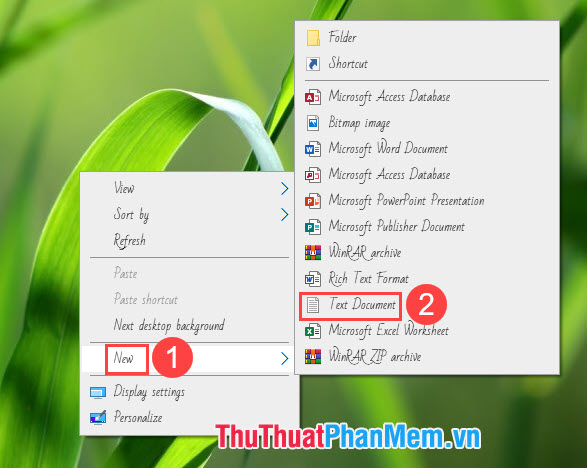
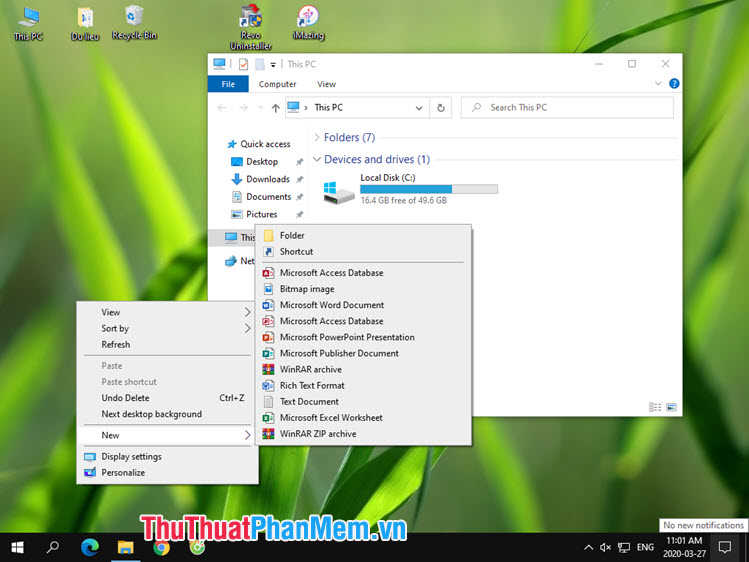
Step 1: Right-click on the desktop and select New (1) => Text Document (2) .
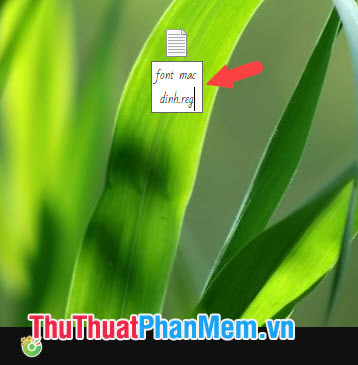
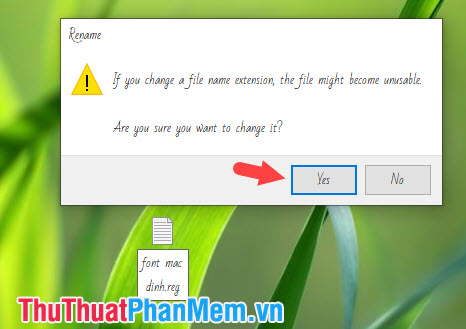
Step 2: You rename the file to the font mac dinh. reg or any other name but must have the extension. reg.
After the message appears, click Yes .
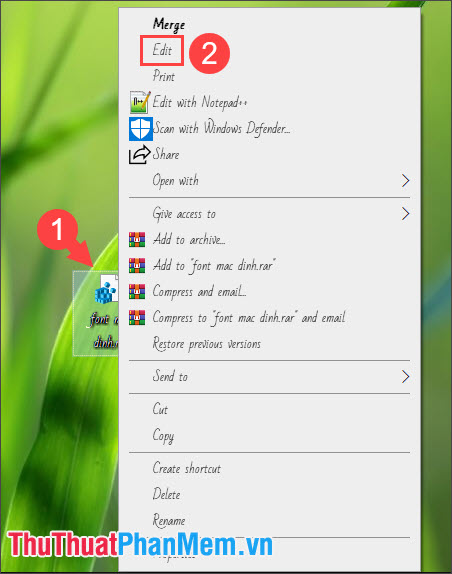
Step 3: Right-click the . reg file (1) => Edit (2) .
Step 4: Paste the following code into Notepad
Windows Registry Editor Version 5.00 [HKEY_LOCAL_MACHINESOFTWAREMicrosoftWindows NTCurrentVersionFonts] "Segoe UI (TrueType)"="segoeui.ttf" "Segoe UI Black (TrueType)"="seguibl.ttf" "Segoe UI Black Italic (TrueType)"="seguibli.ttf" "Segoe UI Bold (TrueType)"="segoeuib.ttf" "Segoe UI Bold Italic (TrueType)"="segoeuiz.ttf" "Segoe UI Emoji (TrueType)"="seguiemj.ttf" "Segoe UI Historic (TrueType)"="seguihis.ttf" "Segoe UI Italic (TrueType)"="segoeuii.ttf" "Segoe UI Light (TrueType)"="segoeuil.ttf" "Segoe UI Light Italic (TrueType)"="seguili.ttf" "Segoe UI Semibold (TrueType)"="seguisb.ttf" "Segoe UI Semibold Italic (TrueType)"="seguisbi.ttf" "Segoe UI Semilight (TrueType)"="segoeuisl.ttf" "Segoe UI Semilight Italic (TrueType)"="seguisli.ttf" "Segoe UI Symbol (TrueType)"="seguisym.ttf" "Segoe MDL2 Assets (TrueType)"="segmdl2.ttf" "Segoe Print (TrueType)"="segoepr.ttf" "Segoe Print Bold (TrueType)"="segoeprb.ttf" "Segoe Script (TrueType)"="segoesc.ttf" "Segoe Script Bold (TrueType)"="segoescb.ttf" [HKEY_LOCAL_MACHINESOFTWAREMicrosoftWindows NTCurrentVersionFontSubstitutes] "Segoe UI"=-Then you save with the shortcut Ctrl + S and exit Notepad.

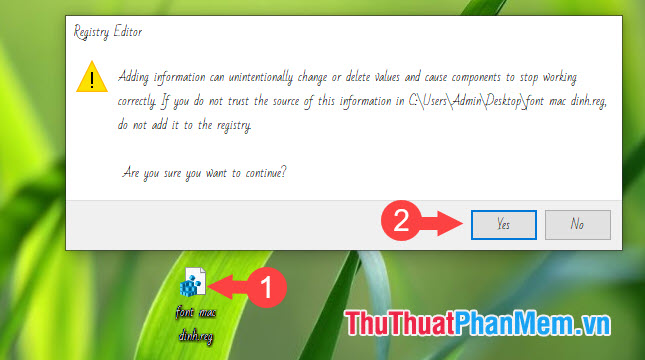
Step 5: Click on the . reg file (1) you just edited. If the following message appears, click Yes (2) .
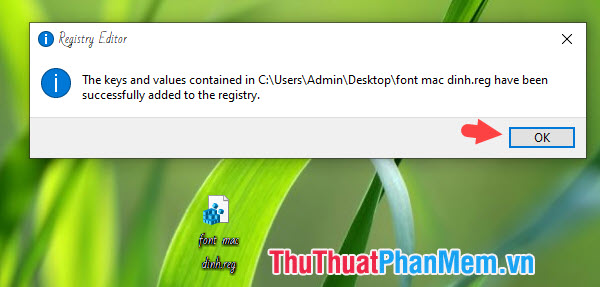
Step 6: After the success message appears, it is completed. Please click OK and reboot to apply the default font.
After booting, open the application and right-click menu to check if the font has been converted to default is not successful.
Through the guide in the article, you can return to the default font quickly and conveniently. Good luck!
FAQ
What should I know about Restore the Default Font on Windows 10?
Focus on the key features, requirements, limitations, and practical use cases explained in this guide.
How do I get the best results with Restore the Default Font on Windows 10?
Follow the recommended steps, use current software or information, confirm compatibility, and review settings before major changes.
Are there any risks or limitations?
Potential limitations depend on compatibility, data quality, cost, privacy, support, and how the product or method is used.
Related Articles
 How to Change Fonts in Windows 11: Step-by-Step Guide9 minutes read
 Instructions for Setting the Default Font in Microsoft Word4 minutes read
 Font Windows 10: How to Change the Default Windows 10 Font6 minutes read
 Instructions: Restore the Default Font Set of Windows 73 minutes read
 How to Set the Default Font and Font Size on Excel3 minutes read
 How to Restore the Default Theme in Windows 104 minutes read
Reader Comments 0
Sign in with email or Google to join the discussion.