Table of Contents
This practical guide walks through how to hide specific file types from search results on, explains the main requirements, and highlights common issues that may appear along the way.
How to hide certain file types in search results on Windows 11
On Windows 11, you can filter out any file type and block it from appearing in Windows Search search results. For example, if you don't want to see any PNG images in the search results, that file type can be added to the system's exclusion list.
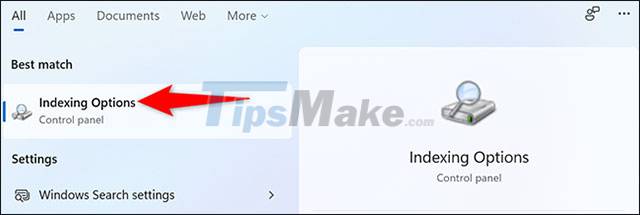
To specify the file type to hide, first open the 'Start' menu and search for the keyword 'Indexing Options'. Then, click on the corresponding option that appears in the returned results.
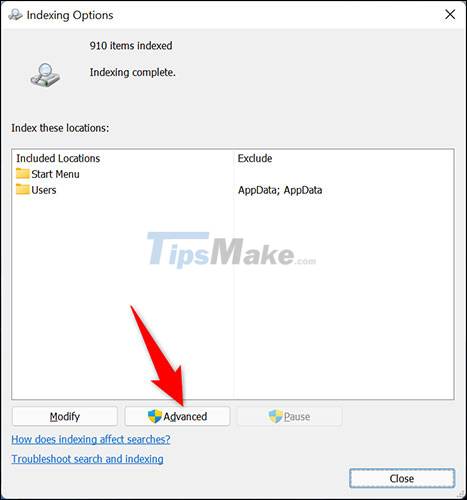
On the 'Indexing Options' window that opens, click the 'Advanced' button.
In the 'Advanced Options' window, click on the 'File Types' tab.

Under the 'File Types' tab, you'll see all the file formats that Windows currently allows to show up in the system's search results. To exclude a specific file type from this list, clear the check box next to it in the list.
Then, at the top, click the 'Index Settings' tab.

Tip: If the file format you want to block is not listed, click 'Add New Extension to List' at the bottom, enter your file extension and click 'Add' to add it. list.
On the 'Index Settings' tab, next to 'Delete and Rebuild Index', click 'Rebuild'. This will create a new search index. When done, the file type you selected will be removed from the Windows Search results.

In the prompt that appears, click 'OK' to confirm action.

You are now on the 'Indexing Options' window. At the top you will see the current status of the index build. The time it takes to rebuild the index depends on how many files are currently on your PC. If you have a lot of files, this can take up to a few minutes.

From now on, excluded file types will no longer appear in search results on your Windows 11 PC.
Key Takeaways
Use the information above as a practical reference for how to hide specific file types from search results on. Review each step carefully, confirm any requirements, and choose the option that best fits your situation.
FAQ
What does this guide explain about Hide Specific File Types from Search Results on?
It explains the main concepts, practical considerations, and useful steps related to hide specific file types from search results on without requiring advanced knowledge.
Who can benefit from learning about Hide Specific File Types from Search Results on?
This information is useful for readers who want a clear overview, practical guidance, and reliable steps related to hide specific file types from search results on.
What should I check before applying this information?
Review the requirements, confirm that your device, software, or situation matches the instructions, and back up important data before making major changes.
Related Articles
 How to Hide a Specific Folder from Search Results on Windows3 minutes read
 Instructions for Hiding Files and Folders in Windows 10 Search4 minutes read
 How to Hide a File or Folder from Search Results in Microsoft6 minutes read
 Types of Data Hiding in Excel - Part End: Hide Excel Files7 minutes read
 File Search: 10 Free Search Tools for Windows 109 minutes read
 Google Allows Locking Domain Names in Search Results3 minutes read
Reader Comments 0
Sign in with email or Google to join the discussion.