Table of Contents
This updated guide examines How to Get Servletexec Working on a Different Website in Iis 7 on and organizes the essential facts, background, and practical takeaways in clear American English.
Part 1
Verify your Default Servlet Exec Installation is Working
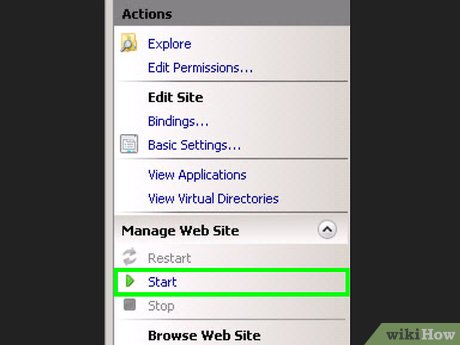 Start. In Services, in IIS Manager, click on Default Web Site. In the action pane, click on Start.
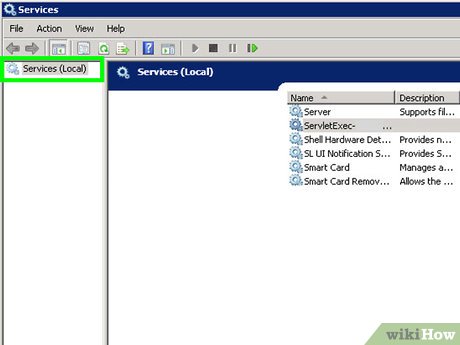 Go to Services. Choose ServletExec-(your instance), Restart.
- You can read your log to see that Servletexec restarted:in C:Program FilesNew AtlantaServletExec AS(your servername)open the ServletExec.log.
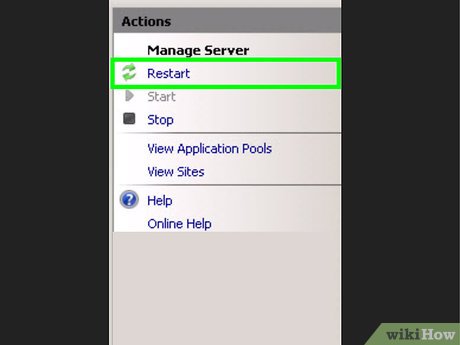 Go back to IIS Manager. Click on your server name (at the top) of your Sites, above Application Pools, in the Actions pane, click on Restart.
 Verify that your application is working. In ie on the server http://localhost/(your app).
- You probably have servletexec admin also working on that default page:either choose Start -> All Programs -> New Atlanta -> ServletExec 6.0 AS -> ServletExec Administrator directly in ie http://localhost/servletexec/admin you should get:
- If it is not working, maybe you forgot to set the ISAPI filters.
- In IIS manager on the server Home page, click on ISAPI Filters.
- You should see Name: "ServletExec" Executable: "c:InetPubScriptsServletExec_Adapter.dll"
 Verify that the CGI/ISAPI Restrictions are set.
- The path is: C:InetPubScriptsServletExec_Adapter.dll
- Description is: ServletExec
- Allow extension path to execute is checked
Part 2
Move My App to {MySite} Website
 Create the Scripts virtual directory
- Point it to the directory where the ServletExec_Adapter.dll is located.
- Your virtual directory MUST be named 'Scripts'
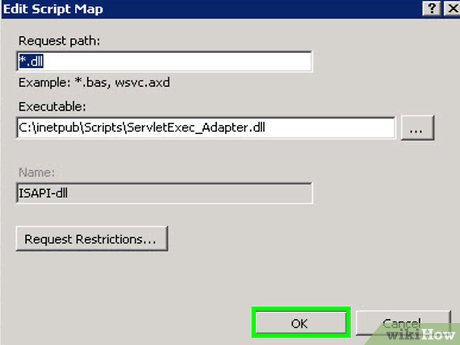 Fix the Handler Mappings.
- With the Virtual Directory 'Scripts' highlighted, click on 'Handler Mappings' in the main screen.
- Look for the path *.dll, if it is not there, add it using the 'Add Script Map' in the Actions panel.
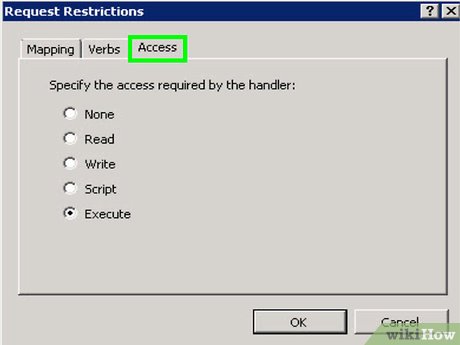 Verify the virtual Scripts directory.
- Close IIS, reopen IIS, reread step 2 and verify that in the virtual Scripts directory of {MySite} has ISAPI-dll local enabled.
- Click on that line, hit Edit, then Request Restrictions, Verbs, and Access tab as described in step 2.
- Click on Edit Feature Permission
- Verify that it has 'Script/Execute' as described in step 2 above.
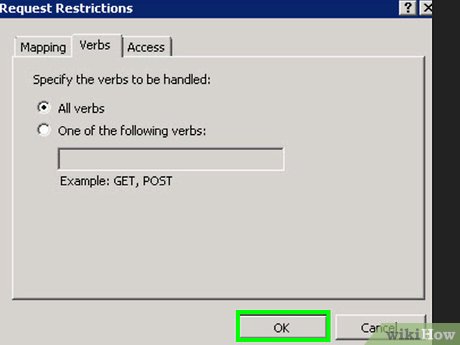 Try to access your app at this time you may get the 403. or 403.18 error. This is fixed in the next part.
Part 3
Activate the app in the new web site {MySite} (fix ServletExec 404 File directory not found, or the 403 - Forbidden message)
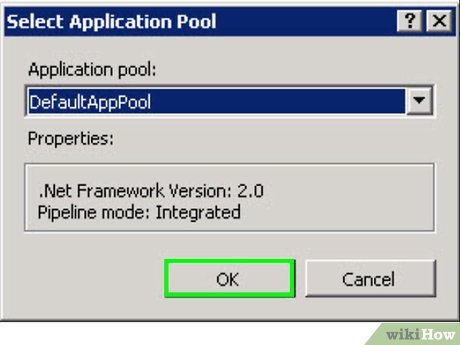 Deal with the application pools. In IIS, go to the Application Pools, Select DefaultAppPool (do not double click).
- Make a note of the number of applications in the DefaultAppPool.
- In the Actions panel, click on View Applications.
- You will see two entries for the /Scripts folder.
- Double click on one line.
- In the drop-down list of the Select Application Pool, you will have a {MySite} selection. Choose that. Click OK.
- If you look now you will see one entry for the /Scripts folder.
- Stop the Default Web Site if you now longer need it. You have moved your app to work on {MySite}). (see Part 1 on how to stop a website)
- Restart Servletexec. (see Part 1 on how to re/start Servletexec)
- Restart IIS. (see Part 1 on how to restart IIS)
- Test your app from a non-server location. {url ending in /{yourapp}}
- For example: https://something.something.mycompany.com/myapp/myinstance.
- You should now have successfully moved your app to work on your {MySite}.
FAQ
What is How to Get Servletexec Working on a Different Website in Iis 7 on about?
It provides a structured overview of servletexec, explains the main context, and highlights practical takeaways for readers.
Why does this topic matter?
Understanding the main concepts helps readers evaluate the issue, avoid common mistakes, and make better-informed decisions.
How should readers use this information?
Use the guidance as a practical starting point, confirm details that may have changed, and follow current product, safety, or security recommendations.
Related Articles
 Moving a Website to a New Server Does Not Interrupt Access8 minutes read
 The Difference Between Web Server and App Server3 minutes read
 What Is VPS? VPS Used to Do? What Is VPS Different from Server?5 minutes read
 'Monitor' the Visitor to Better Manage the Website11 minutes read
 How to Set up a Local Web Server (Local Web Server) on7 minutes read
 6 Websites Help Office People Relax Extremely Well After Stressful4 minutes read
Reader Comments 0
Sign in with email or Google to join the discussion.