Table of Contents
This practical guide explains how to convert From Legacy to UEFI in BIOS in a clear sequence, including preparation, key settings, common mistakes, and troubleshooting steps.
What This Guide Covers
- 1. How to access BIOS
- 2. How to convert Legacy to UEFI in BIOS
UEFI is newer software offering faster boot times, 64-bit support.
Learn more about Legacy and UEFI here:
In this article, TipsMake.com will show you how to convert from Legacy to UEFI in BIOS setup.
1. How to access BIOS
To set up Legacy - UEFI, you first need to access the BIOS. Below is an article that shows you how to enter the BIOS of different computer models and motherboards:
2. How to convert Legacy to UEFI in BIOS
In fact, each type of computer, each type of mainboard (motherboard - motherboard) will have a different BIOS setting. Therefore, the way to convert Legacy to UEFI is also a bit different.
- The most common way is to access Boot then select Boot mode and then choose Legacy or UEFI depending on your needs
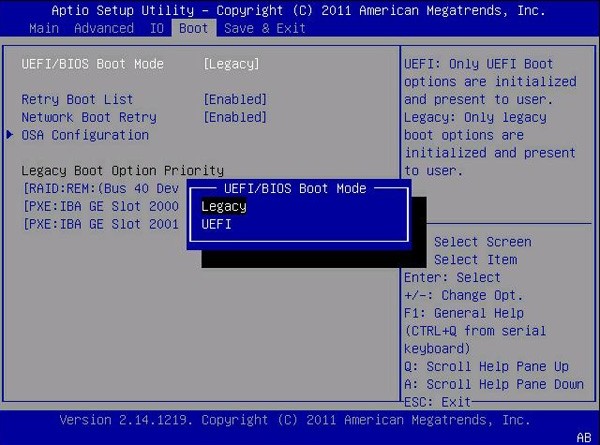
- Or there is a motherboard that will display UEFI/BIOS Boot Mode, click on it and select Legacy or UEFI
- On new HP laptops you can choose between UEFI Hybrid (using a combination of both UEFI and Legacy) or UEFI Native
- Some main lines also allow you to choose whether to boot UEFI first or Legacy first or just choose one of the two

- On Asrock's main line, UEFI is enabled by default and if you only use UEFI, please disable the CSM part.
- Some mainboards support UEFI by default and to enable Legacy support, you must enable it in the Legacy Support section.
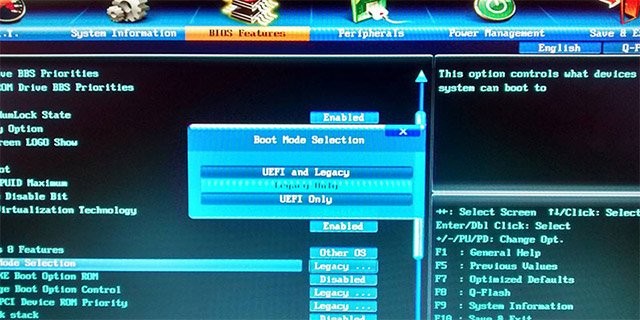
- With Gigabyte mainboards, you can find the UEFI and Legacy settings in the Boot mode selection section of the BIOS
Good luck!
Final Thoughts
Use the instructions and checks above in order, verify the result after each major step, and keep a backup whenever the process changes important files or system settings.
FAQ
What should I check before starting?
Confirm that your device or software version matches the instructions, save important data, and note the original settings before making changes.
What should I do if the steps do not work?
Restart the app or device, install available updates, review any error message, and repeat the steps carefully in the same order.
Can I undo the changes?
Many changes can be reversed, but the exact method depends on the feature. A backup or restore point gives you the safest way to recover.
Related Articles
 How to Convert Legacy BIOS to UEFI in Windows 107 minutes read
 Steps to Convert MRB to GPT Drive Structure in Windows 107 minutes read
 How to Check the Computer That Supports Efi // Uefi or Legacy4 minutes read
 What Is UEFI and Legacy Standards? Differences Between UEFI, Legacy, BIOS6 minutes read
 How to Switch from Legacy to UEFI in Your Computer's BIOS6 minutes read
 Intel Expects to End Legacy BIOS Support by 20204 minutes read
Reader Comments 0
Sign in with email or Google to join the discussion.