Table of Contents
This updated guide examines Drive: How to Back up Data and organizes the essential facts, background, and practical takeaways in clear American English.
Method 1
On Windows
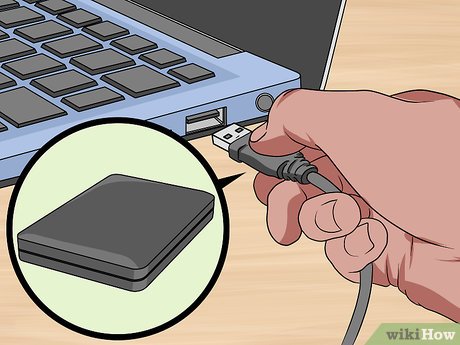 Connect an external hard drive to your Windows computer. You can do this by using one of your computer's USB ports. to back up your Windows computer, you will need an external hard drive on which to store the backup.
- Your external hard drive must be formatted for use with a PC for this to work.
- You can also use a high-capacity flash drive for this step.
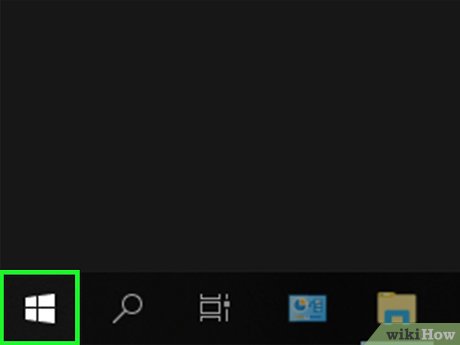 Open Start
 . Click the Windows logo in the bottom-left corner of the screen.
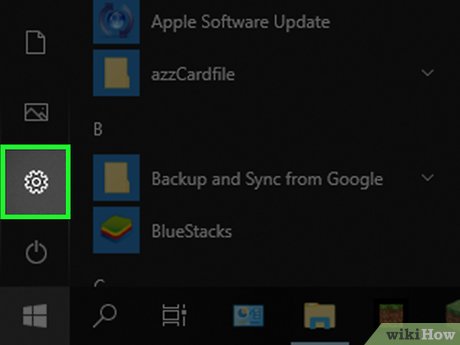 Open Settings
 . Click the gear-shaped icon in the lower-left side of the Start window.
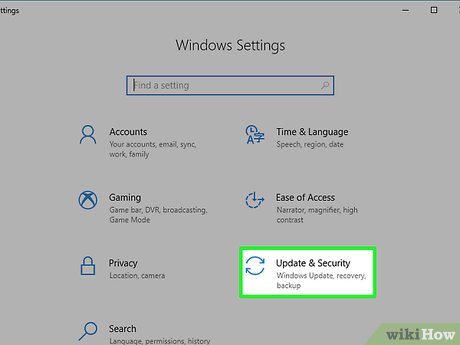 Click
Click Update & Security. You'll find this option in the Settings window.
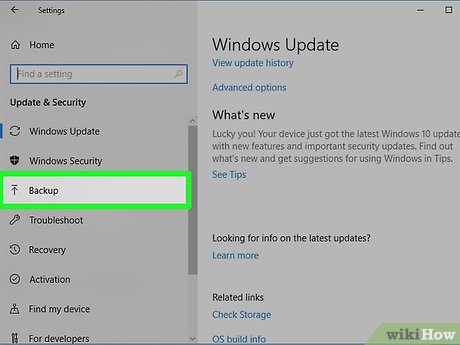 Click theBackuptab. It's in the upper-left side of the Update & Security page.
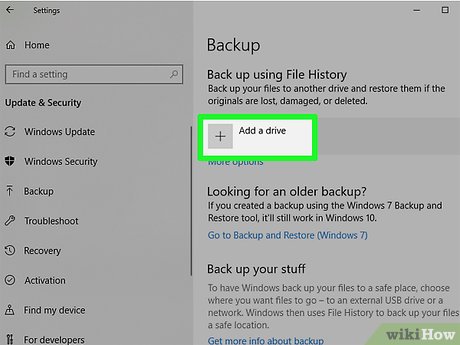 ClickAdd a drive. This is at the top of the page. A drop-down menu will appear.
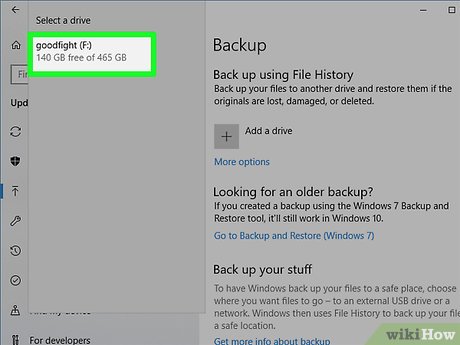 Select your external drive. Click your external drive's name in the drop-down menu. This will set it as your computer's backup drive.
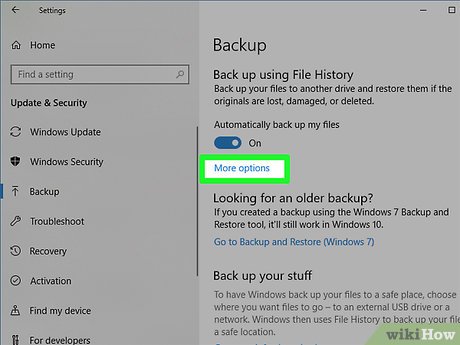 ClickMore options. It's a link below the "On" switch near the top of the page.
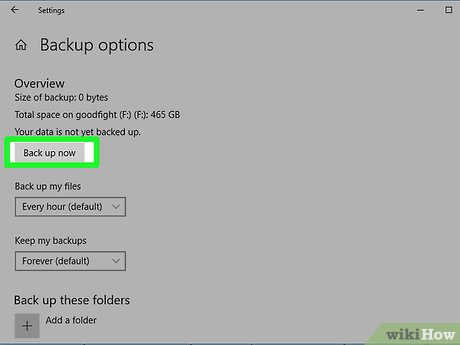 ClickBack up now. This option is in the upper-left side of the page. Doing so will prompt Windows to assemble the backup and begin loading it onto your external drive.
- You may have to click Back up now a couple of times before your drive will begin backing up.
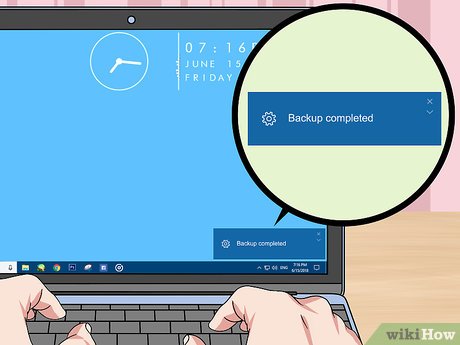 Wait for your backup to complete. You'll see a "Backup completed" notification in the bottom-right corner of your screen once the backup finishes, at which point you can eject and remove the external hard drive. EXPERT TIP
 Network Engineer & Desktop Support Spike Baron is the Owner of Spike's Computer Repair based in Los Angeles, California. With over 25 years of working experience in the tech industry, Spike specializes in PC and Mac computer repair, used computer sales, virus removal, data recovery, and hardware and software upgrades. He has his CompTIA A+ certification for computer service technicians and is a Microsoft Certified Solutions Expert.
 Spike Baron Network Engineer & Desktop Support
Windows 10 has a backup file history that works automatically. You can connect a backup drive that you leave attached all the time and Windows 10 will automatically backup your personal files as they change.
Method 2
On Mac
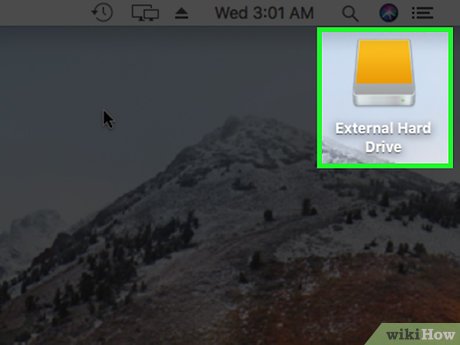 Connect an external hard drive to your Mac. You can do this by using one of your computer's USB-C ports. to back up your Mac, you will need an external hard drive on which to store the backup.
- Your external hard drive must be formatted for use with a Mac for this to work.
- You can also use a high-capacity flash drive for this step.
- If your selected external drive uses a USB 3.0 connection, you'll need a USB 3.0 to USB-C adapter to connect the drive to your computer.
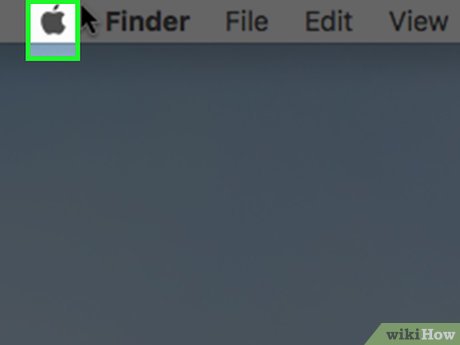 Open the Apple menu
 . Click the Apple logo in the top-left corner of the screen. This will prompt a drop-down menu.
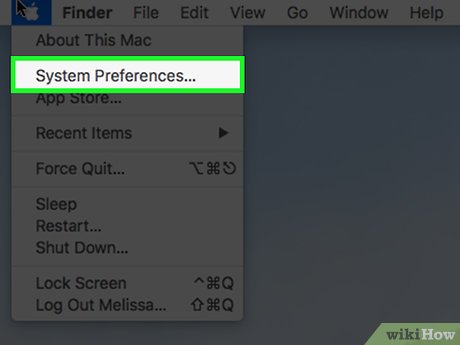 ClickSystem Preferences…. It's near the top of the drop-down menu.
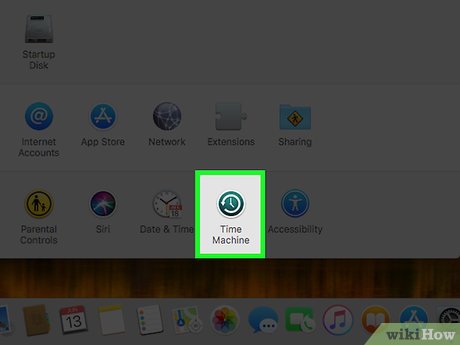 ClickTime Machine. This app icon resembles a green clock dial. The Time Machine window will open.
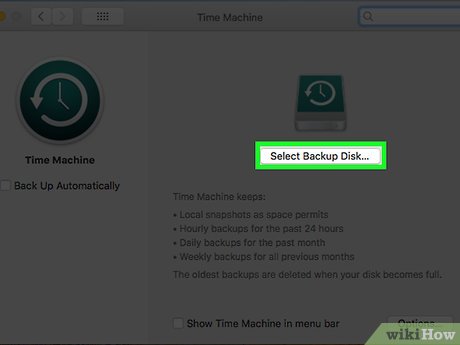 ClickSelect Backup Disk…. It's near the top of the page. A window will open.
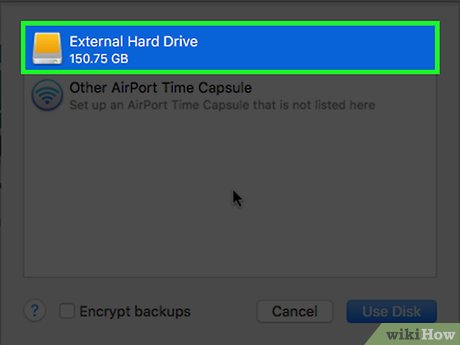 Select your external drive. Click your external drive's name in the window.
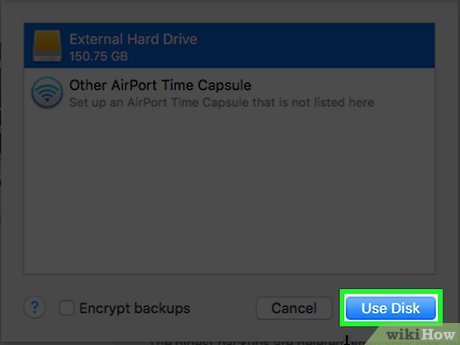 ClickUse Disk. It's at the bottom of the window. Doing so will set the external drive as your Mac's Time Machine backup drive.
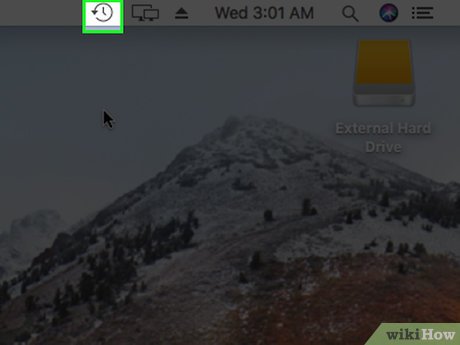 Click the Time Machine menu icon. It's the clock dial-shaped icon in the upper-right corner of the screen. A drop-down menu will appear.
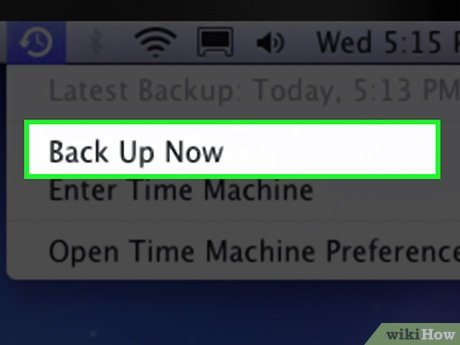 ClickBack Up Now. You'll see this near the top of the drop-down menu. Doing so prompts Time Machine to begin backing up your Mac to the external drive.
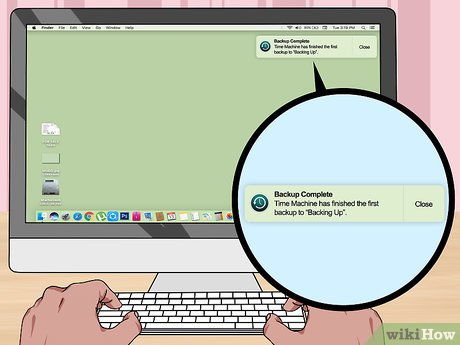 Wait for your backup to complete. You'll see a "Time Machine has finished..." message once the backup finishes, at which point you can eject and remove the external hard drive.
Method 3
On iPhone
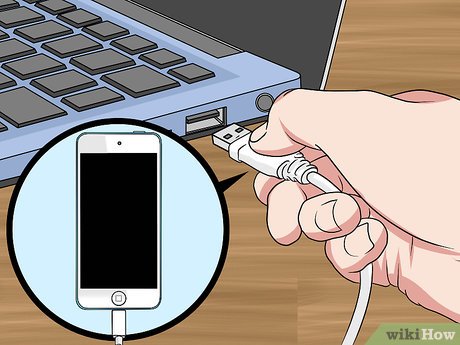 Connect your iPhone to your computer. Use the iPhone's USB charger cable to do so.
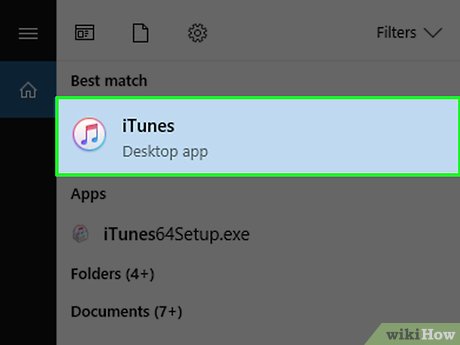 Open iTunes. It's a white app with a multicolored musical note on it.
- If prompted to update iTunes, click Download iTunes and then wait for the update to install. You may have to restart your computer after doing this before continuing.
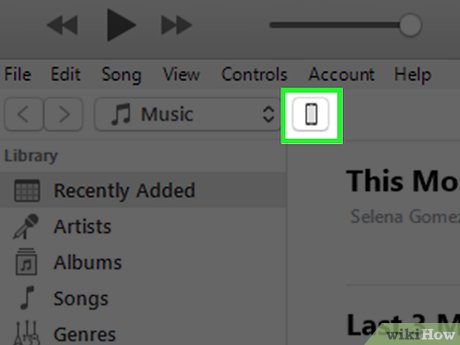 Click your iPhone's icon. This icon resembles an iPhone (or an iPad if you're backing up an iPad instead) in the upper-left side of the iTunes window. Doing so opens the iPhone's page.
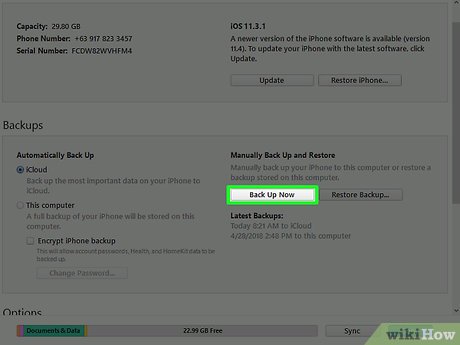 ClickBack Up Now. It's in the "Backups" section of your iPhone's page.
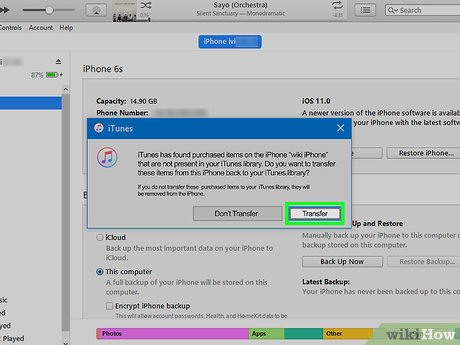 ClickTransfer Purchasesif prompted. If you've purchased items from the iTunes Store app on your iPhone, you'll be asked whether or not you want to store those purchases on your computer. Click Transfer Purchases to do so.
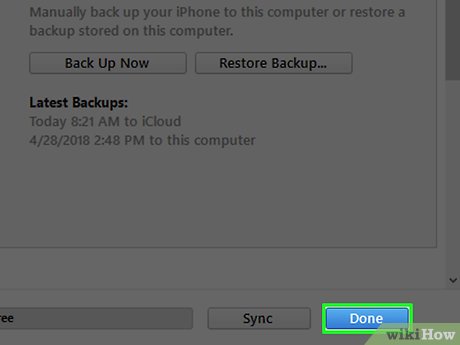 ClickDone. It's a blue button in the bottom-right corner of the window.
- If prompted, click Apply before continuing.
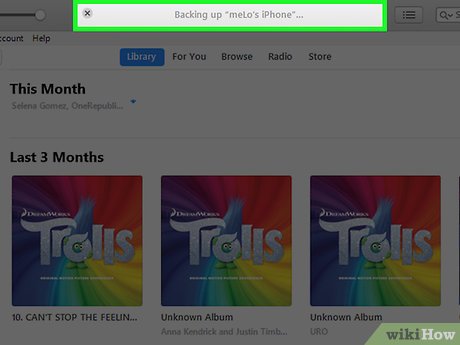 Wait for your iPhone to finish backing up. This will usually take less than 10 minutes. Once your iPhone is done backing up, you'll hear a noise, and the progress bar at the top of the window will disappear. At this point, you can disconnect your iPhone from your computer.
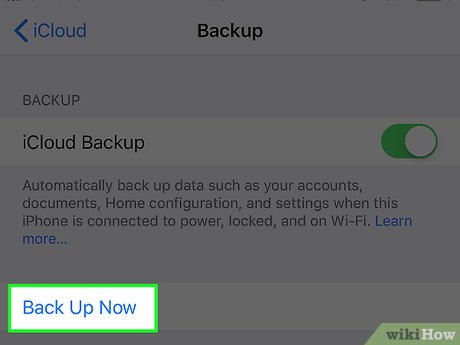 Back up your data using iCloud. To do this, you'll most likely need more than 5 gigabytes of iCloud space, and you'll need to be connected to Wi-Fi (it helps to be connected to a power source, too). To back up to iCloud:
- Open
 Settings
 - Tap your name at the top of the page.
- Tap iCloud
- Scroll down and tap iCloud Backup
- Tap the white "iCloud Backup" switch

- Tap OK when prompted.
- Tap Back Up Now
- Open
Method 4
On Android
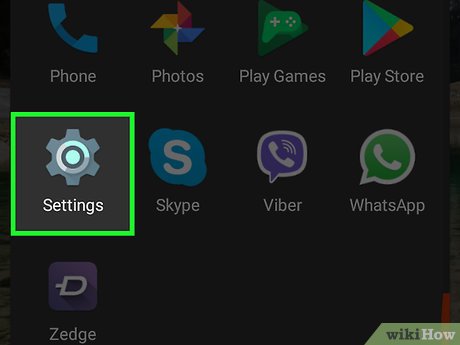 Open your Android's
 Settings. Tap the Settings app, which resembles a gear-shaped icon or a set of sliders.
- You can also use two fingers to swipe down from the top of the screen and then tap the gear-shaped icon in the upper-right or upper-left corner.
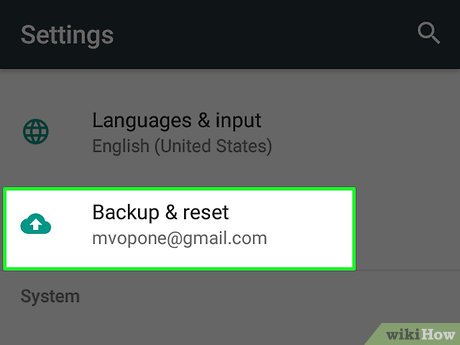 Scroll down and tapBackup and reset. It's near the middle of the Setting page.
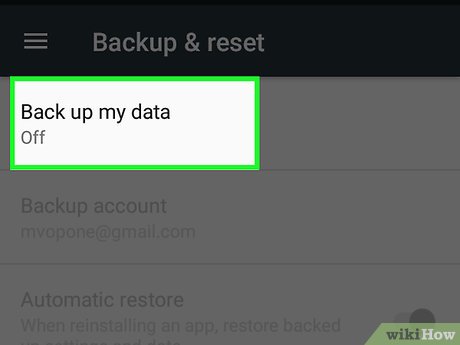 TapBack up my data. You'll see this under the "Google account" heading.
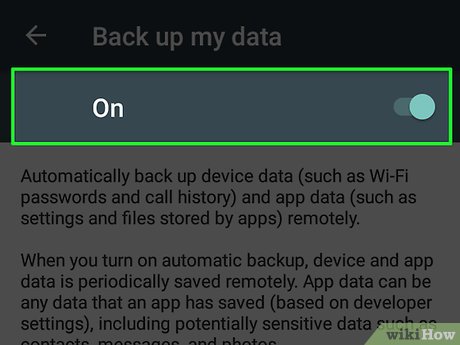 Check theOnoption. Doing so will enable automatic backups for your Android.
- On some Android phones or tablets, you may have to tap the white "Off" switch
 to turn the switch to "On"
- On some Android phones or tablets, you may have to tap the white "Off" switch
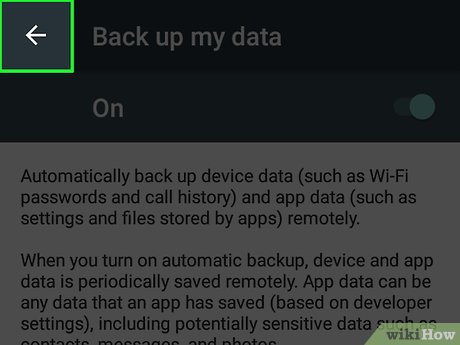 Tap the "Back" arrow. It's in the top-left corner of the screen.
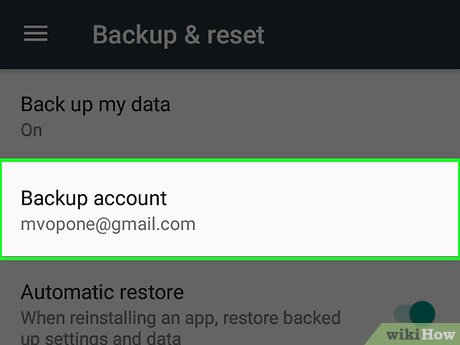 Make sure that your Google account is the backup account. Tap Backup account and look for your Google email address. If you don't see it here, tap Add account and enter the email address and password for your preferred Google account.
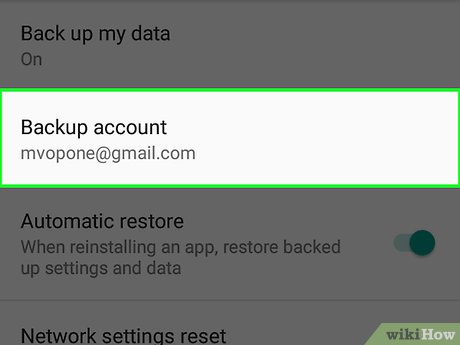 Enable Automatic Restore. Tap the white "Automatic restore" switch
 . It will change color
 which signifies that Automatic Restore is on. This feature automatically updates any Android that you sign into with your backed-up settings, apps, and files.
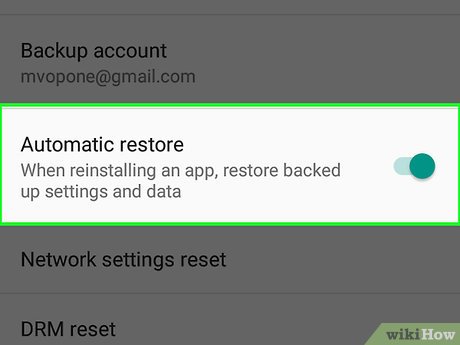 Tap the "Back" button. This will take you back to the Settings page.
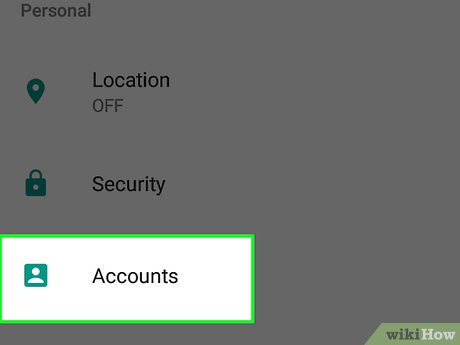 Scroll up and tapAccounts. You'll find this near the top of the page. The last thing you'll need to do is make sure that your Google account's information is being backed up.
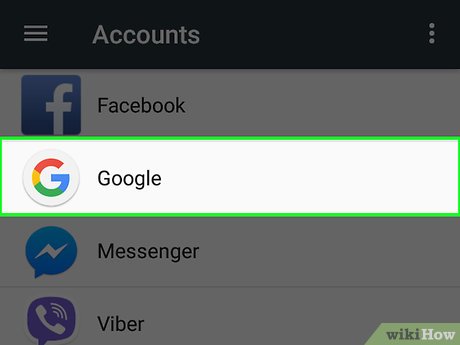 TapGoogle. It should be the top option on this page.
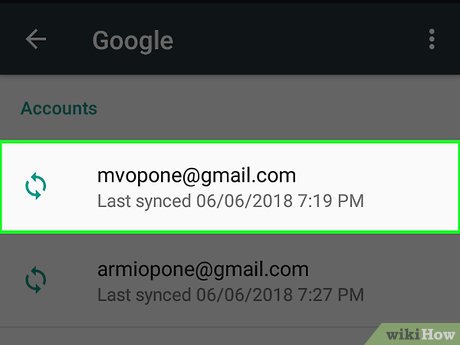 Select your Google account. Tap the account that you want to back up.
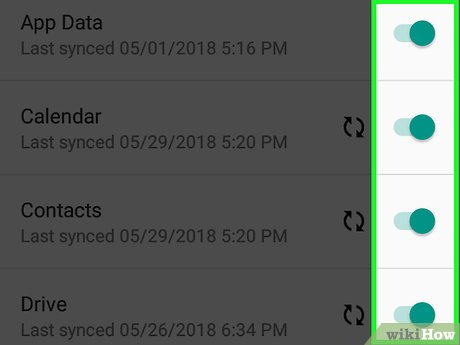 Make sure that everything is set to back up. Scroll down through all of the backup items. If you see a white switch
 to the right of any item on this page, tap it to enable the backup for that item.
- Colored switches next to items mean that those items are backing up.
- You don't have to back up all data here, but make sure that all of the things that you care about have backup enabled.
FAQ
What is Drive: How to Back up Data about?
It provides a structured overview of drive, explains the main context, and highlights practical takeaways for readers.
Why does this topic matter?
Understanding the main concepts helps readers evaluate the issue, avoid common mistakes, and make better-informed decisions.
How should readers use this information?
Use the guidance as a practical starting point, confirm details that may have changed, and follow current product, safety, or security recommendations.
Related Articles
 How to Back Up Data: Practical Guide10 minutes read
 How to Back up and Restore Data Saved on PS410 minutes read
 How to Back up iPhone Data to ICloud2 minutes read
 How to Back up iPhone and Computer Data3 minutes read
 How to Back Up a Mac: Step-by-Step Guide6 minutes read
 Free Tools for Backing up Data Securely for Your Computer4 minutes read
Reader Comments 0
Sign in with email or Google to join the discussion.