Table of Contents
This article provides a clear overview of Sort Data in Excel, with the main facts, useful context, and practical details organized for easy reading.

Article on how to organize data on Excel 2010 spreadsheets.
Step 1: Select the data area you may need to sort, select the Home tab and select Sort & Filter and choose the type of arrangement you want.
- If you may need to sort the column of text data, when selecting Sort & Filter, you will have the choice of sorting: Sort A to Z (sort from A to Z), Sort Z to A (sort from Z to A).

+ If you choose Sort A to Z , the data will be sorted as follows:

+ If you choose Sort Z to A , the data will be sorted as follows:

If you sort the column of numeric data, then choose Sort & Filter will appear choosing the arrangement: Sort Smallest to Largest (sort from small to large) and Sort Largest to Smallest (sort from large to small ).

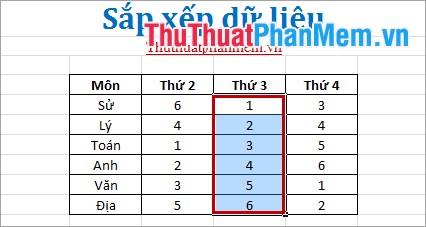
+ If you choose Sort Smallest to Largest , the results will be arranged as follows:
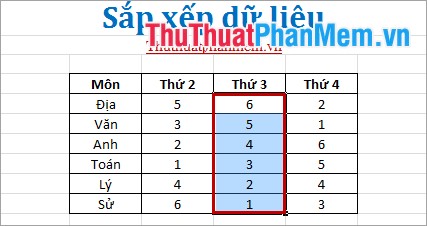
+ If you choose Sort Largest to Smallest , the results after sorting:
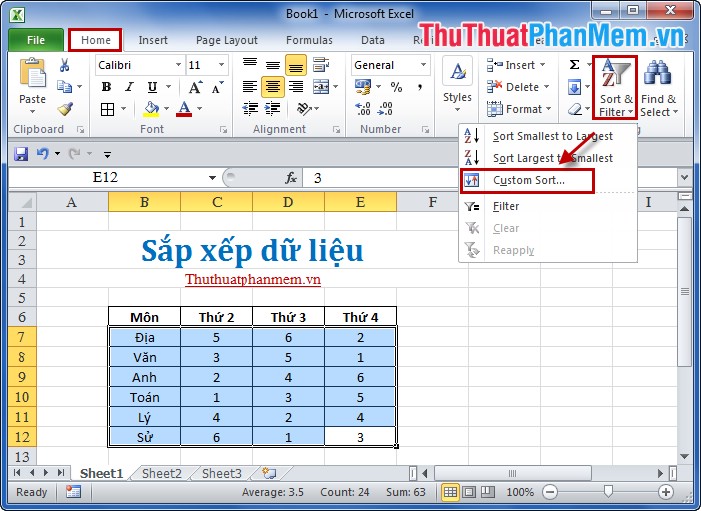
Step 2: You can sort by selecting the data area to sort, select the tab Home -> Sort & Filter -> Custom Sort .
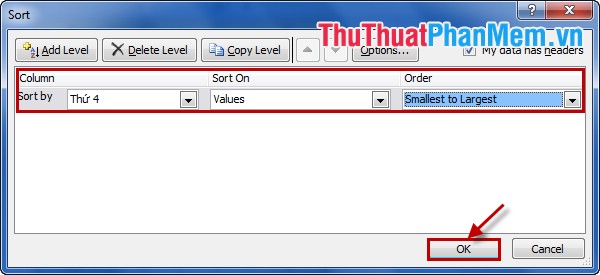
In the Sort table, you select some information:
Sort by you choose the column you may need to sort.
Sort On sort based on what aspect.
Order sort by increasing or decreasing, A -> Z or Z-> A.
Then click OK to sort.
The results will be organized according to your wishes.
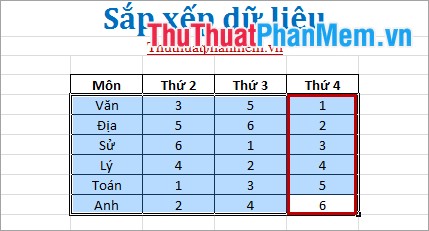
For versions of Excel 2007 or Excel 2013 you do the same. So you already know how to organize data on an Excel spreadsheet. Good luck!
FAQ
What is the main focus of Sort Data in Excel?
The article explains the most important facts, context, and practical details related to Sort Data in Excel.
Who may find this information useful?
It is useful for readers who want a clear overview, practical context, and a better understanding of the subject.
What should readers verify before taking action?
Check current product versions, official requirements, regional availability, and any details that may have changed since the original publication.
Related Articles
 How to Sort Cells Alphabetically in Excel: Complete Guide4 minutes read
 Sort the Database in Excel4 minutes read
 MS Excel 2007 - Lesson 8: Sort and Filter: Excel Data Filtering3 minutes read
 How to Sort Data in Excel Using Sort Is Extremely Simple5 minutes read
 How to Reverse Data in Columns on Excel: Excel Data Spread3 minutes read
 Excel Does Not Have Sort Oldest to Newest, What Should I Do?6 minutes read
Reader Comments 0
Sign in with email or Google to join the discussion.