Table of Contents
This guide provides a practical overview of Instructions on How to Change the Default Font in PowerPoint, including its main features, benefits, limitations, and important considerations.
At this article, Thuthuatphanmem. vn uses PowerPoint 2013 version, you can apply the same for PowerPoint 2016, 2019 and Microsoft 365. Previous versions will no longer be suitable for this tutorial.
Change the default font in PowerPoint
PowerPoint has a built-in Slide Master feature so you can edit slide formats like effects, colors, background styles, and fonts. You will set these settings for the first slide, the next slide will automatically be applied as such.
Step 1: At the interface working with your presentation, select View on the menu bar, then select Slide Master in the tools section.

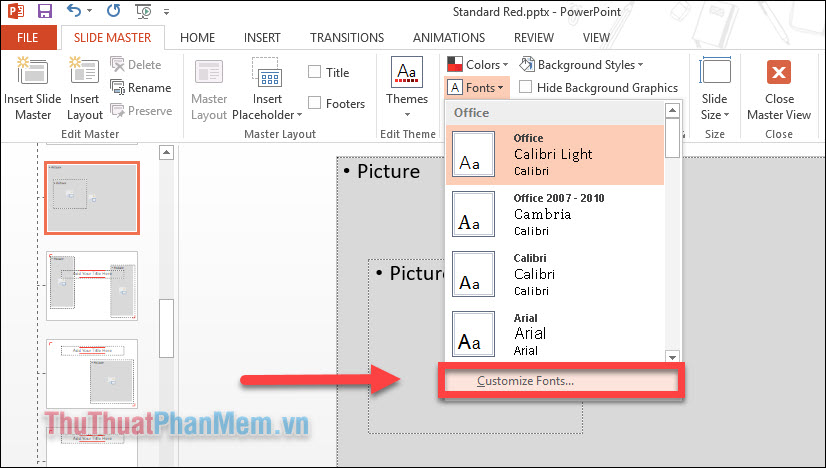
Step 2: Now you will see the column on the left as the slides are simplified, showing only the slide layout. Click on the first slide. Now pay attention to the Background, open Fonts . Here, drop down a list of default font options for Heading (Body) and Body (content) slides. You can immediately choose one of them if you like it.

If not, pay attention to the end of the list and click Customize Fonts. to create your own new option.
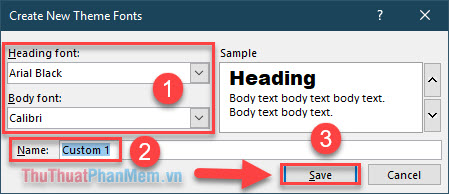
Step 3: A small window appears, Create New Theme Fonts , you proceed to change the font as you want for Heading font (font for title) and Body font (font for content) (1) .
Give it a memorable name (2) and finally Save (3) .
Step 4: Go back to the Slide Master interface and the Fonts section, now a new option will be displayed. Click on this setting .

Step 5: Select the View >> Normal tab again to return to your usual slide editing interface.

Check the font section and you'll see the results that the font for Heading as well as Body has changed to your liking.

Save the font template to use for later
After you have completed the steps to change the default font for PowerPoint as above, you can save it for future use without reset.
Step 1: In the editing interface, slideshow, click File >> Save As or press the key combination Ctrl + Shift + S .

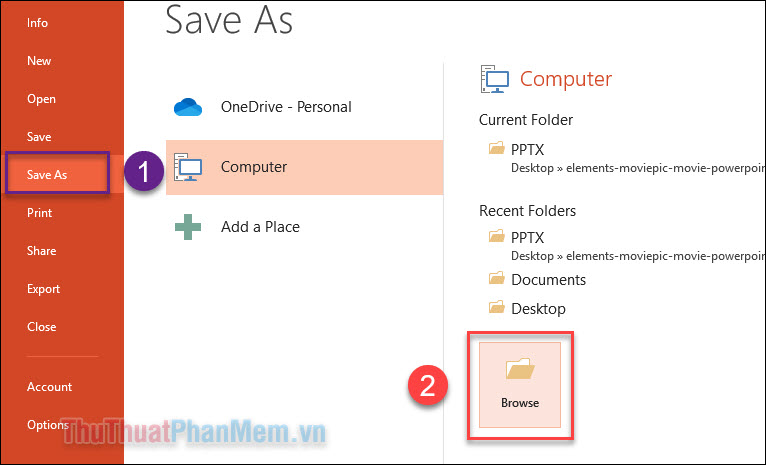
Step 2: In the file saving window, navigate to the DocumentsCustom Office Templates folder .

Then name the presentation template and select the file type as PowerPoint Template (*. potx) , note the file ending with . potx .
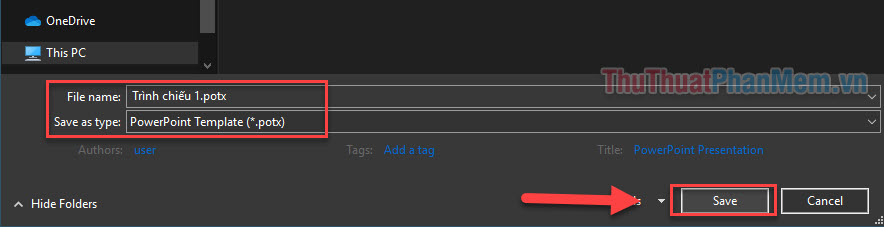
So you've completed the steps to save the presentation template, including the default font settings for PowerPoint.
The next time you use it, open it as follows:
Open PowerPoint , in New , click on PERSONAL. Here will appear the slideshow template you saved earlier, just click open it and start editing!

Above is the guide to change the default font in PowerPoint. If you have any further questions, please comment below the article! Good luck!
FAQ
What should I know about Instructions on How to Change the Default Font in PowerPoint?
Focus on the key features, requirements, limitations, and practical use cases explained in this guide.
How do I get the best results with Instructions on How to Change the Default Font in PowerPoint?
Follow the recommended steps, use current software or information, confirm compatibility, and review settings before major changes.
Are there any risks or limitations?
Potential limitations depend on compatibility, data quality, cost, privacy, support, and how the product or method is used.
Related Articles
 How to Change the Default Font in Powerpoint5 minutes read
 How to Change the Default Font in PowerPoint - Choose the Font5 minutes read
 How to Change Fonts in PowerPoint Slides Extremely Quickly3 minutes read
 How to Change Fonts in Windows 11: Step-by-Step Guide9 minutes read
 Instructions for Setting the Default Font in Microsoft Word4 minutes read
 How to Change the Default Font in Libreoffice3 minutes read
Reader Comments 0
Sign in with email or Google to join the discussion.