Table of Contents
This updated guide examines How to View Xml Files and organizes the essential facts, background, and practical takeaways in clear American English.
Method 1of 3:
Using a Text Editor
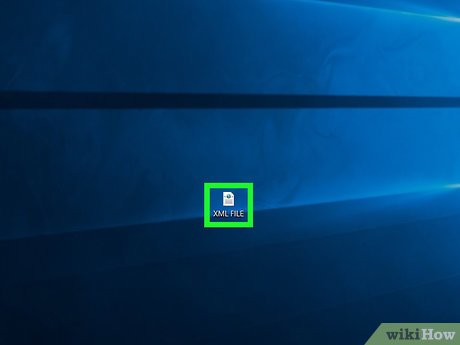 Find the XML file. You can use your computer's "Open With" feature to open the XML file in a text editor, which will allow you to see the XML file's code in plain-text form.
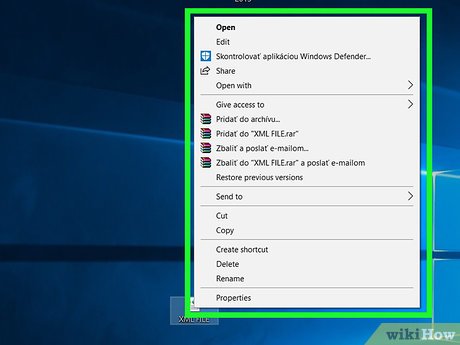 Right-click the XML file. Doing so will prompt a drop-down menu.
- On a Mac, click on the XML file, then click File in the upper-left side of the screen.
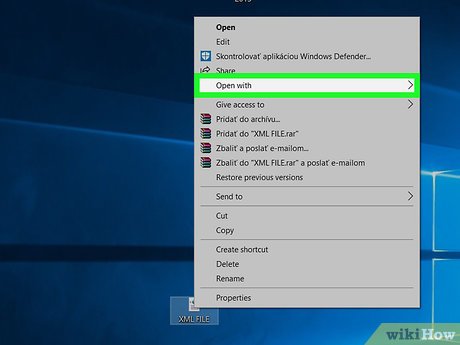 SelectOpen with. It's near the middle of the drop-down menu. A pop-out menu will appear.
- On a Mac, you'll find Open With in the File drop-down menu.
- If you don't see Open with on Windows, click once the XML file to select it, then right-click the file.
 Select your computer's text editor. Click Notepad on Windows, or click TextEdit on a Mac. Doing so will open the XML file's code in the text editor.
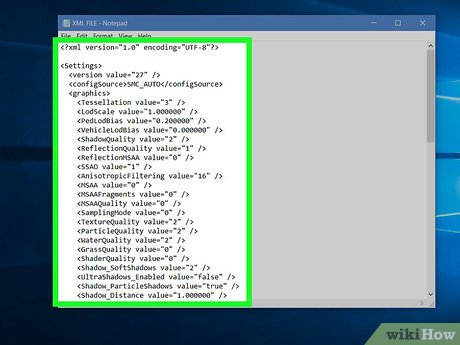 Review the XML file's code. While the XML file's actual formatting (if present) won't display due to being opened in a text editor, you will be able to see the code that was used to create the XML file.
- If you want to see the XML file's formatting, try using a browser or using an XML viewer.
Method 2of 3:
Using a Browser
 Open your preferred browser. Most popular web browsers can display XML files' code, though Microsoft Edge cannot:
- Google Chrome
- Firefox
- Safari
 Open a new tab. Click the "New Tab" button, which is usually to the right of the right-most tab at the top of the window, to do so.
- In most web browsers, you can also pressCtrl+T(Windows) or⌘Command+T(Mac) to open a new tab.
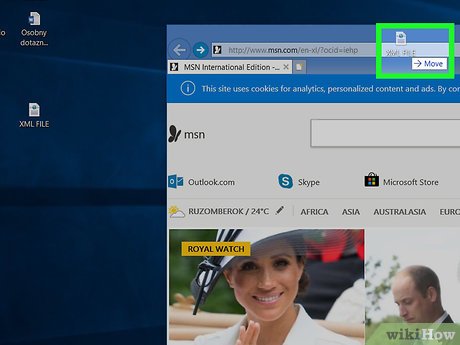 Drag the XML file into your browser. Open the XML file's location, then click and drag the file onto the browser window and drop the file there.
 Review the results. Dragging and dropping your XML file into the browser will prompt the browser to display the XML file's code in a "tree" view.
- You can click the + or - (or, if you're using Chrome, the triangle) to the left of a main tag in the XML code to minimize or expand the code.
Method 3of 3:
Using an XML Viewer
 Open the XML Viewer website. Go to http://www.xmlviewer.org/ in your computer's web browser. This viewer allows you to upload an XML file to view its code, as well as choose different viewing formats.
 ClickBrowse. You'll find this button near the top of the window. Doing so opens a File Explorer (Windows) or Finder (Mac) window.
 Select your XML file. Go to the location of your XML file, then click the XML file once to select it.
 ClickOpen. This option is in the bottom-right corner of the window. Your XML file will be uploaded to the viewer, and its code will be displayed on the left side of the page.
 ClickFormat. It's a button in the middle of the window. Doing so will cause your XML file's text to display in color-coded format in the "Result" window on the right side of the page.
- Sections of XML which are the same (non-black) color correspond to each other. For example, green text refers to tags.
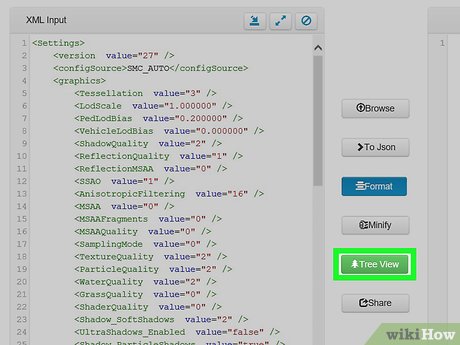 Use the file's "Tree" view. Clicking the green Tree button in the middle of the page will format the "Result" window, making the code easier to read.
- You can click each of the headings in the "Tree View Result" window to minimize or expand them.
FAQ
What is How to View Xml Files about?
It provides a structured overview of file, explains the main context, and highlights practical takeaways for readers.
Why does this topic matter?
Understanding the main concepts helps readers evaluate the issue, avoid common mistakes, and make better-informed decisions.
How should readers use this information?
Use the guidance as a practical starting point, confirm details that may have changed, and follow current product, safety, or security recommendations.
Related Articles
 Frame View in SQL8 minutes read
 How to Check Recently Opened Files on Windows8 minutes read
 How to Quickly View PSD Files Without Opening Photoshop4 minutes read
 How to View Files on a Networked Computer: Step-by-Step5 minutes read
 Click: How to Locate Temporary Internet Files9 minutes read
 How to Check Hidden Files and Folders on Linux7 minutes read
Reader Comments 0
Sign in with email or Google to join the discussion.