Table of Contents
This updated guide examines How to Turn on Windows Defender and organizes the essential facts, background, and practical takeaways in clear American English.
Method 1
Turning on Windows Defender
 Make sure you recently turned off Windows Defender. If you turned off Windows Defender between now and the last time you restarted or shut down your computer, Windows Defender should still be disabled. You can re-enable it by following this method's instructions.
- If you didn't turn off Windows Defender since the last time you restarted your computer, Windows Defender is most likely disabled because you installed a different antivirus program. You'll need to remove the antivirus program to re-enable Windows Defender.
 Open Start
 . Click the Windows logo in the bottom-left corner of the screen.
 Open Settings
 . Click the gear-shaped icon in the bottom-left corner of the Start menu. The Settings window will open.
 Click
Click Update & Security. It's a circular arrow-shaped icon in the Settings window.
 Click theWindows Securitytab. This tab is on the left side of the window.
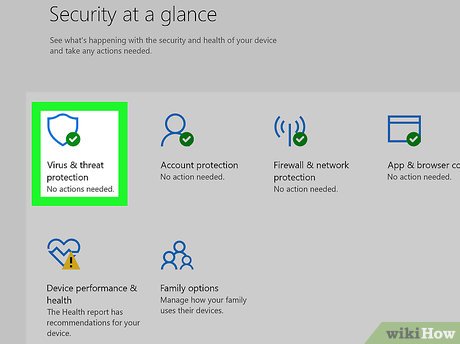 ClickVirus & threat protection. It's in the middle of the window. Doing so opens the Windows Defender window.
- You may have to expand the Windows Defender window by clicking the square in the top-right corner of the window before proceeding.
 ClickVirus & threat protection settings. You'll find this link in the middle of the menu.
 Click the "Off"
 switch below the "Real-time protection" heading. You'll find this heading near the top of the window.
 ClickYeswhen prompted. Doing so will turn back on Windows Defender.
Method 2
Uninstalling a Third-Party Antivirus Program
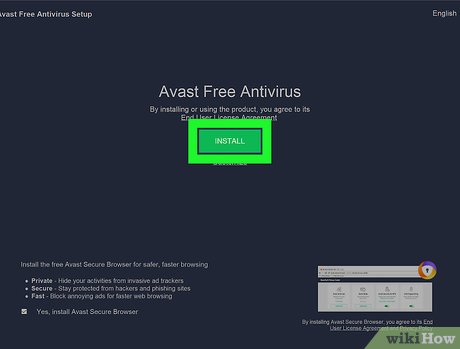 Determine whether you intentionally installed an antivirus program. If you did install an antivirus program on purpose, you should know its name. If not, another program probably installed the antivirus software as part of its installation process, meaning you'll need to look for a program whose name you don't recognize.
 Open Start
 . Click the Windows logo in the bottom-left corner of the screen.
 Open Settings
 . Click the gear-shaped icon in the bottom-left corner of the Start menu. The Settings window will open.
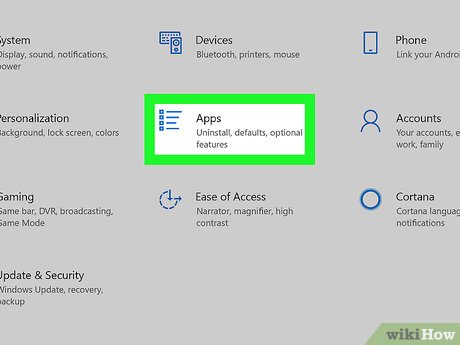 ClickApps. It's in the middle of the Settings window.
 Sort by date if necessary. If you don't know the antivirus program's name, you can narrow it down by showing the most recently installed programs and working backward from there. To do so, click the "Sort by" menu, then click Install date in the drop-down menu.
- If you know the antivirus program's name, skip this step.
 Find the antivirus program. Scroll through the list of installed apps until you find the program that you need to uninstall.
- If you didn't intentionally install an antivirus program, you'll probably find the program you need to uninstall near the top of the list of programs if your Windows Defender only recently turned off.
 Click the program's name. Doing so expands the program's name to display an Uninstall button.
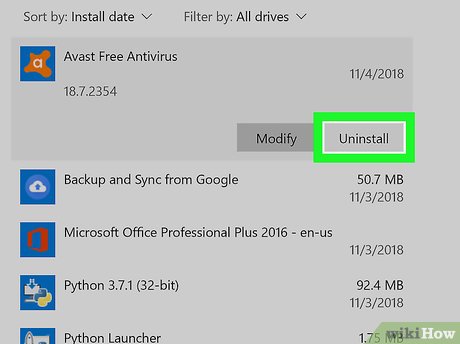 ClickUninstall. You'll find this under the program's name.
 ClickUninstallwhen prompted. Doing so opens the program's uninstallation window.
 Follow the uninstallation prompts. Click through the on-screen uninstall prompts, making sure to select the "Delete all files" (or similar) option if asked whether you want to keep residual files and apps.
 Delete other associated programs. Some antivirus programs install additional programs to handle things like web security; if you see other programs which come from the same developer or have similar names to the program you just uninstalled, uninstall them as well before proceeding.
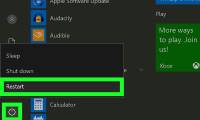
 Restart your computer. Click Start
  , click Power
  , and click Restart in the pop-up menu. Your computer will restart like usual, after which point your Windows Defender program should be back up and running.
- If Windows Defender doesn't turn back on after your computer finishes restarting, you can try turning it on manually.
FAQ
What is How to Turn on Windows Defender about?
It provides a structured overview of click, explains the main context, and highlights practical takeaways for readers.
Why does this topic matter?
Understanding the main concepts helps readers evaluate the issue, avoid common mistakes, and make better-informed decisions.
How should readers use this information?
Use the guidance as a practical starting point, confirm details that may have changed, and follow current product, safety, or security recommendations.
Related Articles
 How to Turn Off the Windows Defender Summary Notification on4 minutes read
 How to Turn Off Windows Defender Completely on Windows 104 minutes read
 How to Turn Off, Turn on Windows Defender in Windows 104 minutes read
 Click: How to Turn Off Windows Defender in Windows 105 minutes read
 How to Turn on Windows Defender: Clear Instructions6 minutes read
 How to Turn Off Windows Defender on the Current Windows 108 minutes read
Reader Comments 0
Sign in with email or Google to join the discussion.