Table of Contents
This guide explains how to split the Background in Standard Photoshop, with clear steps, practical tips, and important checks before you begin.

In the article about basic Photoshop tutorial, Thuthuatphanmem. vn will guide you how to split the background in the most standard Photoshop!
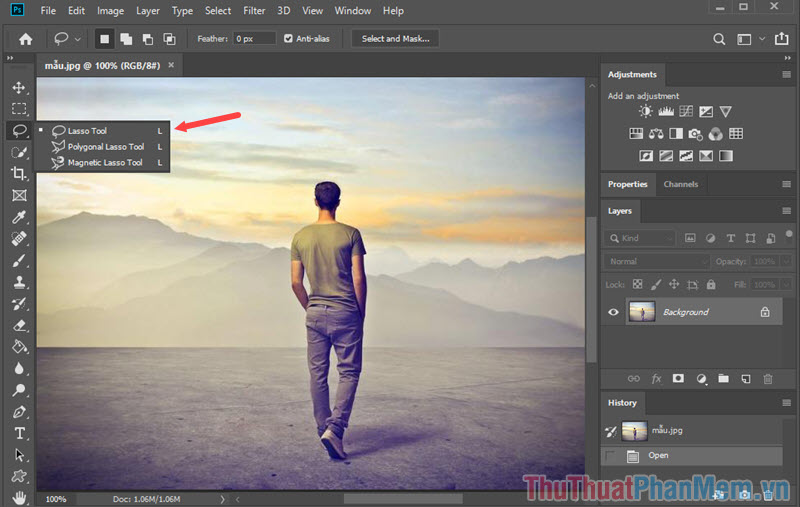
Step 1: After opening the image, you proceed to select the object to split the background, the tool here I choose is the Lasso Tool , you can press the L key to select this tool.
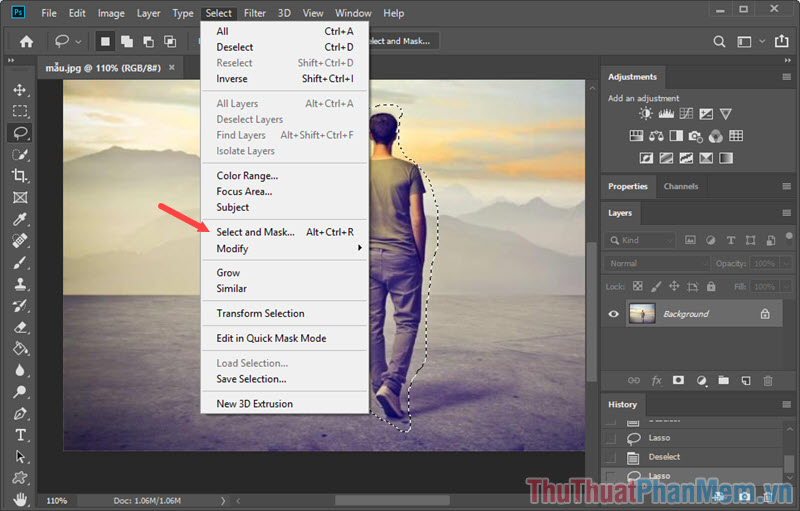
Step 2: The way you proceed to localize the object, after selecting the object area to split the background, go to menu Select => Select and Mask.
Step 3: Click the mouse to select Refine Edge Brush Tools on the left hand side or press the R button on the keyboard. Next, select the Smart Radius section and move the cursor to remove the remaining white background areas.

Step 4: Go to the Output Settings section and select the Decontaminate Colors section and the Output section to select New Layer . Finished editing, you click OK to save.

Step 5: After clicking OK there will be a new layer with the object was separated. At this time, you can use the image has been split to combine with other images.

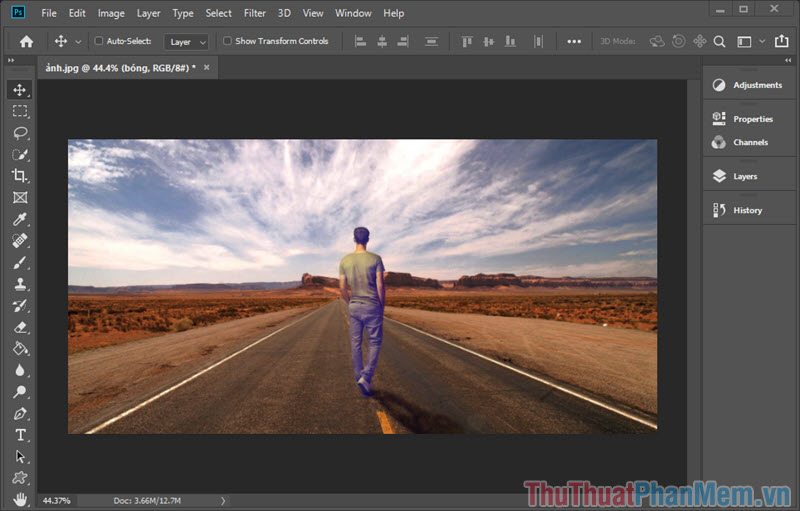
Step 6: Below is a sample where I stitched the split image into a new background.
With the best guide on how to split the background in Photoshop, follow the steps above and if you have any difficulties in performing, please send a comment to Thuthuatphanmem in the comment box below the article!
FAQ
What should I know about Split the Background in Standard Photoshop?
Focus on the key features, requirements, limitations, and practical use cases explained in this guide.
How do I get the best results with Split the Background in Standard Photoshop?
Follow the recommended steps, use current software or information, confirm compatibility, and review settings before major changes.
Are there any risks or limitations?
Potential limitations depend on compatibility, data quality, cost, privacy, support, and how the product or method is used.
Related Articles
 How to Use Photoshop CS5 - Part 9: Delete Complex Backgrounds in6 minutes read
 How to Clear the Background in Photoshop Standard, Clean3 minutes read
 Instructions to Separate Photos from the Background in Photoshop6 minutes read
 How to Split Photos with Photoshop: Edit Photos11 minutes read
 How to Split an Online Photo Background3 minutes read
 Let Your Photos 'Shine' with Gimp's Background Change Feature9 minutes read
Reader Comments 0
Sign in with email or Google to join the discussion.