Table of Contents
This guide explains how to split Tables, Join Tables in Word, with clear steps, practical tips, and important checks before you begin.
1. How to split a table in Word
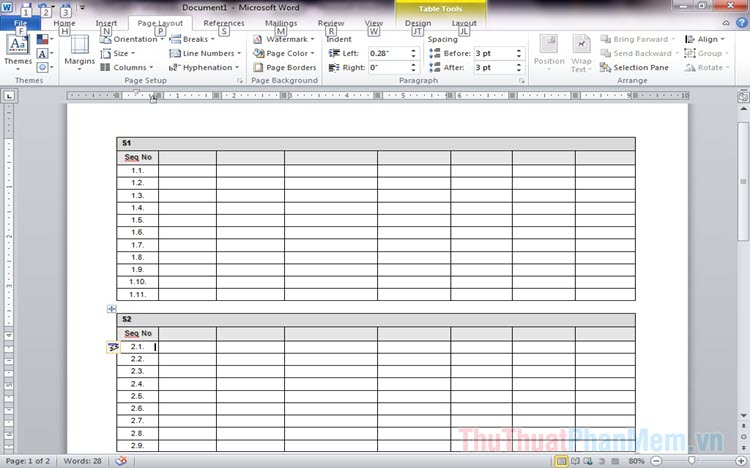
You place the cursor to the position to separate the table (1) . Next you go to the Layout menu (2) => Split Table (3) .

After separating the table is completed, we will be two separate tables as shown below is successful.

2. Join tables in Word
Step 1: Double-click the icon [+] to black out the entire table to connect.

Step 2: You hold the left mouse button on the icon [+] and move it to the table to be paired.

And then the two tables will automatically merge as usual.

Through the instructions in the article, splitting and joining tables in Word is quite easy and fast, isn't it? I wish you success!
FAQ
What should I know about Split Tables, Join Tables in Word?
Focus on the key features, requirements, limitations, and practical use cases explained in this guide.
How do I get the best results with Split Tables, Join Tables in Word?
Follow the recommended steps, use current software or information, confirm compatibility, and review settings before major changes.
Are there any risks or limitations?
Potential limitations depend on compatibility, data quality, cost, privacy, support, and how the product or method is used.
Related Articles
 How to Split Tables and Join Tables in Word3 minutes read
 Create a Word Table: How to Separate Tables and Join Word Tables3 minutes read
 How to Insert and Create Tables in Word 2016: Step-by-Step Guide7 minutes read
 Instructions for Deleting Table Paths in Word4 minutes read
 How to Merge and Split Cells in Word4 minutes read
 MS Word - Lesson 8: Creating a Table: Microsoft Word 20073 minutes read
Reader Comments 0
Sign in with email or Google to join the discussion.