Table of Contents
This updated guide examines Control: How to Protect Kids' Online Safety on Windows and organizes the essential facts, background, and practical takeaways in clear American English.
Method 1of 3:
Set parental control in Windows
- Yes, the Windows operating system has built-in parental control function and you can manage and control your children's Internet use without installing any extra software. The main factor of setting built-in parental control feature in Windows is to set multiple user account on children's PC. So let's divide the tutorial into two parts.
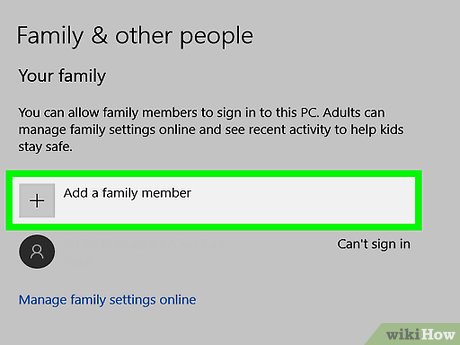 Create a new user account for PC.
- Click on 'Start' on PC's bottom left corner.
- Click 'Manage another account' Create a new account'
- You can see there are already two accounts here. The Administrator account has full control of the computer, and the Standard account is set up for other users.
- In the creating new account window, check Standard account and type username in it, click 'Create Account' and then you can see the new account you created.
- You can set a password for this user account or not by click on 'Create a password'.
 Set up parental control
- Choose account you want to control, click on 'Set up Parental Control'.
- First of all, select the option of 'On, enforce current settings' to turn on the parental control.
- Time limits: you can click and drag the hours you want to block or allow here.
- Games: you can control which type of games you children can play, or you can click 'no' to block all games from your children's account.
- Allow and block specific programs: You can allow or block specific applications have been installed in PC.
Method 2of 3:
Set parental control on Interner Explorer
 Open the IE browser, click on 'Tools' Internet Options'.
 Click on 'Content' Enable', and then this will turn on content advisor ratings, select what you want to allow or block.
 Move the slider to the right or left to decide the blocking level.
 Input the allowed websites by clicking on 'Approved Sites'.
 Navigate to 'General' tab, and set password to prevent other users changing the settings.
- When you use the ratings feature, you can see at least 4 main headings that include language, sex, nudity, and violence. However, if you use the rating feature, some sites simply contain words 'violence', 'sex' or 'kill' will be blocked even though it may be an educational sites related to 'violence' or 'sex'.
Method 3of 3:
Set parental control on Firefox
- Firefox doesn't have built-in parental control, so before setting parental control on Firefox:
 Download and install the add-on.
 Install the add-on which fits your requirements.
 Set the explicit material that you want to block. The method of setting parental control will be different depending on which add-on you choose. The built-in parental control feature of Windows operating system or browsers is very convenient and easy to use, while its disadvantage is also conspicuous. For example, many parents want to know what children are talking about with strangers on social networks, and who they are talking to, in this case the built-in parental control can't help to record the contents. to have comprehensive protection and control of children's online activities, you'd better install the third party software that has computer monitoring feature as well as parental control function.
 Let us take a product of Anykeylogger as example
 Download a keylogger (you can download from this website: http://www.anykeylogger.com) and install it in computer you want to monitor.
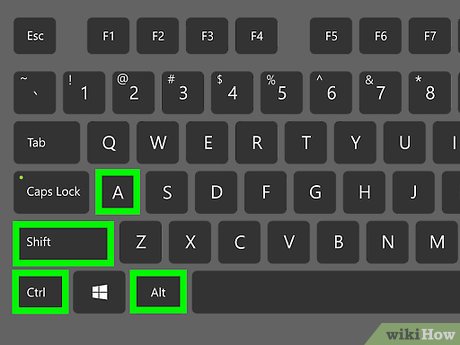 Press Ctrl+Shift+Alt+A to run it.
 Click on 'Screenshots'
 Set capture interval and other settings about screen shots.
 Back to main window, click on 'parental control'.
- Set parental control function here:
Website Blocking :
- Check 'Enable Website Filter',
- Choose 'blocked keyword', and then
- Input words in the following box to add it to the blocked list; or you can choose 'Allowed Websites',
- Here enter the website address in the box to add it to the allowed items.
Application Blocking
- Check 'block application',
- Click the right or left arrow to move the applications to the two boxes to decide which application should be blocked.
Time Control: here you can set time control on your children's Internet use,
- Check the box you need and you can set time limits in everyday in the following table by pressing the relevant sub-boxes into gray.
- Click on 'View Log' in main window
- Choose data and contents you want to view.
- Click 'Delivery' to set email address if you need this program to send logs to you periodically.
- More details you can refer to this article:http://www.anykeylogger.com/how-to-monitor-computer-activities.html
- Set parental control function here:
 Different parental control methods can meet different people's requirements. If you just need to block websites or control children's Internet use time, you can choose to use built-in parental control feature of windows operating system or browsers; if you want to master all your children's online activities, you can choose to use the third party software with computer monitoring and parental control functions, such as Anykeylogger, Net Nanny, etc.
FAQ
What is Control: How to Protect Kids' Online Safety on Windows about?
It provides a structured overview of control, explains the main context, and highlights practical takeaways for readers.
Why does this topic matter?
Understanding the main concepts helps readers evaluate the issue, avoid common mistakes, and make better-informed decisions.
How should readers use this information?
Use the guidance as a practical starting point, confirm details that may have changed, and follow current product, safety, or security recommendations.
Related Articles
 Use Snapchat Family Center to Keep Kids Safer: Step-by-Step Guide7 minutes read
 Most Children Don't Learn About Online Safety in School –– Here Are 5 Ways Parents Can Teach Their Children at Home8 minutes read
 How to Use Microsoft Family Safety for Screen Time7 minutes read
 Google Gemini Warned of 'Hidden Risks' to Children5 minutes read
 The Best Online Programming Platforms for Kids2 minutes read
 How to Use Youtube Kids on Computers6 minutes read
Reader Comments 0
Sign in with email or Google to join the discussion.