Table of Contents
This guide explains how to resolve Slow Boot Windows 10, starting with the most likely causes and moving through practical troubleshooting steps.
1. Turn off applications that start with Windows
When you install the software on your computer, there will be some software that allows to start automatically when the computer is turned on. So when you turn on the computer in addition to booting windows will take more time to launch the software. So we need to turn off without having the software start up on windows. Follow these steps:
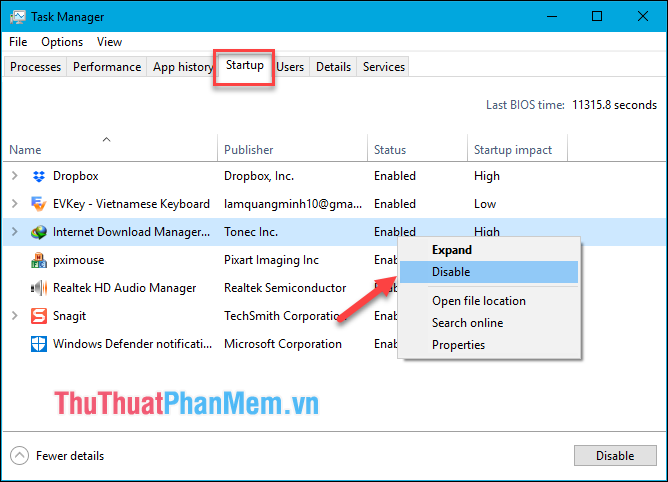
Right-click an empty area of the Taskbar, select Task Manager, or press Ctrl + Shift + Esc to open the Task Manager dialog box, then select the Startup tab .
To disable an application that starts with windows, right-click on the application and select Disable.
2. Kill viruses for computers
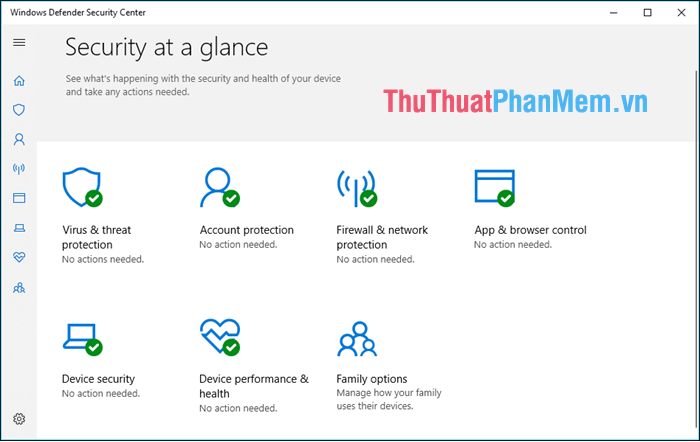
Viruses are also a cause of slow computer startup. When you access the Internet or connect to peripheral devices, the virus infection is unavoidable. Currently, there are many good antivirus software on the market such as: AVG, Kaspersky, Avast, etc. Or if you do not want to install additional anti-virus software, you can use the available Windows Defender antivirus, Windows Defender on windows 10 has been upgraded very strongly and more effectively than previous versions of windows a lot.
3. Turn on the Fast Startup feature in Windows 10
Fast Startup is a pretty good feature in Windows 10, it will greatly increase the boot time of your computer. Normally after installing Windows 10 this feature will automatically be activated. But in some cases we have to activate it manually. You can check if your computer has enabled Fast Startup mode or not by following these steps:
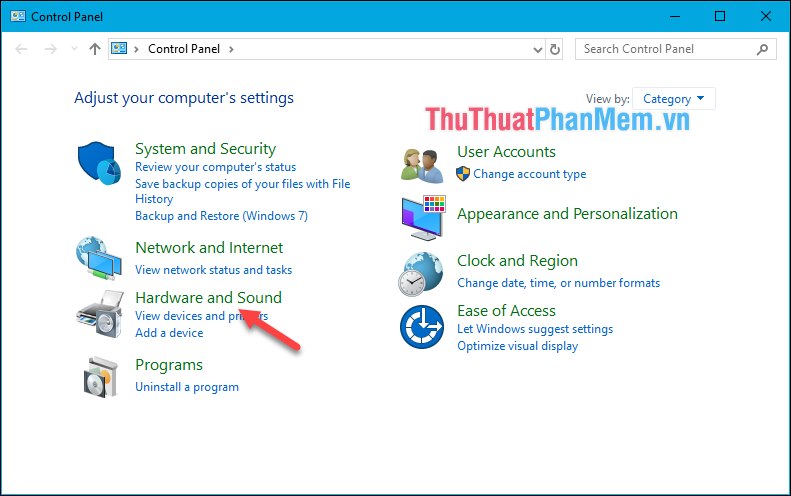
Step 1 : Open Control Panel and select Hardware and Sound
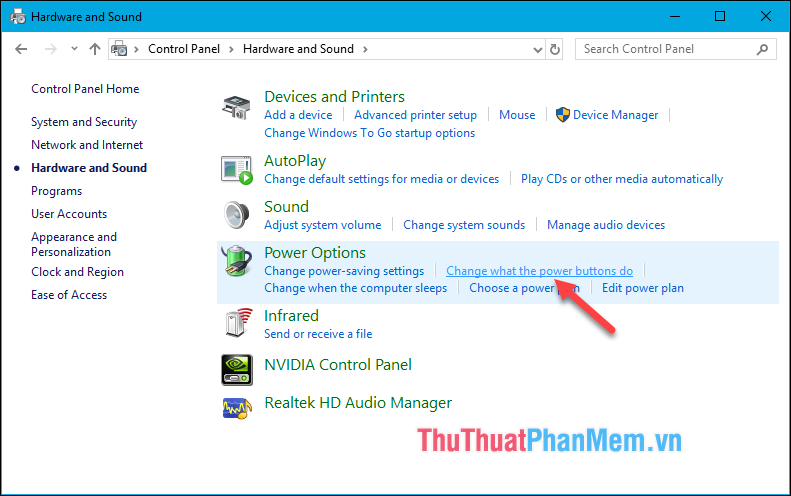
Step 2: In the Power Options section, select Change what the power buttons do.
Step 3 : A new window will appear, look at Turn on fast startup, if it is already checked, that means Fast startup is enabled. If Fast Startup is not enabled, select the Change settings that are currently unavailable
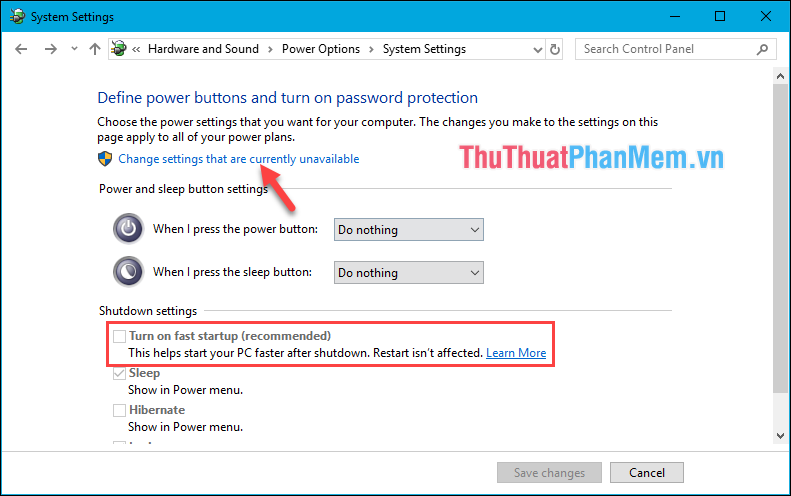
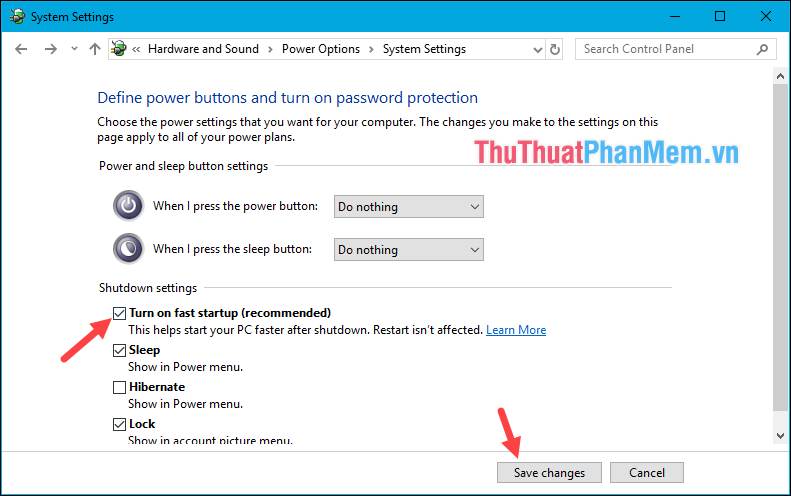
Step 4 : Check the Turn on fast startup and then click Save change . Thus, the Fast Startup feature is enabled.
4. Upgrade to an SSD
If all of the above fail to improve the boot speed of the computer, the last method we should consider is upgrading the HDD to SSD. Of course, the price of SSDs is still high, but the performance it brings is undisputed. If with the HDD version, it takes a few minutes to boot the computer, with the SSD you only need about 10 seconds to start the computer to the Desktop screen.

Above are some small tips to improve the acceleration of Windows 10 that TipsMake. com wants to share to you. Hopefully, through this article, you will have more solutions to make your computer work better. Good luck!
FAQ
What usually causes Slow Boot Windows 10?
The cause may involve incorrect settings, outdated software, damaged files, permission problems, device compatibility, or a temporary system issue.
What should I try first to resolve Slow Boot Windows 10?
Restart the affected app or device, install pending updates, verify settings and connections, and follow the troubleshooting steps in order.
How can I prevent the issue from returning?
Keep software updated, maintain backups, avoid interrupted installations, and review system or device settings after major changes.
Related Articles
 How to Fix, Fix Slow Boot Computer, Windows 10 Boot Slowly7 minutes read
 How to Fix Slow SSD Boot Times on Windows 106 minutes read
 Tips to Help Win 10 Boot Faster: How to Speed Up Windows 109 minutes read
 How to Perform Clean Boot on Windows 11: Step-by-Step Guide7 minutes read
 Windows Starts Slowly: Tracing 'Guys' Makes Windows Boot Slowly5 minutes read
 'Clear the Way' for Win XP to Boot Faster (Part 1)1 minutes read
Reader Comments 0
Sign in with email or Google to join the discussion.