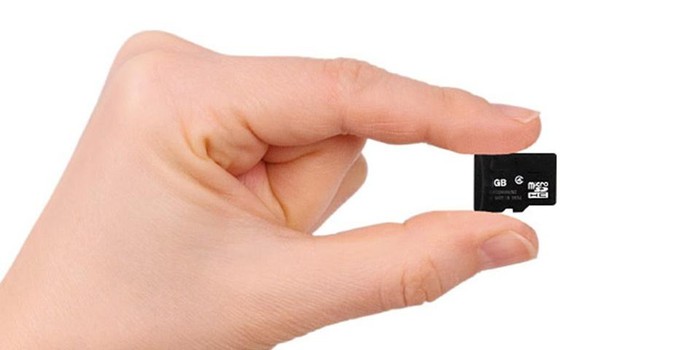
The reason is that the memory card needs to be reformatted
This guide explains how to resolve Non-formatted Memory Card by Using the Software, starting with the most likely causes and moving through practical troubleshooting steps.
In some cases, it is mandatory to format the memory card, such as: In case of storing raw files; before lending a memory card to others and wanting to secure and protect personal data; When the memory card is damaged, for unknown reasons, users can format the memory card to solve this problem; When the memory card is full and you want to free up space, format the memory card.
Common errors when formatting memory cards
When the user executes a memory card for Windows Explorer, the process fails successfully and an error message "Windows was unable to complete the format '(Windows could not complete the format).
Also, when formatting a memory card larger than 32 GB, the screen will display the error message "The volume size is too big". If the memory card is set to write protection mode, the It is also not possible to format the memory card because of the error "The disk is write protected. Or sometimes, there is a situation where the memory card cannot be found on Windows or the memory card is not detected when the user wants to format the memory card.
How to format common memory cards
To format the memory card, do so by managing the disk (Disk Management, File Explorer or Diskpart). These are all the most common software for formatting memory cards for Windows 10, Windows 8 and Windows 7.
In Disk Management and File Explorer to perform, go to these software and right-click and select Format memory card, click Format, then follow the instructions to format the memory card.
For Diskpart, perform the following steps: Select disk list - Select disk - Partition list - Select partition #> Format fs = fat32 quickly.
The application supports memory card format
Sometimes users may encounter some unexpected problems when formatting Micro SD card in Windows, there are still some other ways for users to successfully format there. The easiest and most effective way is to use reliable Micro SD card formatting software.
In order to save time for successfully reformatting a memory card, users can use AOMEI Partition Assistant ( AOMEI Partition Assistant ). The free memory card format application supports all versions of Windows 10/8/7 / XP / Vista.
The advantages of this application can support users to format a large disk (over 32 GB) smoothly; application that allows to format a corrupted SD card in Windows computers; AOMEI Partition Assistant can format the anti-write SD card instead of erasing the write protection first and then format it.
To format the memory card with AOMEI Partition Assistant, please download the micro SD card format for free and back up the necessary data on the memory card as the formatting process will erase all the data. on the SD card.
Then connect the Micro SD card to the Windows PC, install and launch AOMEI Partition Assistant, right-click the card and select Format partition. In the small window that opens, users can edit labels as desired in the Partition Label box, select the file system NTFS, FAT32, Ext2 or Ext3, Ext4, exFAT in the File System. Then go back to the main interface, click Apply and Proceed to format the SD card.




Reader Comments 0
Sign in with email or Google to join the discussion.