Table of Contents
GPT-5.4 and Claude Opus 4.6 were both capable automation models, but a simple “winner” is misleading. GPT-5.4 offers broad tool support through the OpenAI API, including computer use, shell, code interpreter, web search, file search, MCP, and structured outputs. Claude Opus 4.6 was designed for demanding reasoning, coding, and agent work, but it is now part of an older Claude generation and may not be the right starting point for a new deployment.
If you are choosing a model today, first check each vendor's current model catalog and lifecycle status. If you must compare these exact versions for an existing system, evaluate them with the same prompts, tools, safety rules, and acceptance criteria.
GPT-5.4 and Claude Opus 4.6 at a glance
| Criterion | GPT-5.4 | Claude Opus 4.6 |
|---|---|---|
| Position | OpenAI flagship model for complex professional work in the GPT-5 generation | Older Anthropic flagship model; check current availability and migration guidance |
| Strong use cases | Tool-rich automation, coding, document workflows, structured output, computer interaction | Complex reasoning, coding, long-running agent tasks, and large-context analysis |
| Context | Official API documentation lists a 1,050,000-token context window and 128,000 maximum output tokens | Long-context support was a major feature, but limits and access can vary by platform and model lifecycle |
| Tools | OpenAI Responses API supports tools including web search, file search, hosted shell, apply patch, computer use, MCP, and code interpreter | Tool use depends on the Anthropic API or product surface; agent behavior also depends on the surrounding harness |
| Cost | Token pricing plus possible tool-call and long-context surcharges; verify the live pricing page | Verify current pricing and whether the model is still available on the intended platform |
| Best selection method | A representative evaluation using your real tasks, latency target, error cost, and security constraints | |
Do not compare unrelated benchmark numbers
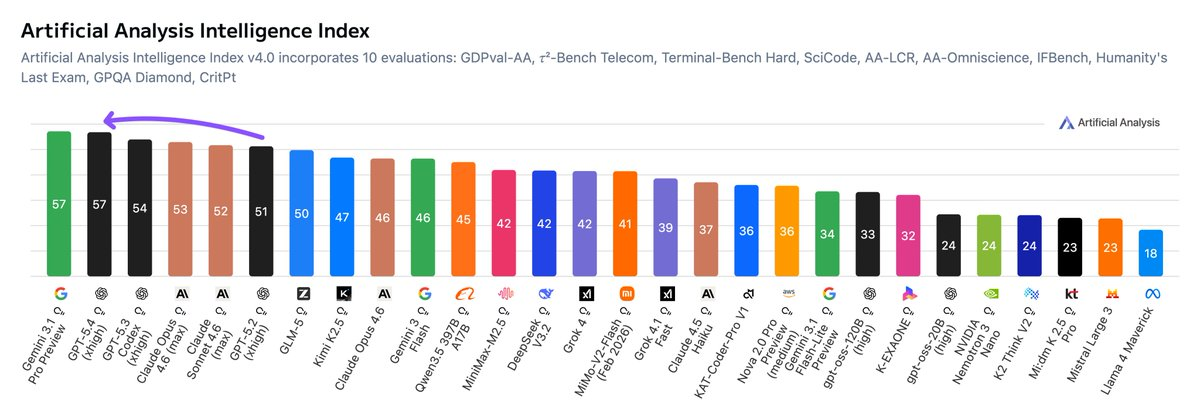
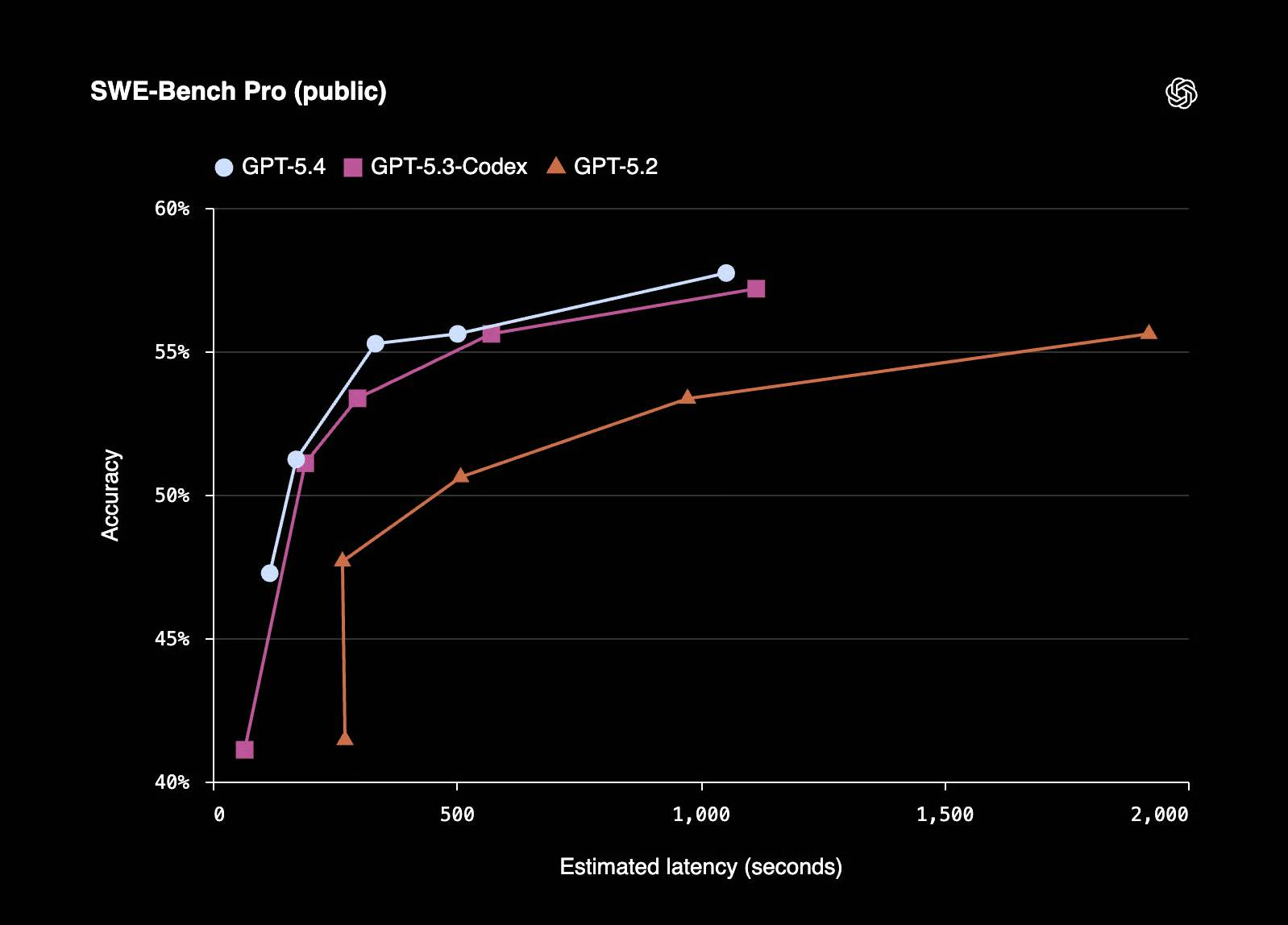
The original comparison placed results from different benchmark suites side by side as if the percentages were directly comparable. They are not. A score on SWE-bench Verified cannot be ranked against a score on SWE-bench Pro without accounting for the dataset, harness, prompt, tools, sampling settings, and scoring method.
Vendor benchmark charts can be useful evidence, but they answer narrow questions. A model that scores higher on a coding benchmark may still be slower, more expensive, less reliable with your internal libraries, or harder to constrain in an automation workflow.
Before trusting a benchmark claim, check:
- the exact benchmark version and contamination controls;
- whether the model used tools, multiple attempts, or a custom agent scaffold;
- the reasoning or compute setting;
- whether the reported number is a vendor result or an independent reproduction;
- the date, because model aliases and serving behavior can change.
Coding and software-engineering tasks
Both models can generate code, explain repositories, edit multiple files, and help diagnose failures. The decisive factor is often the system around the model: repository search, shell access, patch application, test execution, context management, and review controls.
GPT-5.4's official model page lists hosted shell, apply patch, code interpreter, skills, and MCP among its supported tools. Those capabilities make it suitable for an agent that can inspect code, implement a change, and run validation in a controlled environment.
Claude Opus 4.6 was widely used for complex code and agent tasks, but teams should consult Anthropic's current model catalog before beginning new work. A newer Claude model may provide a supported upgrade path and better performance for the same category of task.
Computer use and graphical automation
GPT-5.4 supports computer use through the OpenAI tool ecosystem. That makes it relevant when an agent must interpret screenshots and interact with graphical interfaces. Support does not make every action safe or reliable: visual state can be ambiguous, pages change, and an incorrect click can have real consequences.
For browser or desktop automation, require confirmation before purchases, account changes, destructive actions, messages, or handling sensitive data. Use an isolated environment, restrict credentials, log actions, and make important steps reversible.
Claude models can also participate in computer-use workflows through supported Anthropic products and APIs. Compare the complete system rather than assuming that a model-only benchmark predicts end-to-end success.
Long context is capacity, not guaranteed recall
A large context window can hold more source material, but it does not guarantee that the model will notice every relevant detail or reason correctly over all of it. Very long prompts also increase latency and cost.
GPT-5.4's documented context window is 1,050,000 tokens, with higher pricing rules for prompts above a stated threshold. Claude's current catalog should be checked for the supported model and context limit on your target platform.
For either provider, improve reliability by retrieving only relevant files, adding stable project instructions, summarizing completed work, and testing whether important facts are still used accurately at different context positions.
Cost: calculate completed-task cost
Token price alone is not the full cost of an automation. Include input, cached input, output, reasoning behavior, tool-call fees, long-context multipliers, retries, and the engineering time needed to correct failures.
Use this simple measurement:
completed-task cost =
model and tool charges
+ retry cost
+ human review time
+ failure remediation
A model with a higher per-token price may be cheaper if it finishes reliably with fewer retries. A cheaper model may be the better choice for high-volume, low-risk classification or extraction. Measure both on the same tasks instead of assuming that fewer tokens always means lower total cost.
How to run a fair evaluation
- Create a representative task set. Include routine tasks, difficult edge cases, and cases where the correct response is to ask for clarification.
- Define acceptance criteria. Use tests, schemas, expected citations, or reviewer rubrics rather than subjective impressions.
- Hold the harness constant. Give both models equivalent context, tools, permissions, and retry budgets where possible.
- Record operational metrics. Track success rate, latency, tokens, tool calls, retries, and reviewer time.
- Test safety boundaries. Include prompt injection, malformed data, unavailable tools, and requests that require confirmation.
- Use pinned model versions. Avoid moving aliases when reproducibility matters, and rerun evaluations before upgrading.
Which model should you choose?
Choose GPT-5.4 when
- your existing OpenAI API workflow needs its documented tool set;
- computer interaction, structured outputs, or OpenAI-hosted tools are central requirements;
- your evaluation shows acceptable accuracy, latency, and completed-task cost;
- you can use a pinned snapshot and the model remains supported for your deployment.
Keep or evaluate Claude Opus 4.6 when
- an existing system already depends on its behavior and migration risk is material;
- you need a controlled baseline for comparison with a newer Claude model;
- your platform still supports it and your own tests show a clear advantage on the target work.
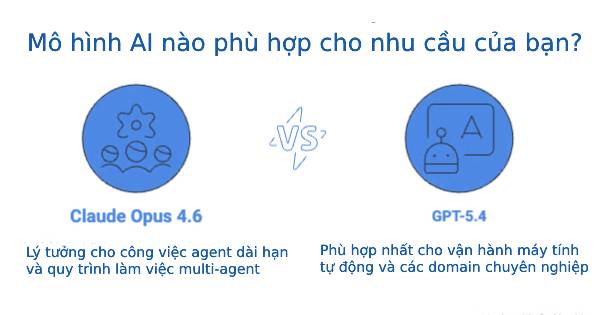
For a new project, do not select Opus 4.6 merely because an older benchmark favored it. Compare GPT-5.4 with a currently supported Claude model and any smaller models that may meet the same quality threshold at lower cost.
A safer default for production automation
Whichever model you use, validate structured data, limit tool permissions, isolate code execution, protect secrets, and require human approval for irreversible actions. Monitor real failures after launch and keep a rollback path. The best model is the one that meets your measured quality and safety requirements in the complete system—not the one with the largest number in a marketing table.
Related Articles
 How to Learn About Claude Opus 4.68 minutes read
 Learn About Claude Opus 4.7: the Latest AI Model from Anthropic, Just Released12 minutes read
 How to Map Understanding and Build Lessons from Gaps with Claude11 minutes read
 Anthropic Launches Claude Opus 4 for Advanced Coding3 minutes read
 minutes read
 How to Use Claude in Cursor: What You Need to Know7 minutes read
Reader Comments 0
Sign in with email or Google to join the discussion.