Table of Contents
This guide provides a practical overview of Fastest Way to Clean Your Computer on Windows 10, including its main features, benefits, limitations, and important considerations.
Clean the trash
A simple but unknown thing: When you delete folders, files, pictures. on your PC. In fact, they will not be deleted immediately, but instead will be moved to the Trash. The recycle bin stores files so you can restore the files you need or accidentally delete them. But if you are sure you need more free space, do the Trash.
Open Recycle Bin on the Desktop.

At the top menu bar, point to Recycle Bin Tools and select Empty Recycle Bin . Now all files in the trash will be deleted permanently.

Disk cleanup
Windows has a disk cleaning utility called Disk Cleanup, which can help you clean up space by removing unnecessary files including temporary internet files, system error files and even Windows installations. Earlier left on the machine.
You can find Disk Cleanup using the search tool on the Taskbar.

The main interface displays the types of files you can delete from your computer. Check the file types you want to delete or take up a lot of space, then click OK .
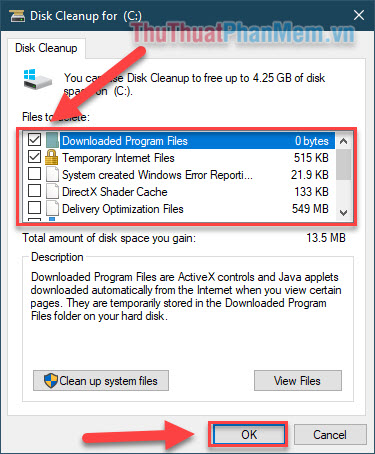
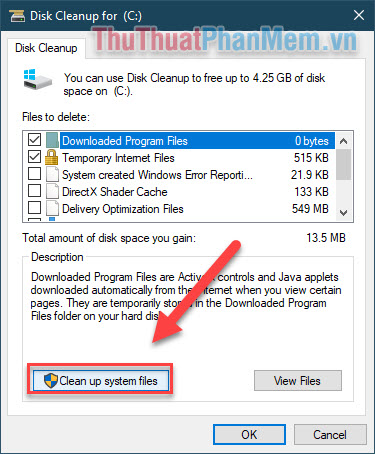
If you want to delete files on an old Windows system (possibly up to several Gb), choose Clean up system files .
Delete temporary files and download them
You can delete temporary files without running Disk Cleanup, along with downloaded files that you no longer need.
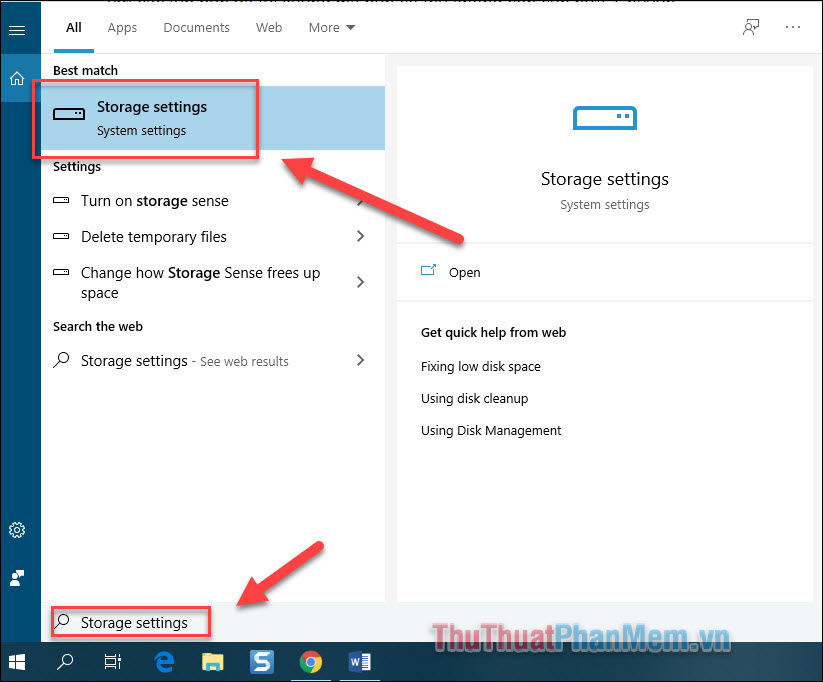
Enter Storage settings in the search bar and open this setting.
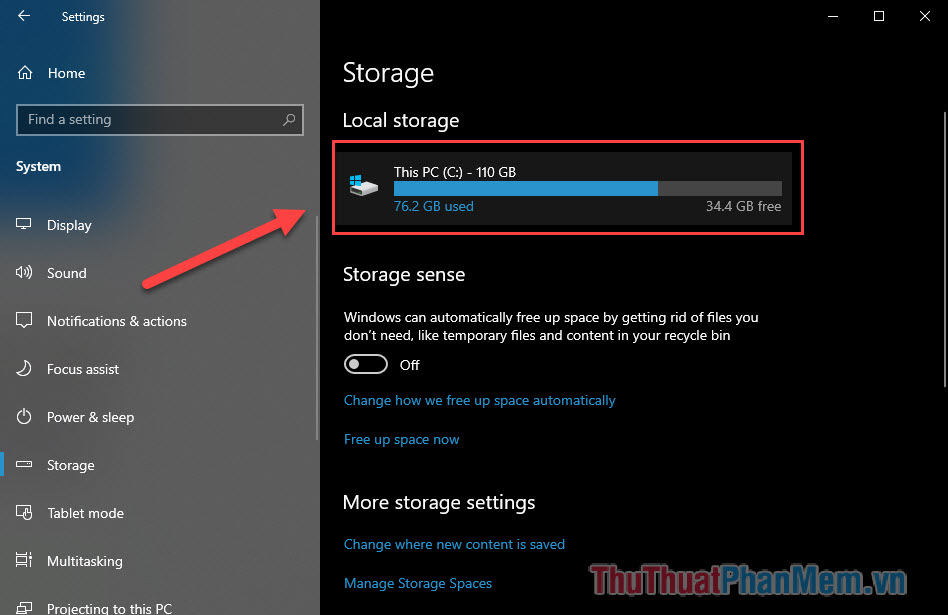
Select This PC or this is the drive you are using.
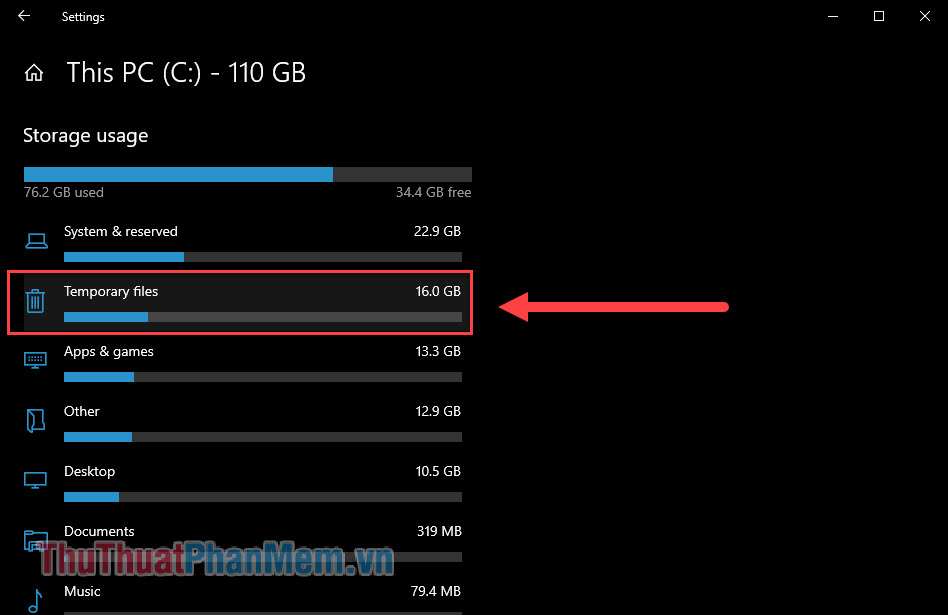
Continue to open Temporary files .
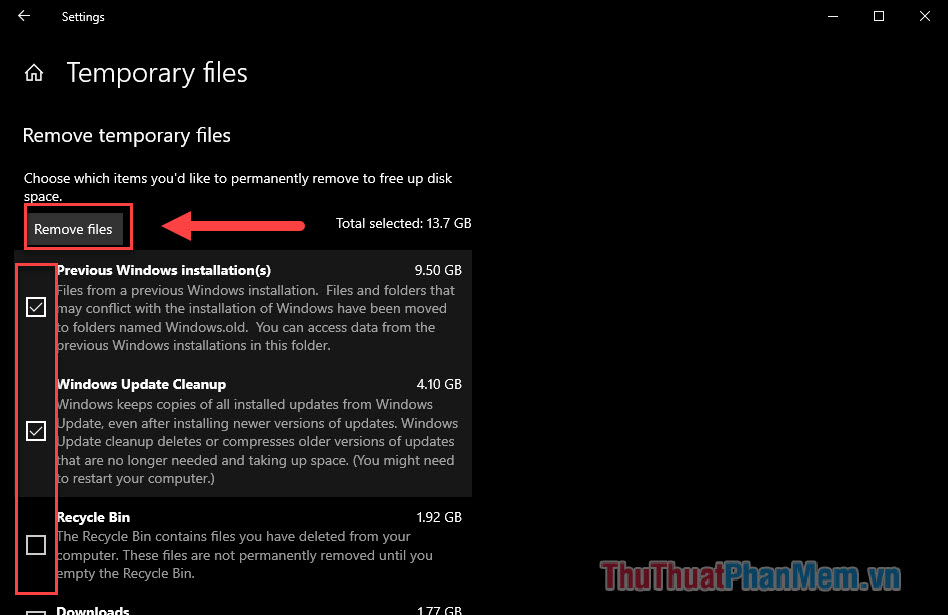
Select the types of files you want to delete, and then click Remove files .
Set to automatically free up space
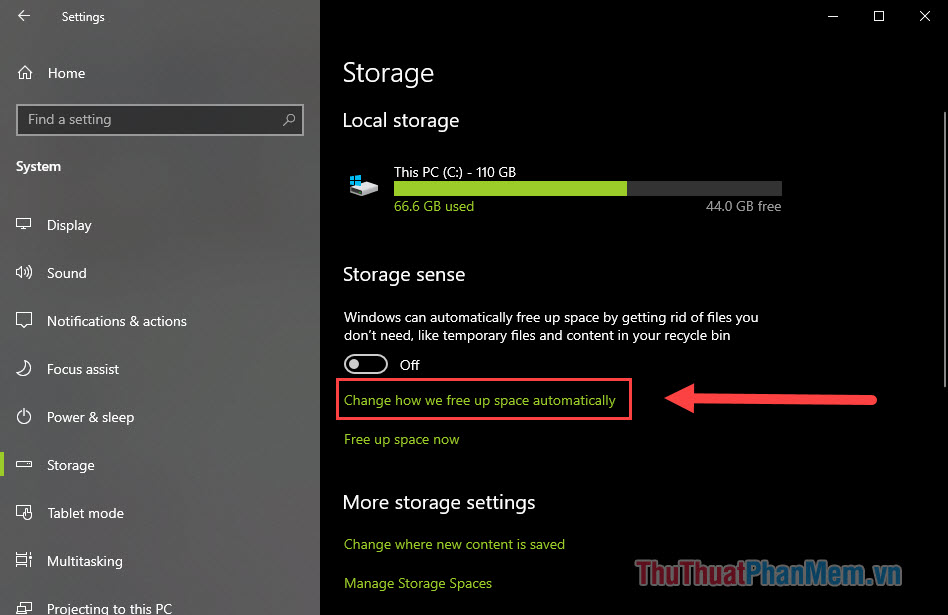
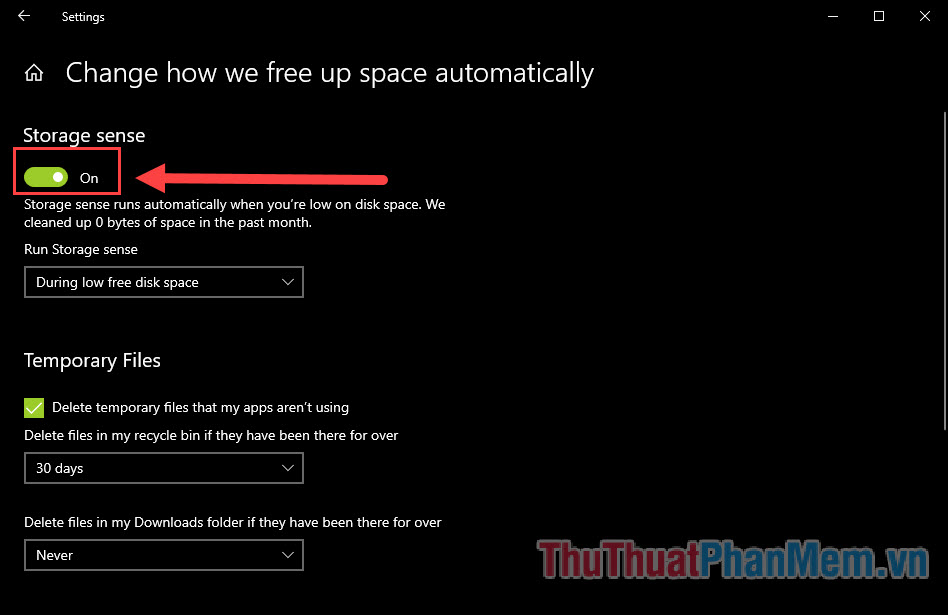
You can set your computer to automatically delete these files using the Storage Sense feature. Still in the Storage Settings window, pay attention to the Change how we free up space automatically line .
Here you can set a deadline to delete temporary files and in download folders.
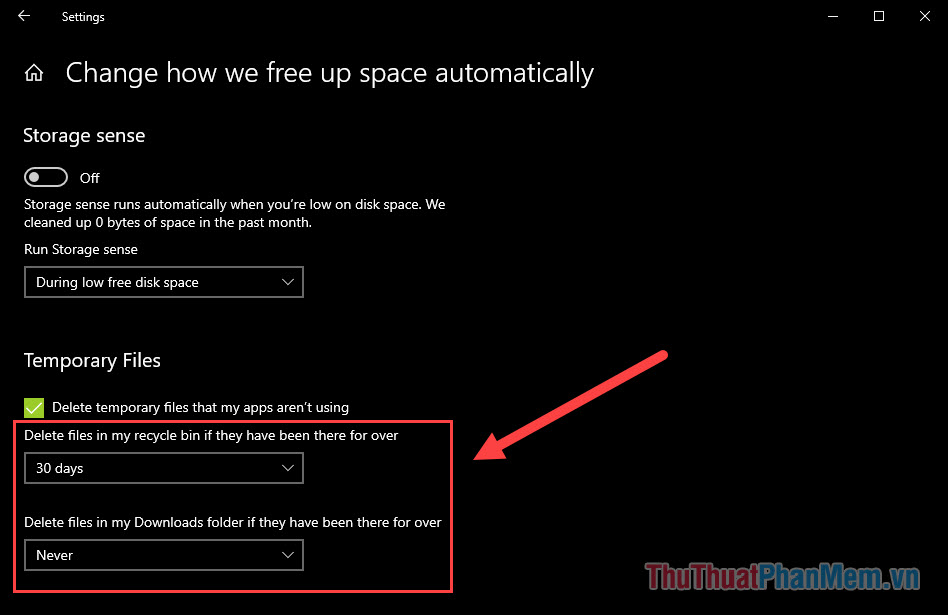
Once set up, remember to turn on Storage sense so that the computer will schedule it automatically.
Uninstall unnecessary software
There will come a time when you realize that there are software on your PC that you never use and are taking up a lot of hard drive space. Get rid of them now!
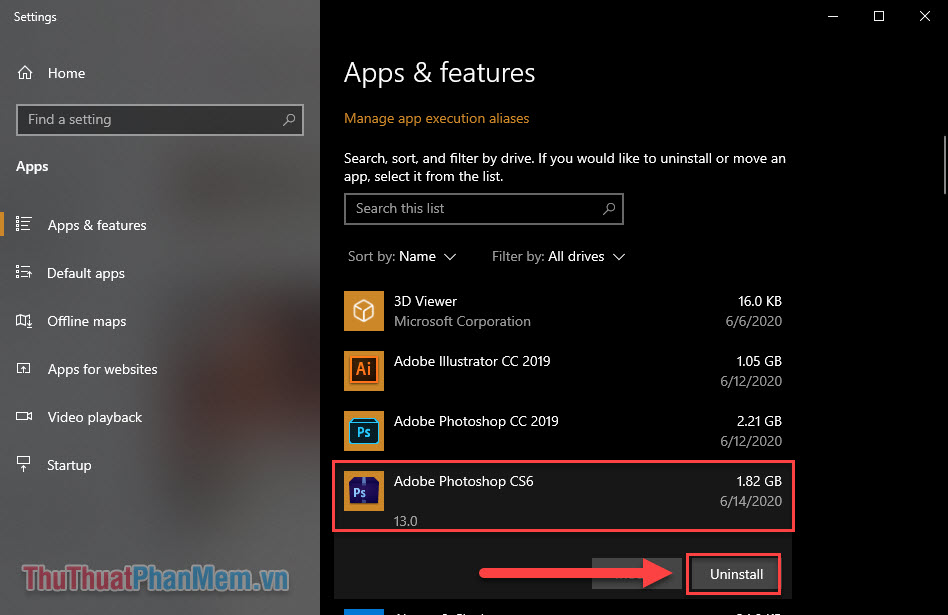
Enter Add or remove programs in the search box and open this setting.

Select the software you want to delete and click Uninstall .
Use cloud storage
Cloud storage is a great way to save your hard drive space. Cloud storage services now offer you ample storage with a very affordable price. Or, you can use it for free with around 5 to 10 Gb depending on the service provided. Refer to the article Top 5 best cloud storage services to learn more!

The above are ways to help you quickly free up space on a Windows computer. Good luck!
FAQ
What should I know about Fastest Way to Clean Your Computer on Windows 10?
Focus on the key features, requirements, limitations, and practical use cases explained in this guide.
How do I get the best results with Fastest Way to Clean Your Computer on Windows 10?
Follow the recommended steps, use current software or information, confirm compatibility, and review settings before major changes.
Are there any risks or limitations?
Potential limitations depend on compatibility, data quality, cost, privacy, support, and how the product or method is used.
Related Articles
 How to Use Clean Master to Clean up, Speed up Windows6 minutes read
 How to Implement Clean Boot on Windows 10/8/74 minutes read
 Guide to Clean up Windows 10 Computer Junk to Increase Capacity and Speed4 minutes read
 10 Tasks to Clean up Your Windows Computer Should Not Be Ignored9 minutes read
 How to Automatically Clean Junk on Windows 10 Computers3 minutes read
 6 Ways to Reset Windows Computer to Its Original State13 minutes read
Reader Comments 0
Sign in with email or Google to join the discussion.