Table of Contents
Understanding Microsoft access 2007 requires more than a headline. The overview below breaks down the key facts, changes, and user impact.
Microsoft Access 2007 Overview
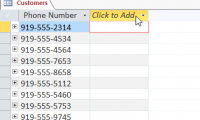
Add records to the table
To add a new record to the table:
- Open the table in Datasheet View mode
- Click on the box (New)
- Enter the new record 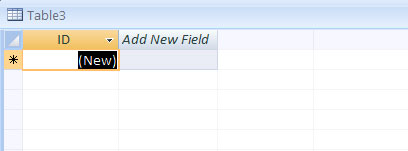 Find and Replace data
To find data:
- Click the Find button on the Home tab. 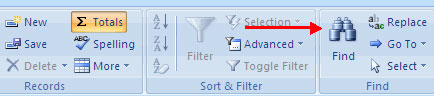 To find and replace data:
- Click the Replace button on the Home tab.  When you search and replace data, there are a number of options in the Find dialog box that can be used:
Items Find What Type the data you want to find List in the Look In Use section to specify a table or column to search for data List in the Match section Helps you limit the search in a field or the beginning of a field List in the Search section Helps you determine the direction to search for the Match Case check box Use this check box to specify a search in uppercase or lowercase. Totals
The Totals button gives you an extra LINE to add to the database. Total can be sum (total), average (average), a count ( minimum ), minimum (maximum), maximum ( maximum ), or variance (different). To set a Total LINE:
- Click the Totals button on the Home tab 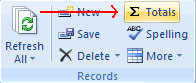 - Click the down arrow of the cell where you want to place a Totals
- Select the appropriate Totals. 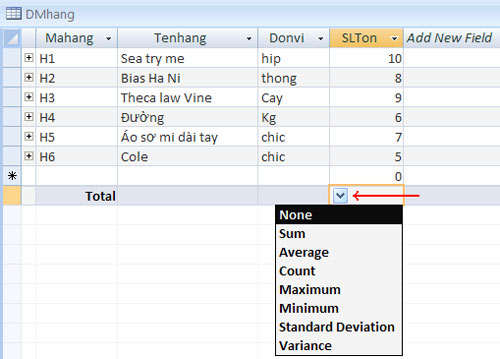 Arrange the logs
You can arrange the records in the datasheet according to one column or two consecutive columns. To sort the records by a column:
- Select the school you want to arrange
- Click the Sort Ascending or Sort Descending button . 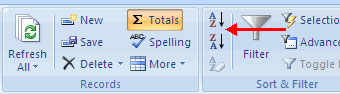
To sort two columns:
- Move columns so that they are close together
- Select columns to sort by pressing Shift and clicking on columns
- Click the Sort Ascending or Sort Descending button. 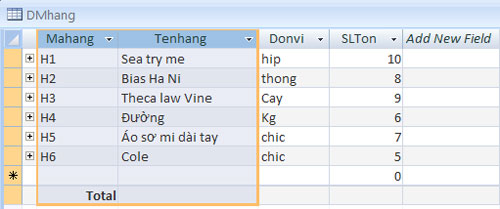 To remove the sort:
- Click the Clear Soft button 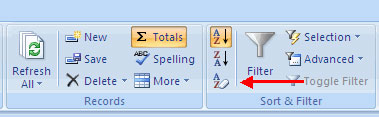 Filter (filter)
You can filter the logs to display them as desired. To filter by a column:
- Open the database in Datasheet View mode
- Click the down arrow in the field name
- Select the appropriate filtering criteria
- Click OK . 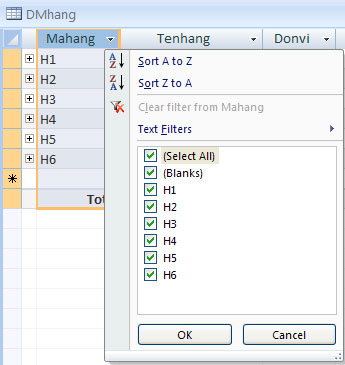 To remove Filter:
- Click the Filter button on the field tag
- Click Clear Filter
- Click OK . 
FAQ
What happened in MS Access - Lesson 9: Data Management: Microsoft Access 2007?
Understanding Microsoft access 2007 requires more than a headline.
What factors influenced Microsoft access 2007?
The overview below breaks down the key facts, changes, and user impact.
What was the practical impact on users?
Microsoft Access 2007 Overview Add records to the table To add a new record to the table: - Open the table in Datasheet View mode - Click on the box (New) - Enter the new record Find and Replace data To find data: - Click the Find button on the Home tab.
Related Articles
 The Future of Access and Identity Management (Iam), a Field That5 minutes read
 Work with Data in Access 201610 minutes read
 MS Access 2003 - Lesson 5: Chapter 2: Access Learning in 1 Hour6 minutes read
 MS Access - Lesson 6: Managing Tables: Microsoft Access 20072 minutes read
 Edit Tables in Access 20169 minutes read
 Steps to Export Microsoft Access Data to Word Documents6 minutes read
Reader Comments 0
Sign in with email or Google to join the discussion.