Table of Contents
Instructions on How to Transfer ESD File to ISO for Win XP is easier to understand when the core ideas are paired with practical examples. The sections below explain the topic clearly, highlight useful steps, and point out details that can prevent common errors.
To install Windows 7, 8 or Windows 10, ISO files will be chosen by more people than ESD files. However, if you accidentally download the ESD file to your computer and don't know how to use it, you can switch from an ESD file to an ISO file to make it easier to install Win via USB. This guide, we will show you how to convert an ESD file to an ISO file using ESD to ISO software.
Step 1:
First of all, you need to download the ESD to ISO software to be able to transfer the ESD file to ISO according to the link below:
- Download ESD to ISO software
Step 2:
After you have completed the steps to install the ESD to ISO tool, access the folder containing the ESD file on your computer, right-click and select Convert to ISO .

Step 3:
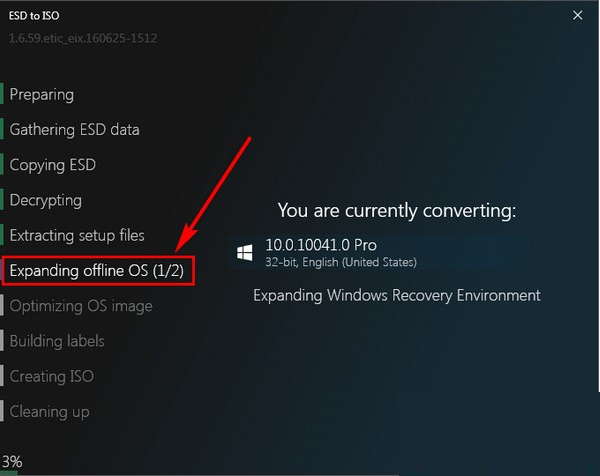
We will be transferred to the interface to convert ESD files to ISO. This process will go through 10 steps and each successful installation process will display with the percentage bar below as shown:

The completed steps will be marked with white so we can identify. The transition due to 10 steps will take quite a long time, especially with the ESD file copy process, extracting files, editing files or creating ISO files,. will take longer than other steps.
Step 4:
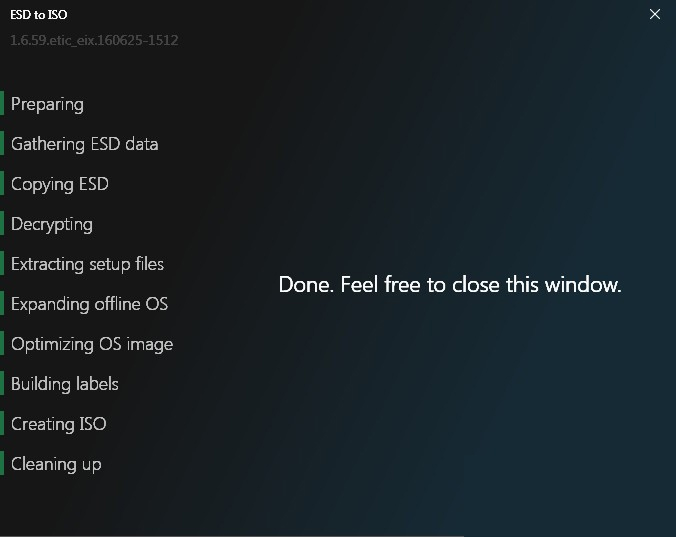
When all ESD conversion steps have been completed, the Done message will appear . Feel free to close this Window .
Step 5:
Going back to the ESD file storage directory, we will see the ESD file converted to the ISO file format as shown below:

Above are the steps to convert from an ESD file to an ISO file for the convenience of installing Win. For Windows 7 or later versions, you need to install a third tool to be able to read ISO files such as UltraISO, VitualDrive, etc. Windows 7 and above can be read on your computer without the need for other software. support.
Refer to the following articles:
- Instructions to upgrade to Windows 10 from Windows 7/8 / 8.1
- Instructions for upgrading Windows 7 to Windows 8 and Windows 8.1
- Hiren's USB creation guide is quick
I wish you all success!
FAQ
What is Instructions on How to Transfer ESD File to ISO for Win XP?
To install Windows 7, 8 or Windows 10, ISO files will be chosen by more people than ESD files.
Why is Instructions on How to Transfer ESD File to ISO for Win XP important?
A clear understanding of Instructions on How to Transfer ESD File to ISO for Win XP helps you make informed decisions, avoid common mistakes, and use the relevant tools or techniques more effectively.
How should beginners approach Instructions on How to Transfer ESD File to ISO for Win XP?
Start with the fundamental concepts, follow the examples step by step, and test each change in a safe environment before applying it to important systems or data.
Related Articles
 10 Ways to Open Bluetooth File Transfer Utility on Windows 118 minutes read
 How to Use Zsync to Transfer a File Part in Linux7 minutes read
 5 Fast and Free Web Applications for Transferring Large Files8 minutes read
 How to Transfer Files from Mac to Android Without Android File Transfer7 minutes read
 The Best Sftp Server and Tools for Secure File Transfer10 minutes read
 How to Use Mobimover to Transfer Data on iPhone to PC8 minutes read
Reader Comments 0
Sign in with email or Google to join the discussion.