Table of Contents
Learning how to creating a table of contents in word 2007 and above and word 2003 fastest doesn't have to be complicated. This updated guide presents a clear workflow, practical checks, and troubleshooting advice you can use while completing the process.
Key Takeaways
- Follow the steps to create a table of contents in word 2007 and above.
- Explore mark table of contents in word 2007 and above.
- Understand method 1: use pre-built heading.
How to Create a Table of Contents in Word 2007 and Above
You need to go through 2 steps: 1 is to mark the table of contents and 2 is to create an automatic table of contents. This helps you create a table of contents in Word 2007 or later. Let's learn step 1 to mark the table of contents first.
1. Mark Table of Contents in Word 2007 and Above
Method 1: Use Pre-built Heading
First, you must highlight the content you want to format as a heading, pay attention to highlight accurately and tightly so as not to add unnecessary spaces or text to the heading. Then activate the Home tab and select the pre-installed Heading Styles on the toolbar in the upper right corner of the screen. You can choose Heading 1, heading 2… to format the heading as desired.
In case you don't see the heading type you need, select the Quick Styles Gallery expansion arrow to select it. Details as shown below.
Method 2: Highlight Individual Text Items

You can use the Add Text function of Table of Contents to create a table of contents in Word. First, highlight enough information lines to create Heading. Then click the References tab – Add Text in the Table of Contents group and just select the level you want to apply to the selected content. Level 1 represents Heading 1, level 2 represents Headings 2… similarly for the next Headings.
2. Create a Table of Contents in Word 2007 or Later
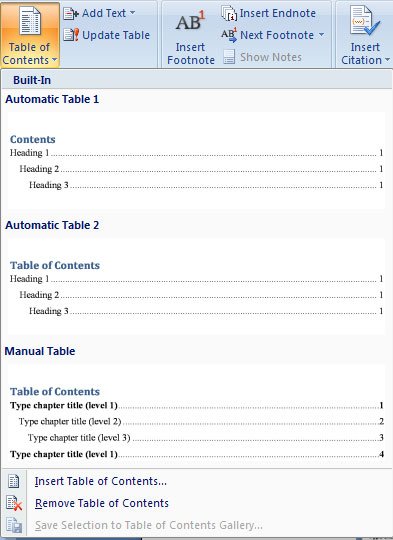
You can proceed to create a table of contents in Word 2007 or later by placing the cursor on the first or last page of the document where you want to automatically set the table of contents after completing the above steps to mark the table of contents. Then select the References tab - select the Table of Contents button and proceed to select the table of contents according to the available template.
You can also click the Insert Table of Contents button to format the table of contents in your own way. For Word 2016 and 2019 versions, there is also the Custom Table of Contents option to edit the table of contents style that the user wants. Just click the Remove Table of Contents button as shown below. This helps you delete the table of contents.
How to Create a Table of Contents in Word 2003
The process of creating a table of contents in Word 2003 also requires 2 steps: 1 is to select the topics to be included in the table of contents and 2 is to add the table of contents automatically. In which step 1 is the most important step. Let's learn how to do step 1 first.
Step 1: Create Heading
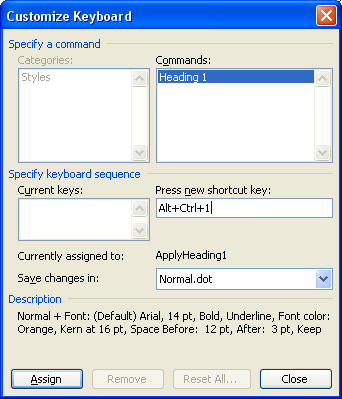
First, you need to highlight the text you want to use as a title. Similar to the method for Word 2007 and above, you need to highlight it precisely and tightly so that you don't add unnecessary text or spaces to the table of contents. You must use the following key combinations: Alt + Ctrl + 1 applies to Heading 1, Alt + Ctrl + 2 applies to Heading 2, Alt + Ctrl + 3 applies to Heading 3. This helps you create the corresponding heading type.
You will not be able to use the above shortcut from Heading 4 onwards. At this point you need to press Ctrl + Shift + S to enter the Style box on the Formatting bar and use the arrows to select the type of Headings you want.
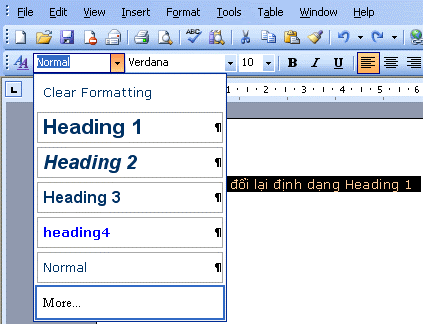
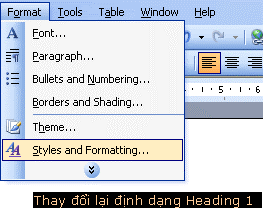
You must open FormatStyle and Formatting and follow the next steps below. This helps you change the Heading format as desired when creating a table of contents in word 2003.
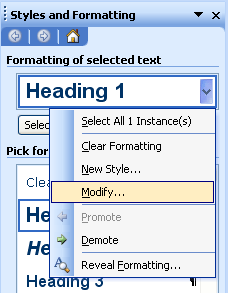
A panel named Style and Formatting will appear on the right, for instance here we choose Heading 1. (The default Heading 2, Heading 3 types in word 2003, if you want to change the format, just do the same as the steps below).
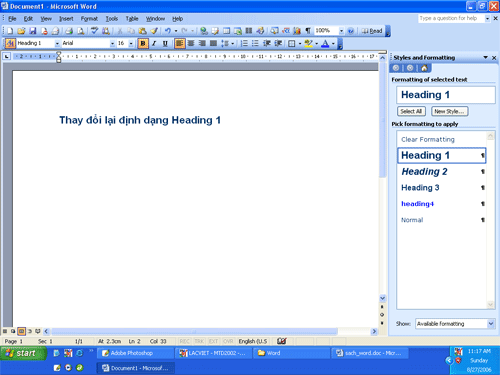
Then, click Modify on the Formatting of selected text box:
The Modify Style dialog box will then appear:
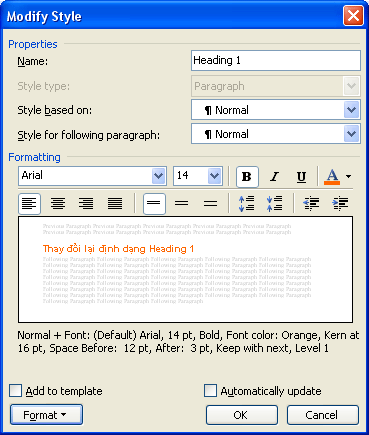
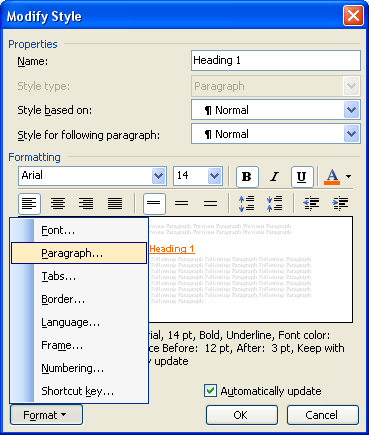
Here you can change the Heading name, change the font format for the heading in the Formatting box. This format will be applied to all future files if you select the Add to template box. Changes to other formats for the Heading will be automatically updated without having to open Modify Style to edit if you select the Automatically update box. Some available formats for Heading will appear as shown below: if you select the Format box in the bottom left corner.
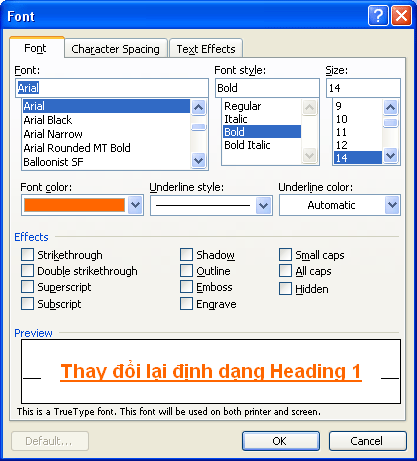
To continue to change the font format for headings when creating a table of contents in Word 2003, open the Font dialog box and edit as shown below:
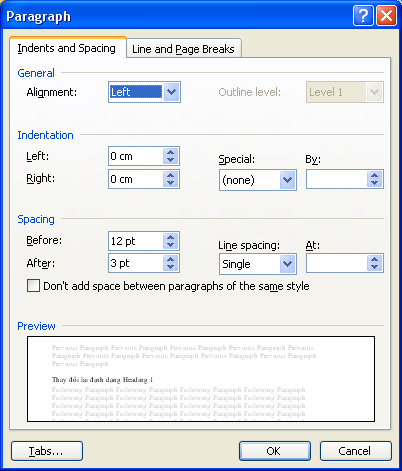
Open the Paragraph dialog box and format as desired if you want to change the paragraph format for Heading when creating a table of contents in Word 2003.
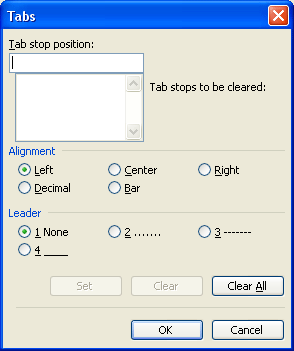
Similarly, to format the Heading in tabs, open the Tabs dialog box and edit.
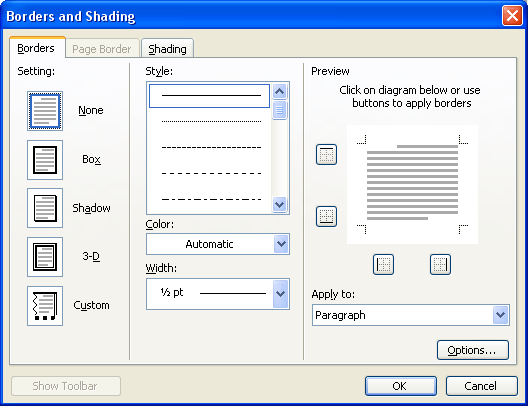
Or open the Border dialog box to format the Heading border and edit as desired.
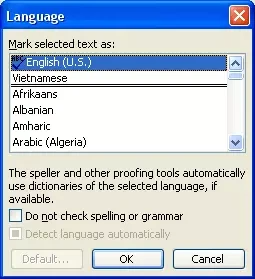
You can change the language spelling checker when you open the Language dialog box.
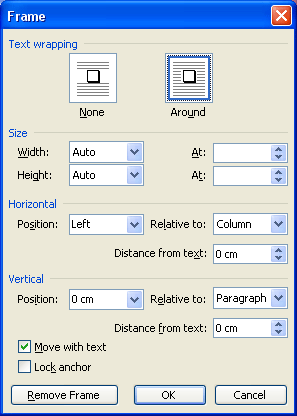
You can set the Heading to a frame so that it can be moved anywhere in the text file if you open the Frame dialog box.
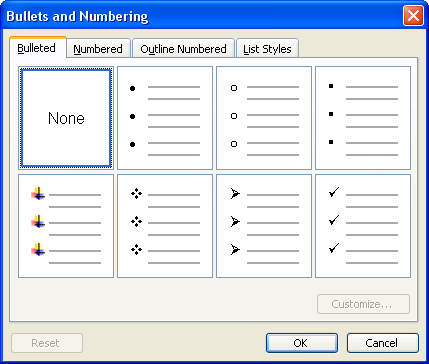
For the Bullets and Numbering dialog box, you can format Heading by serial number and first line character automatically when creating a table of contents in Word 2003. Details as shown below.
Finally, the Customize Keyboard dialog box allows you to modify or add shortcuts to use for different types of Headings.
After each of the above operations you must select the Ok or Close button to confirm their completion. This helps you complete the Heading format in the process of creating a table of contents in Word 2003.
Step 2: Select to Display the Table of Contents According to the Created Headings
1. First you need to choose the location of the table of contents by placing the mouse cursor at the beginning or end of the file in Word 2003. This helps you be able to display the table of contents according to the created headings.
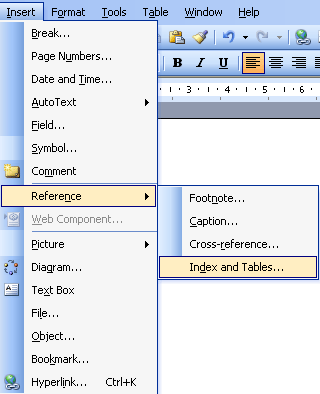
2. Next open Insert > Reference > Index and Tables ….
3. Select the Table of Contents tab after the Index and Tables dialog box appears.
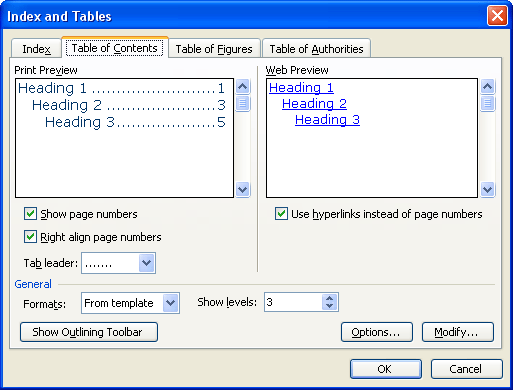
Let me explain the criteria in this framework:
1. Print Preview is the type of table of contents that will appear when printed.
2. Web Preview is the table of contents style that will display in web page form.
3. Show page numbers is to display page numbers in the table of contents.
4. Right align page numbers is to display page numbers on the right margin.
5. Use hyperlinks instead of page numbers is to use links from the table of contents to the page where the Heading is placed.
6. Tab leader is to select the type of tab line from the end of the Heading to the page number.
7. Show levels is used to display the number of Heading levels.
8. Show Outlining Toolbar is to display the Outlining toolbar on the MS Word window.
9. Options will open the Table of Contents Options dialog box for users to choose some additional features.
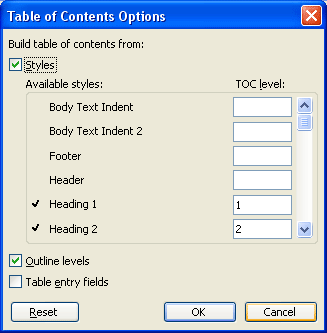
10. Modify is to open the Style dialog box, modify the font format for the table of contents content when creating a table of contents in Word 2003 automatically.
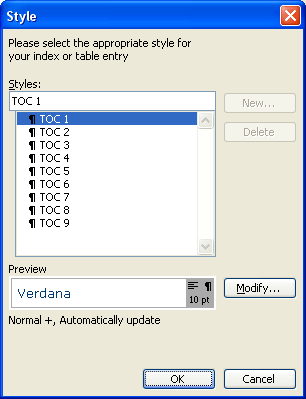
A message box will appear if the file already has an automatic table of contents and you agree to change the font format using the Style dialog box.
This message asks if you want to change the format of the table of contents. Select Yes and click the Ok button to have Word 2003 display the table of contents.
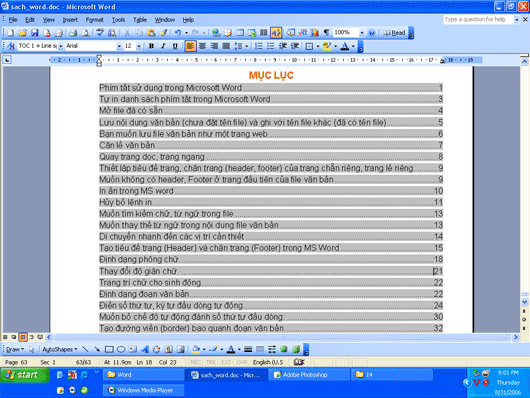
This process of creating a table of contents in word 2003 allows linking the table of contents with the required page number. That means you can combine the Ctrl + Click button to jump to the correct item number and page number required.
Above is a summary of the fastest ways to create a table of contents in Word 2007 and above and Word 2003. Up to now, Word 2003 has almost been replaced by users with versions from 2007 and above. However, that doesn't mean that no one uses Word 2003 anymore. Therefore, this guide would like to introduce how to create a table of contents in Word for both versions for your reference.
Final Thoughts
The most reliable way to handle creating a table of contents in word 2007 and above and word 2003 fastest is to follow the process in order, verify each important setting, and test the result before moving on. Use the guidance above as a practical reference, then adjust the details for your device, software version, or specific goal.
FAQ
What should I check before I creating a table of contents in word 2007 and above and word 2003 fastest?
Use the latest available software, confirm that your device meets the requirements, and make sure you have the necessary permissions, account access, or backup before changing anything.
Why might I be unable to creating a table of contents in word 2007 and above and word 2003 fastest?
Common causes include outdated software, missing permissions, incompatible settings, incomplete setup steps, or a temporary network problem. Recheck the process from the beginning and restart the app or device if needed.
Is it safe to creating a table of contents in word 2007 and above and word 2003 fastest?
It is generally safe when you use official tools, review every permission, and back up important data before making system-level or account-level changes.
Related Articles
 How to Create a Table of Contents Automatically in Word7 minutes read
 How to Create an Automatic Table of Contents in Word 2019/2016/2010/200712 minutes read
 Create Automatic Table of Contents in Word for Word 2007, Word 20106 minutes read
 Create Automatic Table of Contents in Word 20039 minutes read
 How to Create Automatic Table of Contents in Word 20164 minutes read
 10 Impressive Table of Contents for Microsoft Word: MS Word12 minutes read
Reader Comments 0
Sign in with email or Google to join the discussion.