Table of Contents
This updated guide examines How to Use Ascii Characters to Create Strong Passwords and organizes the essential facts, background, and practical takeaways in clear American English.
Responsible-use note: Apply security techniques only to systems you own or are explicitly authorized to test.
Passwords and passphrases help prevent unauthorized people from accessing files, programs and other resources. When you create a password or passphrase, you should make it strong, meaning it is very difficult to guess or crack. You should use strong passwords with all user accounts on your computer. If you are using the network at work, your network administrator may require you to use strong passwords.
Note : In a wireless network, a protected Wi-Fi security key (WPA) supports the use of a passphrase. This passphrase is converted into a key, used for encryption, and you cannot see it.
What makes a strong password or passphrase?

Strong passwords and passphrases contain characters of the following 4 types:

Passwords or passphrases can meet all of the above criteria and remain weak. For example, Hello2U!, Meets all the criteria for a strong password listed above, but is still weak, as it contains a complete word. H3ll0 2 U!, Is a more powerful alternative, because it replaces some letters in the complete word with numbers and includes spaces.
- Notes when setting a password
Tips for remembering your strong password or passphrase
1. Create an acronym from an easy-to-remember piece of information. For example, choose a meaningful phrase for you, such as 'My son's birthday is 12 December, 2004' (my son's birthday is December 12, 2004). Use the initials of that phrase as your password. For example, you can use Msbi12 / Dec, 4 as your password.
2. Replace numbers, symbols and misspellings for letters or words in that easy-to-remember phrase. For example, 'My son's birthday is 12 December, 2004' could become Mi $ un's Brthd8iz 12124 , and that would create a good passphrase.
3. Link your password or passphrase to your favorite hobby or sport. For example, 'I love to play badminton' can become ILuv2PlayB @ dm1nt () n.
4. If you feel you have to write your password or passphrase to remember them, make sure you don't label the password and keep the password in a safe place.
Create stronger passwords and passphrases with ASCII characters
You can also create passwords and passphrases using extended ASCII characters. Using extended ASCII characters makes your password or passphrase safer, by increasing the number of characters you can choose, to make the password strong. Before using extended ASCII characters, make sure that the password and passphrase contain them, compatible with the programs used by you or your workplace. Be especially careful when using extended ASCII characters in passwords and passphrases, if your workplace uses multiple operating systems or different Windows versions.
You can find extended ASCII characters in Character Map. Some extended ASCII characters should not be used in passwords and passwords. Do not use characters, if a shortcut is not defined in the lower right corner of the Character Map dialog box.
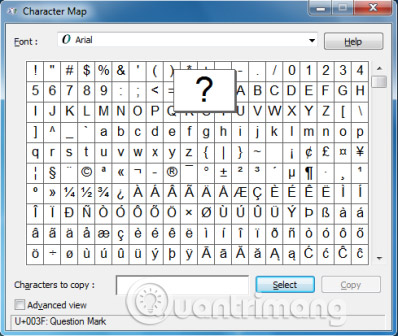
Windows 7 or Vista passwords can be longer than 8 characters, as suggested above. In fact, you can create passwords as many as 127 characters long. However, if you're on a network with a Windows 95 or Windows 98 computer, consider using a password that is no longer than 14 characters. If your password is longer than 14 characters, you may not be able to log into your network from computers running those operating systems.
:
- ASCII encoding and Latin character table ISO 1252
- How can Windows passwords be cracked?
- Instructions for creating images in ASCII Art code style
FAQ
What is How to Use Ascii Characters to Create Strong Passwords about?
It provides a structured overview of Strong passwords, explains the main context, and highlights practical takeaways for readers.
Why does this topic matter?
Understanding the main concepts helps readers evaluate the issue, avoid common mistakes, and make better-informed decisions.
How should readers use this information?
Use the guidance as a practical starting point, confirm details that may have changed, and follow current product, safety, or security recommendations.
Related Articles
 Summary of How to Create Strong Passwords and Manage the Most14 minutes read
 How to Create Secure Passwords on Fastword3 minutes read
 HTTP Urls: URL Encoding in HTTP3 minutes read
 5 Websites Create the Most Powerful Random Password7 minutes read
 ASCII Function in SQL Server: Tips and Examples2 minutes read
 Ascii ()() Function in Python3 minutes read
Reader Comments 0
Sign in with email or Google to join the discussion.