Table of Contents
This updated guide examines Click: How to Send Documents Securely on PC or Mac and organizes the essential facts, background, and practical takeaways in clear American English.
Method 1of 4:
Password-protecting a Microsoft Word Document (Windows and Mac)
 Open the document in Microsoft Word. The quickest way to do this is to double-click its file name.
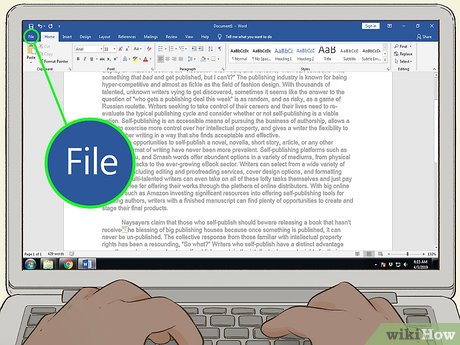 Click theFilemenu. It's at the top-left corner of the window (or in the menu bar on a Mac).[1]
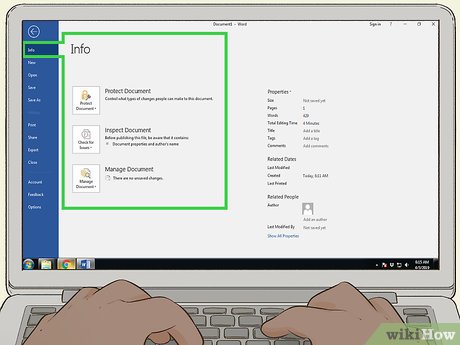 ClickInfo.
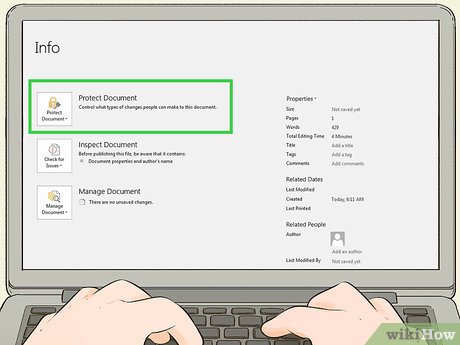 ClickProtect Document.
 ClickEncrypt with Password.
 Create and confirm the document password. Follow the on-screen instructions to type and confirm the password that will protect your document.
 Save the file. Click the File menu and select Save to save the new version of your document.
 Share the document with others. Now that the file is password protected, you can send it in a variety of ways:
- Attach the document to an email message in Gmail, Outlook, or Mac Mail.
- Add the file to a cloud drive like Google Drive, iCloud Drive, or Dropbox.
Method 2of 4:
Attaching Files to Encrypted Messages in Outlook (Windows and Mac)
 Open Outlook on your PC or Mac. It's usually in All Apps area of the Start menu in Windows, and in the Applications folder in macOS.
 ClickNew Email. It's the envelope icon at the top-left corner of the window.
 Click theFilemenu. It's near the top-left corner of the screen.
- If you're using Outlook 2010, click the Options menu, then select More Options .
 ClickProperties. If you're using Outlook 2010, skip to the next step.
 ClickSecurity settings.
 Check the box next to 'Encrypt message contents and attachments. '
 ClickOK. This message will now be encrypted.
 ClickClose. Now that the encryption settings are set, you can create the message.
 Enter a recipient, subject, and message.
 ClickAttach file. It's the paperclip icon at the top of the new message. This opens your computer's file browser.[2]
 Select the attachment and clickOpen. This attaches the file to the message.
 ClickSend. The message will now be delivered to the recipient.
Method 3of 4:
Encrypting a Document with EPS (Windows)
 Navigate to the file you want to encrypt. An easy way to do this is to press⊞Win+Eto open the File Explorer, then double-click the folder that contains the file.
 Right-click the file or folder. A context menu will expand.
 ClickProperties. It's the last option in the menu.
 ClickAdvanced. It's near the bottom-right corner of the window.
 Check the box next to 'Encrypt contents to secure data. ' It's the last option on the window.
 ClickOK. If you selected a folder, a confirmation message will appear.
 SelectApply changes to this folder, subfolders and files.
 ClickOK. The selected file or folder is now encrypted. To access the file or folder, you'll have to use your Windows login credentials.
 Send the encrypted document.
- If you encrypted only one file, you can attach it to an email message. You can't compress the folder and then attach it to an email.
- If you encrypted a folder, upload it to a cloud drive like Google Drive, iCloud Drive, or Dropbox. Once uploaded, use the drive's tools to share the files as you wish.
Method 4of 4:
Encrypting Documents with Disk Utility (Mac)
 Add the file you want to encrypt to a folder. If you're not sure how to do this, see Make a New Folder on a Computer.
 Click theGomenu. It's at the top of the screen.
 ClickUtilities. It's near the bottom of the menu. A new Finder window will open.
 Double-clickDisk Utility. This opens the Disk Utility app.
 Click theFilemenu. It's in the menu bar at the top-left corner of the screen.
 Hover the mouse overNew. Another menu will expand.
 ClickImage from folder.
 Select the folder you want to encrypt and clickChoose.
 Select128-bitor256-bitfrom the 'encryption' drop-down menu.
 Create a password. Enter a new password for the folder into the 'Password' box, then again in the 'Verify' box.
 ClickChoose.
 ClickSave.
 ClickDone. The files in the folder are now encrypted. Now you can upload the folder to a cloud drive like Google Drive, iCloud Drive, or Dropbox. Once uploaded, use the drive's tools to share the files as you wish.
FAQ
What is Click: How to Send Documents Securely on PC or Mac about?
It provides a structured overview of click, explains the main context, and highlights practical takeaways for readers.
Why does this topic matter?
Understanding the main concepts helps readers evaluate the issue, avoid common mistakes, and make better-informed decisions.
How should readers use this information?
Use the guidance as a practical starting point, confirm details that may have changed, and follow current product, safety, or security recommendations.
Related Articles
 How to Send Password Protected Files Without Buying Software6 minutes read
 Guide to Transfer Ebook into the Amazon Kindle5 minutes read
 Instructions for Scanning Documents with 3 Simple Steps4 minutes read
 How to Scan Documents Directly Using Whatsapp3 minutes read
 How to Send a Word Document17 minutes read
 Send a Fax from a Windows Xp-based Computer9 minutes read
Reader Comments 0
Sign in with email or Google to join the discussion.