Table of Contents
This updated guide examines How to Open Windows 10 Settings and organizes the essential facts, background, and practical takeaways in clear American English.
Method 1of 2:
Opening the Settings App
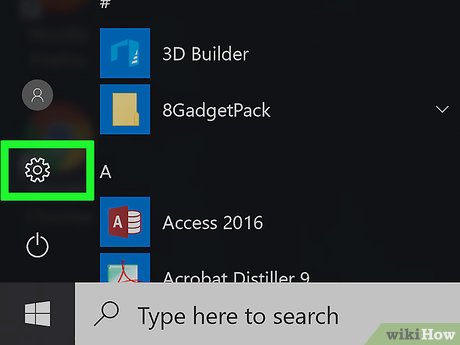 Use the Start menu. Click or tap the Start button and select the settings gear in the lower left corner.
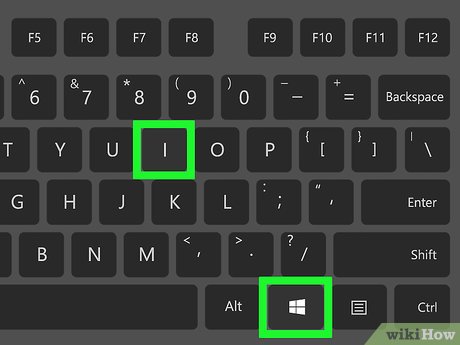 Press the⊞Win+Ikeyboard keys at the same time. This is a very quick and convenient way to open Settings.
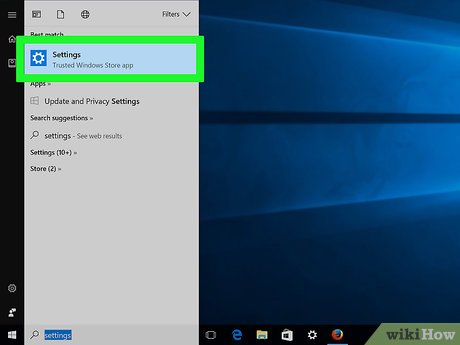 Use Cortana/search. Typesettingsand hit↵Enteror select the matching result.
- If you're in a country where Cortana is supported, then you can ask her to open Settings for you. Press the microphone icon and say "open settings" or just "settings".
- You can also use Cortana/search to look for and open specific settings. For example, you can typecolor settingsor ask Cortana to "open color settings".
 Use theAll settingsquick action in the Action Center. The Action Center is where you can view any notifications on your device and perform actions through tiles at the bottom called quick actions.
- Press the speech bubble/notification icon at the lower right corner of your screen to open Action Center. Click or tapAll settings. If you only see four tiles, click the "Expand" link to show the rest of them.
 Use File Explorer. First, open File Explorer.
- Make sureThis PCis selected from the left pane. From the ribbon at the top, make sure theComputertab is selected and then click or tapOpen Settings.
- Alternatively, select your local drive that Windows is installed on. Navigate to "WindowsImmersiveControlPanel" and then open "SystemSettings" or "SystemSettings.exe".
 Enterstart ms-settings: into Command Prompt or Windows Powershell and hit↵Enter.
Method 2of 2:
Opening/Jumping to Specific Pages in the Settings App
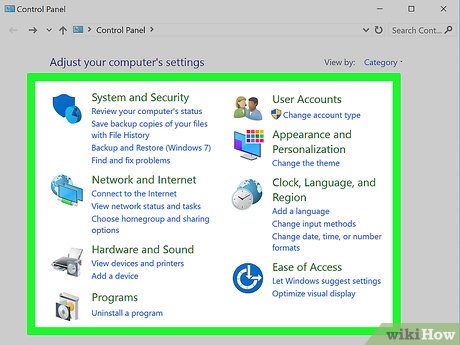 Use Control Panel to open specific pages in the Settings app. Control Panel can be launched by clicking or tapping the search bar/icon (or by typing in the Start menu if you disabled the taskbar search) and then typingcontrol paneland then hitting↵Enteror selecting the matching result. Here is a list of places to navigate to in Control Panel that will launch a page in Settings:
- System and Security > Security and Maintenance > Recovery > If you're having problems with your PC, go to Settings and try resetting it
- User Accounts > User Accounts > Make changes to my account in PC settings
- Appearance and Personalization > Taskbar and Navigation (or Navigation properties)
- Appearance and Personalization > Turn High contrast on or off (under Ease of Access Center header)
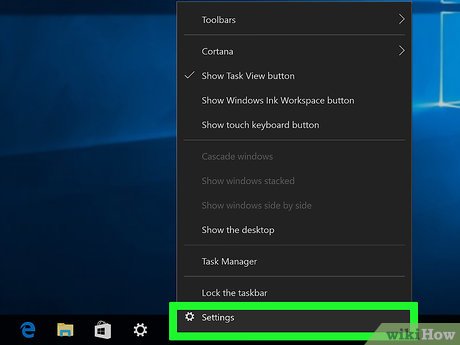 Open the taskbar settings. Right-click or hold down (for touchscreens) on the taskbar and then choose theTaskbar settingsoption at the bottom of the context menu.
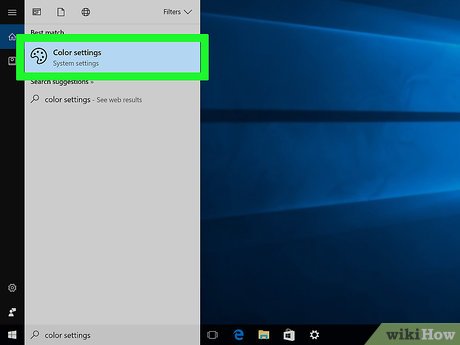 Use Cortana/search to look for and open specific settings. For example, you can typecolor settingsor ask Cortana to "open color settings".
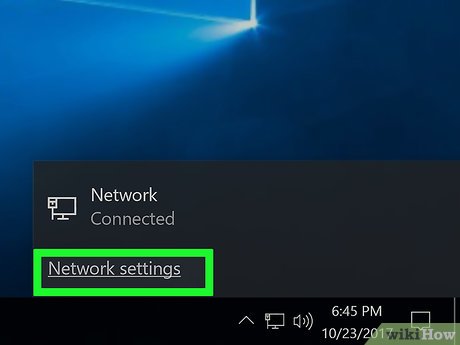 Open Network settings through the taskbar icon.
- Click or tap on the network icon o the taskbar (looks like a one or more curved bars or a monitor with a plug to the left).
- Select "Network & Internet settings" at the bottom.
FAQ
What is How to Open Windows 10 Settings about?
It provides a structured overview of settings, explains the main context, and highlights practical takeaways for readers.
Why does this topic matter?
Understanding the main concepts helps readers evaluate the issue, avoid common mistakes, and make better-informed decisions.
How should readers use this information?
Use the guidance as a practical starting point, confirm details that may have changed, and follow current product, safety, or security recommendations.
Related Articles
 5 Ways to Open Sound Settings on a Windows PC5 minutes read
 Steps to Open Sound Settings on Windows PC8 minutes read
 10 Ways to Open Display Settings in Windows 118 minutes read
 Summary of Several Ways to Quickly Access the Settings4 minutes read
 4 Ways to Quickly Open the Network Connection Tool on Windows4 minutes read
 How to Fix Errors That Cannot Open Start Menu, Hang Taskbar3 minutes read
Reader Comments 0
Sign in with email or Google to join the discussion.