Table of Contents
This updated guide examines How to Make a User Account an Administrator in Windows 8 and organizes the essential facts, background, and practical takeaways in clear American English.
Method 1of 3:
Changing Your Account
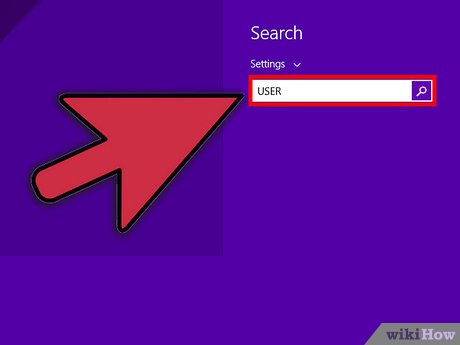 Login to Windows with an administrator account. Open the Start menu and type in "User." Select "Settings."
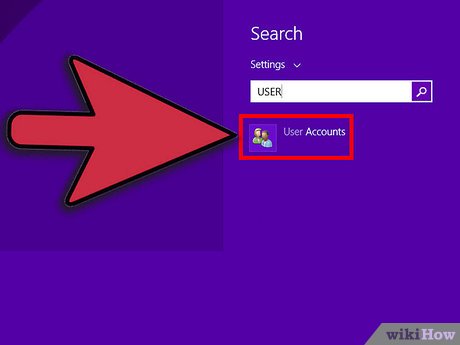 Select the "User Accounts" option in the top left corner.
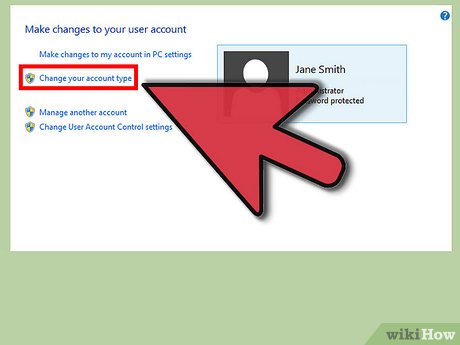 Select "Change your account type" from the User Accounts screen.
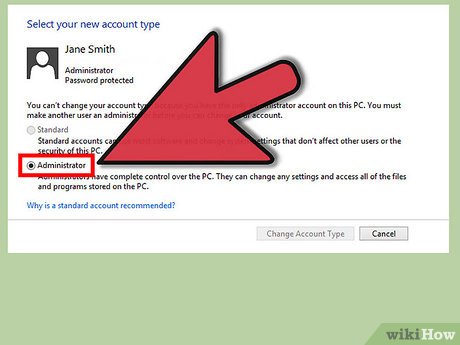 Select a user, and then click the "Administrator" option.
 Click "Change Account Type" to change the account to Administrator.
Method 2of 3:
Changing Another Account
 Open the Start screen. You can open the Start screen by pressing⊞Win. On the Start screen, start typinguser.
 Select "User Accounts" from the search results. There may be several options available to choose from. The User Accounts window ill open in the Desktop screen.
 Click the "Manage another account" option. If you aren't logged in as an administrator you will need to enter the administrator's password.
 Click the account you want to make an administrator. There may be several to choose from if there are multiple accounts on the computer.
 Click the "Change the account type" link. This will open a new page with the different account options.
 Toggle "Administrator". Click theChange Account Typebutton to save the changes. The account now has Administrator privileges.
Method 3of 3:
Alternative Method
 Run the command from an elevated command prompt. To do that, you need to use the same procedure as in the Windows 7.
- Press the Windows key to get into the Metro interface if you are not already there.
- Enter CMD and right-click on the Command Prompt result that should appear. This opens a list of options at the bottom.
- Select Run as administrator there.
- Accept the UAC prompt.
- Enter the following command to enable the hidden administrator account:
- net user administrator /active:yes
 If you ever want to disable the account, follow the same instructions, but run the following command instead: net user administrator /active:no
- Once you have enabled the account, you will see it listed in the user accounts control panel applet. Note that the account has not assigned a password to it, and that you should consider setting one to improve account security.
FAQ
What is How to Make a User Account an Administrator in Windows 8 about?
It provides a structured overview of account, explains the main context, and highlights practical takeaways for readers.
Why does this topic matter?
Understanding the main concepts helps readers evaluate the issue, avoid common mistakes, and make better-informed decisions.
How should readers use this information?
Use the guidance as a practical starting point, confirm details that may have changed, and follow current product, safety, or security recommendations.
Related Articles
 How to Login to Windows Xp as the Administrator4 minutes read
 How to Find or Change My Computer's Administrator5 minutes read
 How to Make Yourself an Administrator on Any Windows System5 minutes read
 How to Log in with Administrator Privileges on Windows4 minutes read
 How to Set Administrator Password6 minutes read
 Turn Off the Administrator Account in Windows 73 minutes read
Reader Comments 0
Sign in with email or Google to join the discussion.