Table of Contents
This updated guide examines Tap: How to Install Windows 8 on an Android Tablet and organizes the essential facts, background, and practical takeaways in clear American English.
Part 1of 4:
Downloading Limbo
 Open your tablet's
 Google Play Store. This app resembles a multicolored "Play" button on a white background.
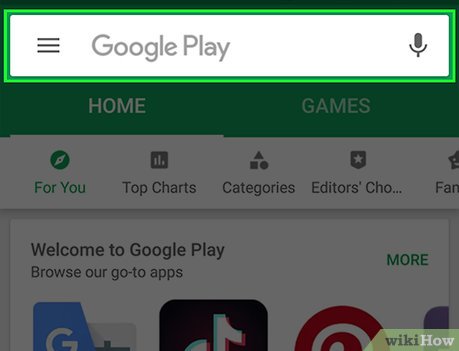 Tap the search bar. It should be at the top of the screen.
 Type inlimbo pc emulator. This will search the Play Store for the Limbo emulator app.
 TapLimbo PC Emulator QEMU ARM x86. It's at the top of the drop-down menu below the search bar. Doing so takes you to the Limbo download page.
 TapINSTALL. This green button is on the far-right side of the screen.
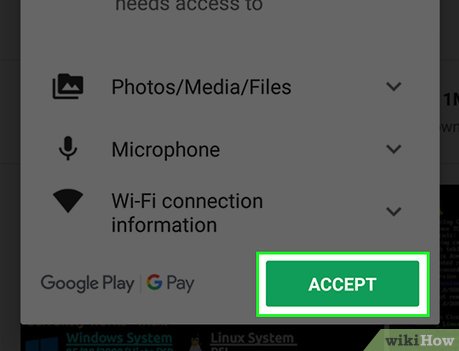 TapACCEPTwhen prompted. Doing so will allow Limbo to download onto your tablet.
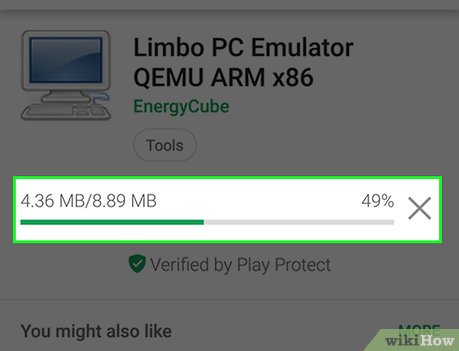 Allow Limbo to download. Limbo is a small app, so you can proceed with downloading the Windows 8 file while Limbo finishes downloading.
Part 2of 4:
Downloading Windows 8
 Enable downloads from unknown sources. This will allow you to download and install programs from websites rather than having to go through the Google Play Store:[1]
- Open
 Settings
 - Tap Security or Lock screen and security
- Tap the grey "Unknown sources" switch

- Tap OK if prompted.
- Open
 Open a web browser. Tap your preferred web browser's app icon (e.g.,
 Chrome ) to do so.
 Open the Windows 8 ISO site. Go to https://www.microsoft.com/en-us/software-download/windows8 in your tablet's browser.
 Scroll down and select an operating system. Tap the "Select edition" drop-down box, tap Windows 8.1 in the drop-down menu, and tap the blue Confirm button below the edition.
 Scroll down and select a language. Tap the "Choose one" drop-down box, tap your preferred language, and tap Confirm .
 Tap32-Bit Download. It's a blue button near the bottom of the page. Doing so will prompt the Windows 8 file to begin downloading onto your tablet's SD card.
- The download may take upward of an hour to complete, so just make sure that your tablet is connected to the Internet and plugged into a power source.
 Wait for the download to complete. Once it does, you can proceed with adding the Windows 8 file to the Limbo folder.
Part 3of 4:
Adding Windows 8 to Limbo
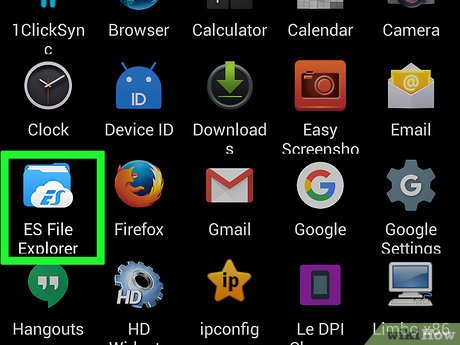 Open your file explorer app. Depending on your tablet's manufacturer, this app's name will vary.
- If you don't have a built-in file explorer app, you can download one from the Google Play Store. ES File Manager is a popular free choice.
 Go to the Windows 8 file. Tap the storage location to which the Windows 8 file was downloaded. In most cases, this will be a folder entitled Downloads that's in the "Internal Storage" or "SD Card" folder.
 Tap and hold the Windows 8 file. Doing so will prompt a menu or options to appear.
 TapCopyorMove. You should see one of these options either in a pop-up menu, or at the bottom or top of the screen.
- You may first have to tap ⋮ in one of the tablet's corners to select Copy or Move .
 Find thelimbofolder. Go back to the main page of the file explorer app, select your tablet's Internal Storage , and tap the limbo folder.
- If you can't find limbo in the internal storage, try the SD Card option. You may also need to restart your tablet before the limbo folder shows up.
- If you selected the Move option, you will be prompted to select a destination folder.
 TapPasteorMove. Again, you'll either see this option in a pop-up menu or at the top/bottom of the screen, or you'll need to tap ⋮ to see this option. Doing so will place the Windows 8 ISO file in the limbo folder. Once the copying/moving completes, you'll be able to run Windows 8.
Part 4of 4:
Running Windows 8
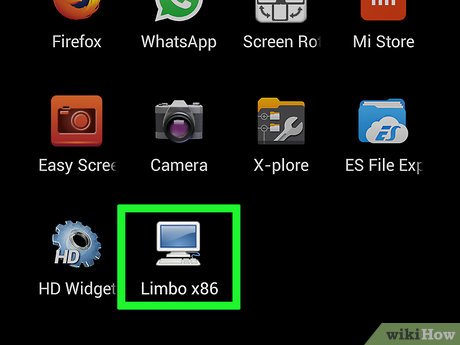 Open Limbo. Tap the computer-shaped Limbo app icon to do so.
 TapI Acknowledgewhen prompted. It's at the bottom of the screen.
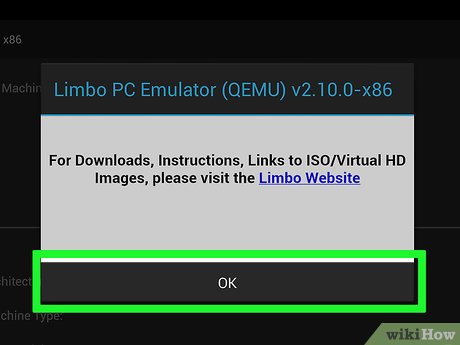 TapOKwhen prompted. Doing so will bring you to the main Limbo page.
- The pop-up window on which you have to select OK is usually a list of version notes, so you don't have to read the window here.
 Tap the "Load Machine" drop-down box
 . It's in the upper-right side of the screen. A drop-down menu will appear.
- This box will likely say None in it.
 Check theNewbox. You'll find this in the drop-down menu. Doing so opens a window.
 Enter a name. Type in a name (e.g.,windows 8) for your operating system.
 TapCREATE. It's at the bottom of the window. This will select Windows 8 as your operating system.
 Change the CPU model option. Tap the "CPU Model" drop-down icon, then tap qemu32 in the drop-down menu.
 Select a RAM option. Tap the "RAM Memory (MB)" drop-down icon, then tap at least 512 .
- If your tablet can handle using a gigabyte of RAM, consider tapping 1024 here instead.
 Check the "Hard Disk A" box. It's in the "Storage" section of this page, though you may need to scroll down a bit to see it.
 Tap the "Hard Disk A" drop-down icon. It's to the right of the "Hard Disk A" heading. A drop-down menu will appear.[2]
 TapOPEN. This option is in the menu. Doing so will open a list of your tablet's internal storage folders.
 Select the Windows 8 file. Scroll down and tap limbo , then find the Windows 8 file and tap it to select it. You may need to tap a checkmark ✓ or a button (e.g., OPEN or OK ) to confirm this choice.
 Scroll down and check the "Fullscreen" box. It's in the "User interface" section of the page. Once you've selected this final option, you're free to run Windows 8.
 Scroll up and tap the "Play" button. This is the triangle-shaped icon at the top of the Limbo page. Doing so will prompt Windows 8 to begin running on your tablet.
- Keep in mind that your tablet will run quite slowly during this time.
FAQ
What is Tap: How to Install Windows 8 on an Android Tablet about?
It provides a structured overview of tap, explains the main context, and highlights practical takeaways for readers.
Why does this topic matter?
Understanding the main concepts helps readers evaluate the issue, avoid common mistakes, and make better-informed decisions.
How should readers use this information?
Use the guidance as a practical starting point, confirm details that may have changed, and follow current product, safety, or security recommendations.
Related Articles
 Install Windows 10: Install Win 10 for Android Tablet4 minutes read
 4 Ways to Use Your Android Tablet Even When the Battery Is Completely Dead8 minutes read
 Why Are Android Tablet Apps So Bad: Key Facts7 minutes read
 How to Install APK Files on Android: Clear Instructions3 minutes read
 5 Reasons to Switch to Android Tablets6 minutes read
 Top 5 Best Cheap Android Tablets 20197 minutes read
Reader Comments 0
Sign in with email or Google to join the discussion.