Table of Contents
This updated guide examines How to Install Deb Files and organizes the essential facts, background, and practical takeaways in clear American English.
Method 1of 4:
Using Ubuntu Software Manager
 Double-click the. DEB file. If you're using Ubuntu with a Graphical User Interface (GUI), this method will guide you through one of the most straightforward ways to install DEB packages.
- If you run into trouble with dependencies when using this method, try either the Using GDebi Package Installer or Using Dpkg method.
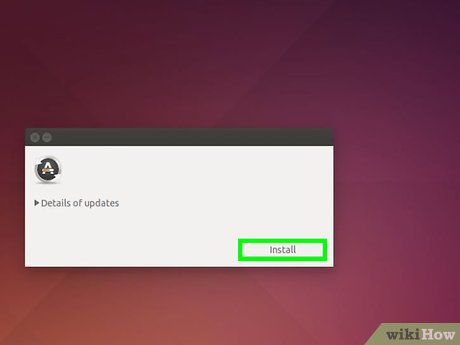 Click theInstallbutton. An authentication window will appear.
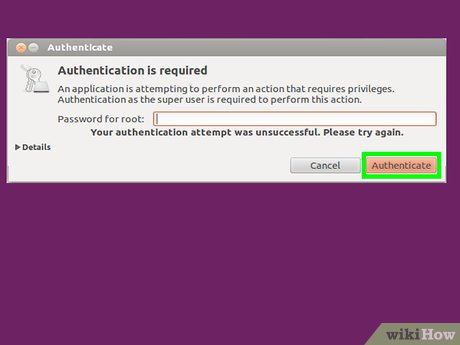 Enter your password and clickAuthenticate. This begins the installation process. Once the installation is complete, you'll see a confirmation message.
Method 2of 4:
Using GDebi Package Installer
 Install GDebi if you haven't already done so. GDebi is one of the most reliable ways to install DEB packages because of its ability to handle dependencies.[1]If you have Linux Mint, GDebi is already set up as your default package manager. If you're using Ubuntu or Debian, you'll need to install it (or use another method). To install GDebi:
- PressCtrl+Alt+Tto open a terminal window.
- Typesudo apt-get updateand press↵Enteror⏎Return.
- Enter your password when prompted.
- Typesudo apt install gdebi-coreand press↵Enteror⏎Return.
 Open a terminal window. If you're logged into a shell account, just skip to the next step. Otherwise, you can pressCtrl+Alt+Tto open a terminal window in most window managers.
- If you're using Linux Mint, you can install the DEB file now by double-clicking it in your file manager and selecting Install Package .
- If you're using Ubuntu or Debian and want to use the GDebi GUI, open your file manager, right-click the DEB file, and select Open With Other Application . Choose GDebi when prompted, and then click Install Package to complete the installation.
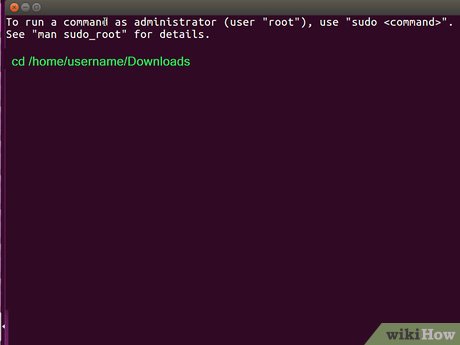 Usecdto navigate to the directory with the DEB file. For example, if you saved the file to/home/username/Downloads, typecd /home/username/Downloadsand press↵Enteror⏎Return.
 Typesudo gdebi filename.deb and press↵Enteror⏎Return. Replacefilename.debwith the DEB file's actual name. This installs the DEB package and all related dependencies.
Method 3of 4:
Using Dpkg
 Open a terminal window. If you're logged into a shell account, just skip to the next step. Otherwise, you can pressCtrl+Alt+Tto open a terminal window in most window managers.
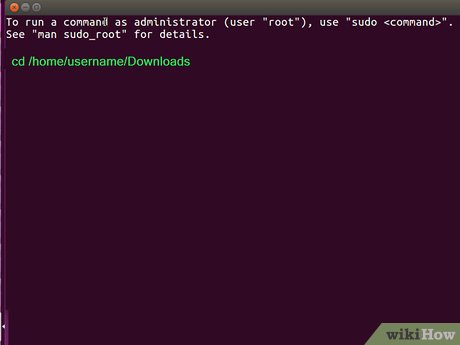 Usecdto navigate to the directory with the DEB file. For example, if you saved the file to/home/username/Downloads, typecd /home/username/Downloadsand press↵Enteror⏎Return.
 Typesudo dpkg –i filename.deb and press↵Enteror⏎Return. Replacefilename.debwith the name of the DEB file. This command will install the package.
- If it's the first time you've run a command usingsudoin this window, you'll have to enter your password when prompted to continue.
 Resolve any dependency errors (optional). If the previous command threw an error about dependencies, runsudo apt-get install -fto resolve them.
Method 4of 4:
Using Apt
 Open a terminal window. If you're logged into a shell account, just skip to the next step. Otherwise, you can pressCtrl+Alt+Tto open a terminal window in most window managers.
- Apt is normally used to download and install software from remote sources, but you can use it to install local DEB packages using a special syntax.
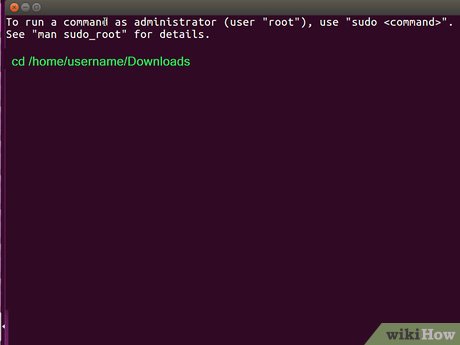 Usecdto navigate to the directory with the DEB file. For example, if you saved the file to/home/username/Downloads, typecd /home/username/Downloadsand press↵Enteror⏎Return.
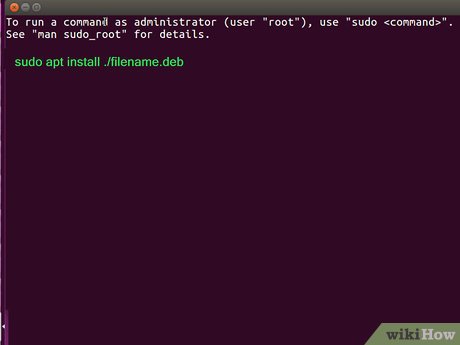 Run the installation command. Typesudo apt install./ filename.deb and press↵Enteror⏎Return. The software will now install.
- Be sure to replacefilename.debwith the actual name of the file, take note of the./before it—if you leave it out, the apt tool will try searching for the package on remote sources.[2]
- If it's the first time you've run a command usingsudoin this window, you'll have to enter your password when prompted to continue.
FAQ
What is How to Install Deb Files about?
It provides a structured overview of deb, explains the main context, and highlights practical takeaways for readers.
Why does this topic matter?
Understanding the main concepts helps readers evaluate the issue, avoid common mistakes, and make better-informed decisions.
How should readers use this information?
Use the guidance as a practical starting point, confirm details that may have changed, and follow current product, safety, or security recommendations.
Related Articles
 How to Install APK Files on Android: Clear Instructions3 minutes read
 How to Scan for Viruses on APK Files4 minutes read
 How to Install APK Files on a PC3 minutes read
 How to Open Exe Files12 minutes read
 How to Install APK, XAPK Files on Bluestacks3 minutes read
 Install Word to PDF Converter to Convert Word Files to High-Quality Pdfs3 minutes read
Reader Comments 0
Sign in with email or Google to join the discussion.