Table of Contents
This updated guide examines How to Encrypt a Folder on Windows and organizes the essential facts, background, and practical takeaways in clear American English.
Part 1of 2:
Installing 7-Zip
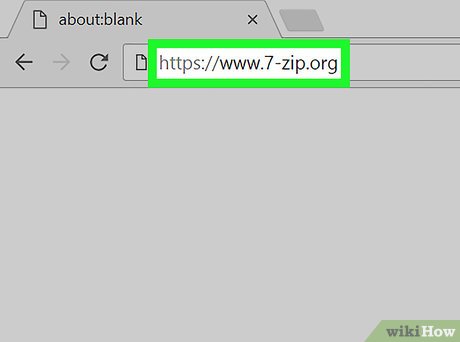 Go tohttps://www.7-zip.org. This is the website for 7-zip, a free Windows application that can be used to encrypt your folders.
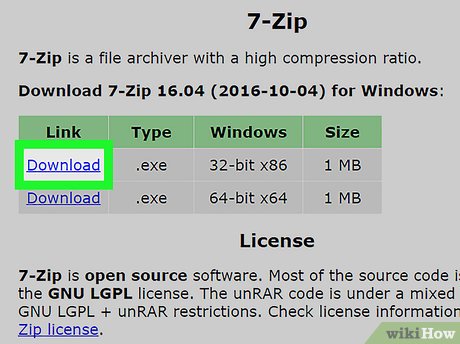 ClickDownload. Be sure to click the link for your version of Windows (32-bit or 64-bit). The installer will now download to your computer.
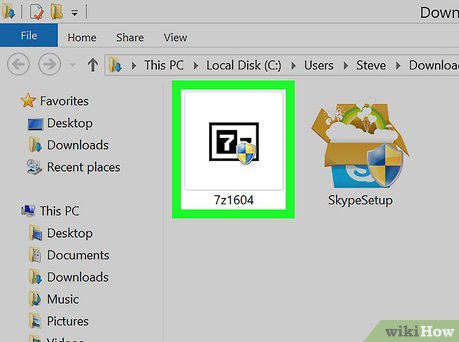 Open the installer. This is the file you just downloaded. You may see a link to the file at the bottom of your web browser. Click it, then select Open if prompted.
- If you don't see it in your browser, you should find it in the Downloads folder.
 Select a folder for 7-zip. The default option (c:Program Files7-Zip) should work for most people.
 ClickInstall. Once the installation is complete, the 'Install' button will change to 'Close.'
 ClickClose. 7-Zip is now installed on your computer.
Part 2of 2:
Encrypting a Folder
 Open 7-Zip. You will find it in the
 menu. This opens a list of all folders on your computer.
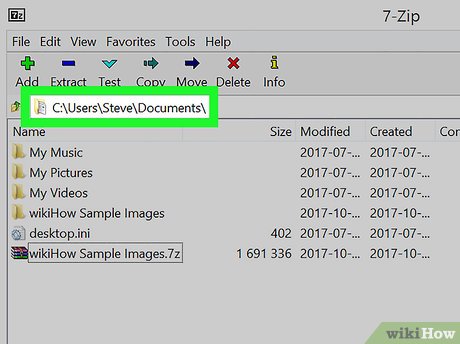 Navigate to the folder you want to encrypt. Just make sure it's visible on the screen—don't open it.
- For example, if you want to encrypt a folder that's in your own Documents folder, double-click Users , then double-click your username. You'll see the Documents folder inside the Users folder.
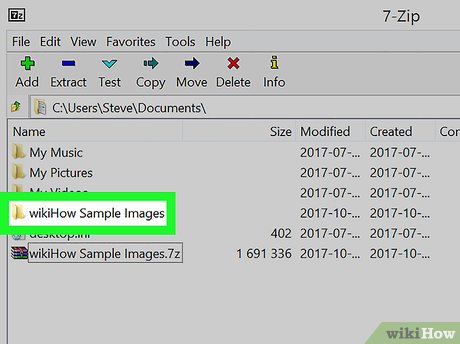 Click the folder you want to encrypt. It is now highlighted in a different color, which means it's selected.
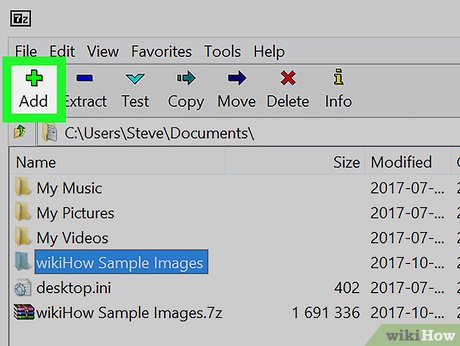 ClickAdd. It's the first icon at the top of 7-Zip. You'll also see a '+' symbol on the button. A window will appear.
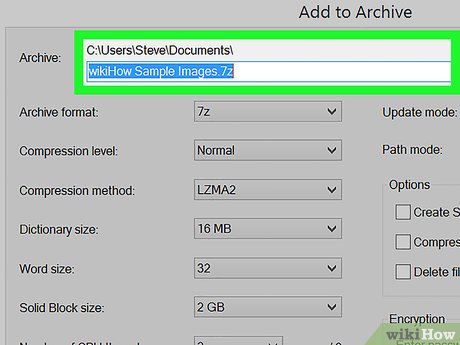 Select a folder from the 'Archive' drop-down menu. This is where the encrypted folder will be stored.
- Use the ⋯ button to locate the folder.
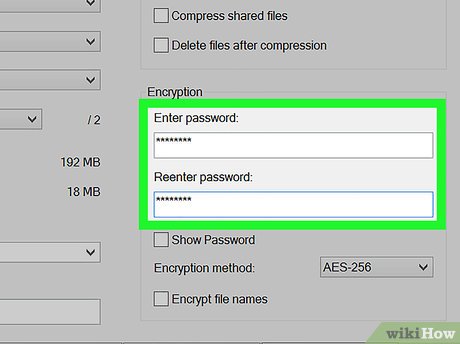 Set a password for your encrypted folder. To do this, type a password into the first box in the 'Encryption' area, then type it into the second box for confirmation.
- It's extremely important that you remember this password, as you'll need it to access these files.
- The default encryption method is AES-256. You'll see that it's selected from the Encryption drop-down. There's no need to change it.
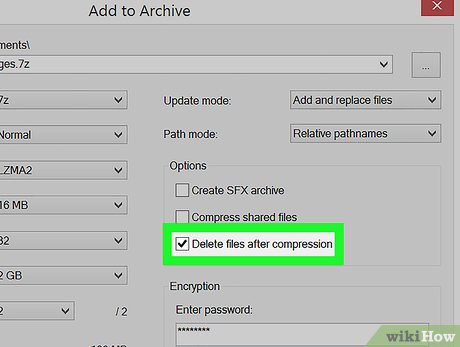 Check the box next to 'Delete files after compression. ' This ensures that there will be no unencrypted version of the folder, making it safe from prying eyes.
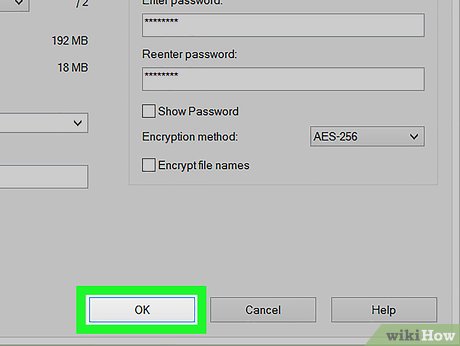 ClickOK. The folder is now encrypted. When you try to open it, you'll be prompted to enter a password.
FAQ
What is How to Encrypt a Folder on Windows about?
It provides a structured overview of folder, explains the main context, and highlights practical takeaways for readers.
Why does this topic matter?
Understanding the main concepts helps readers evaluate the issue, avoid common mistakes, and make better-informed decisions.
How should readers use this information?
Use the guidance as a practical starting point, confirm details that may have changed, and follow current product, safety, or security recommendations.
Related Articles
 How to Encrypt FILE or FOLDERS on Windows 10, 8, 710 minutes read
 How to Set Password for Folder and File in Windows9 minutes read
 How to Encrypt Files10 minutes read
 Folder Protection: How to Protect Folders with Secure Folder?2 minutes read
 What Is the Windows.old Folder and How Do You Delete It?5 minutes read
 Encrypt Drive: How to Encrypt Windows System Drive with Veracrypt15 minutes read
Reader Comments 0
Sign in with email or Google to join the discussion.