Table of Contents
This guide explains how to do Automatic Table of Contents in Word 2013, 2016, with clear steps, practical tips, and important checks before you begin.
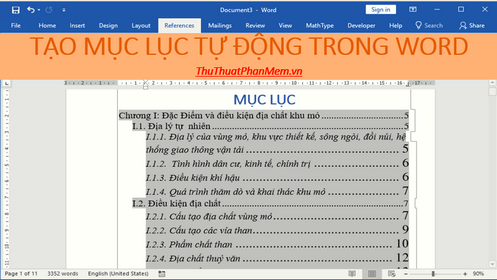
Switch the View of the document.
To create a table of contents easily you need to convert your text to Outline mode to facilitate the creation of the table of contents. Go to the View tab -> select Outline to switch to Outline mode for the text:

Text results are transferred to Outline mode :

Create a table of contents automatically
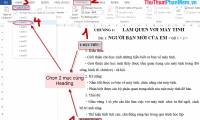
Step 1: Once you have changed the text to Outline mode, you only need to select the table of contents corresponding to the levels to create the table of contents, the big title corresponds to the low level in the table of contents. The example here Chapter I corresponds to level 1:

Step 2: Similar to section I.1, Natural geography is equivalent to level 2, I.1.1 corresponds to level 3:

After selecting the level, the titles are decentralized as shown:
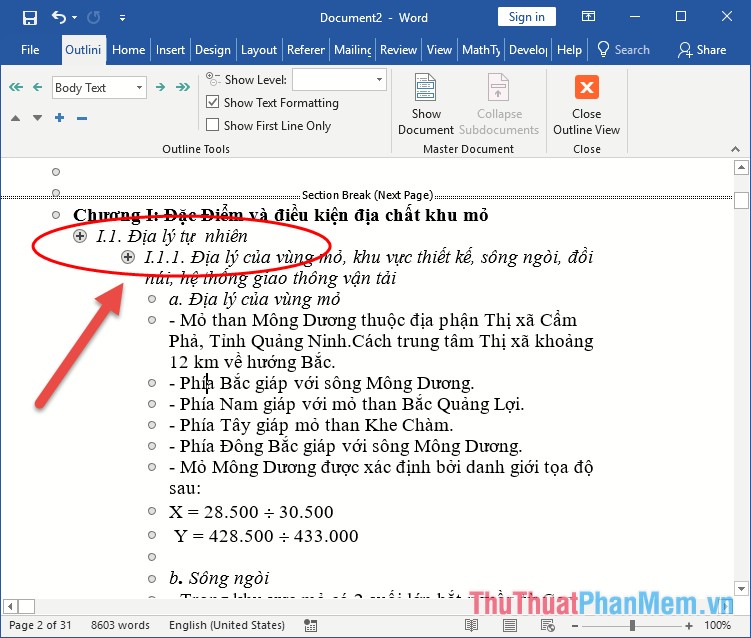
Similarly, you choose the level level for all the titles in your text:
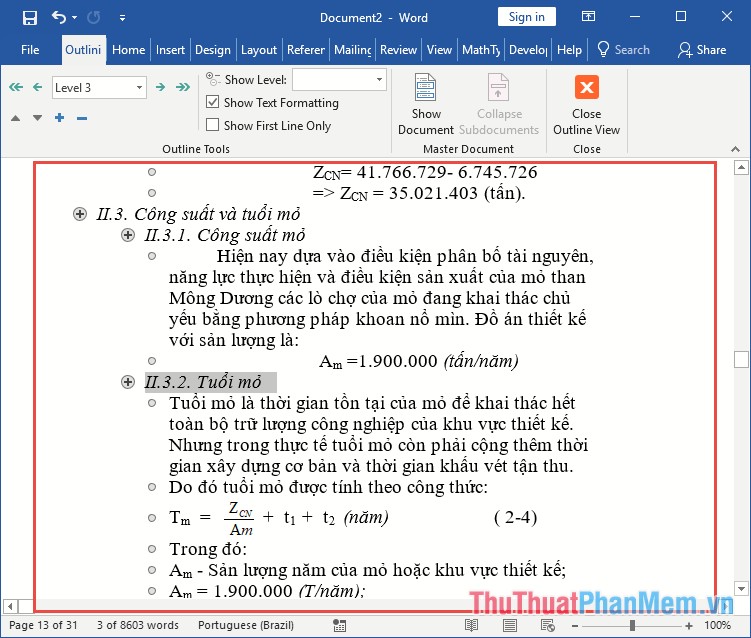
Step 3: After leveling up all the titles to create a table of contents in your document, place the mouse cursor at the position you want to create the table of contents (here to create the table of contents after the introduction). References tab -> click Table of Contents -> select display style for table of contents:
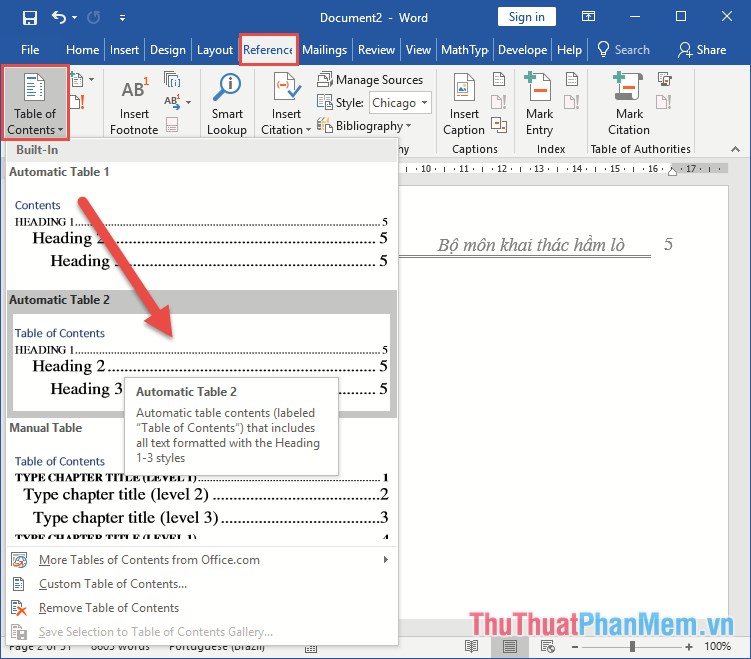
Step 5: After selecting the display style for the table of contents -> the table of contents has been created:
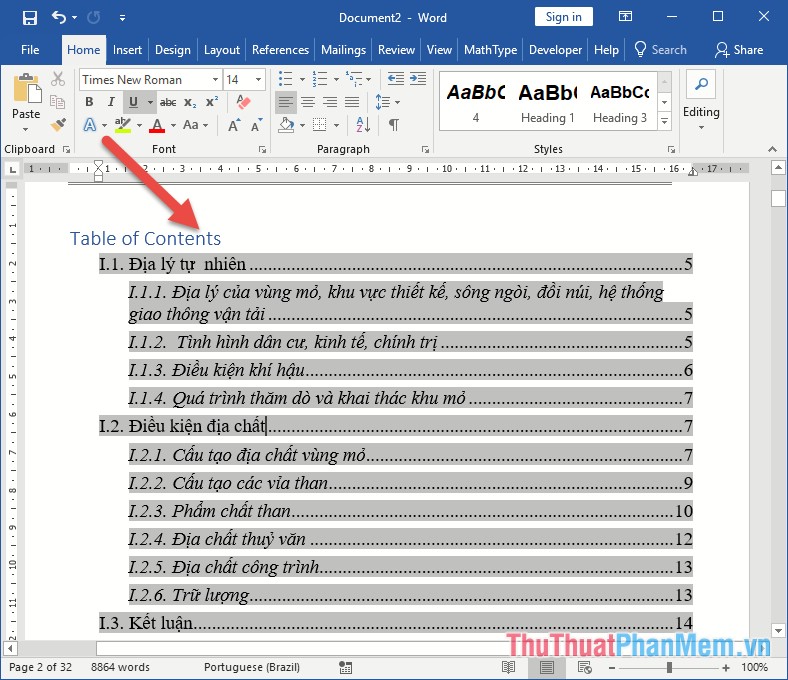
Step 6: Edit the name, font formats, position for the table of contents to get results:

So you've created the table of contents for your text, now when you want to move to any page, go to the table of contents page -> hold down Ctrl and click the position to move to immediately That page is displayed:
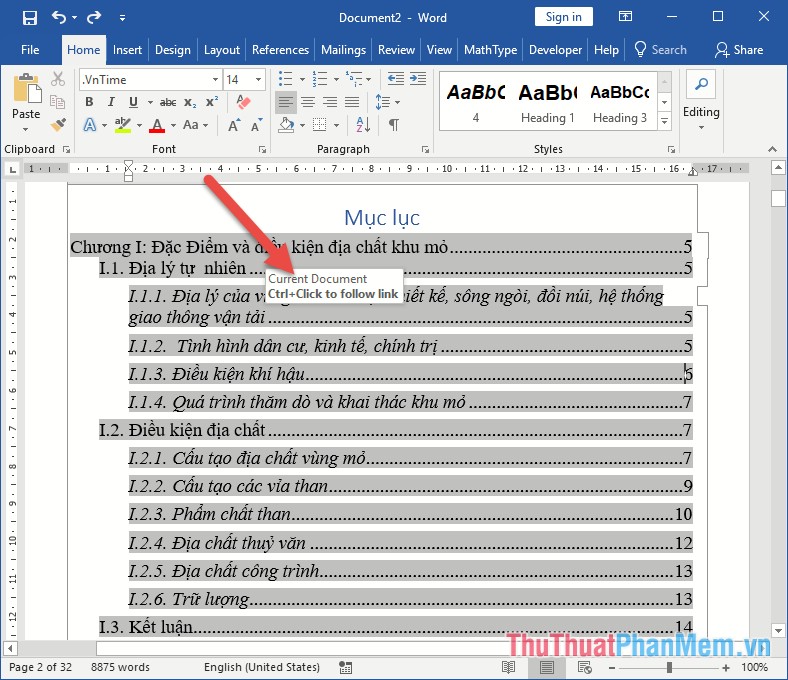
Update Table of Contents
In case you want to edit the text content, this makes your table of contents wrong, very simple after you finish editing you go back to the page containing the table of contents -> right-click and choose! Update Field:
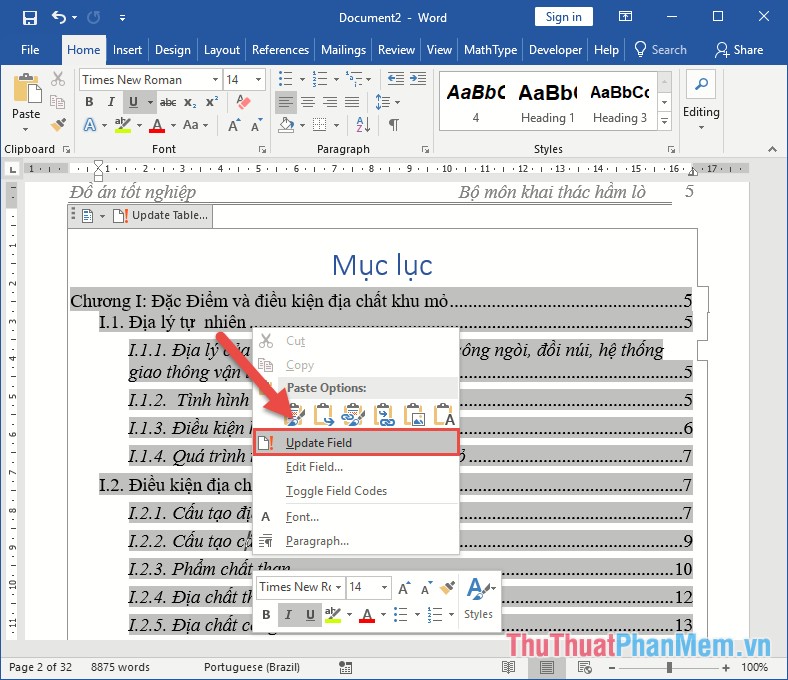
The dialog box includes the following options:
- Update page number only: Only update the page number in the table of contents.
- Update entire table: Perform updates all the content in the table of contents, including adding titles to show in the table of contents.
For example, here I need to add content, so I.1.4 on page 7 is pushed to page 8. Need to update the page number for the table of contents should select Update page number only -> click OK:

The result of the newly updated page number corresponds to the updated titles:
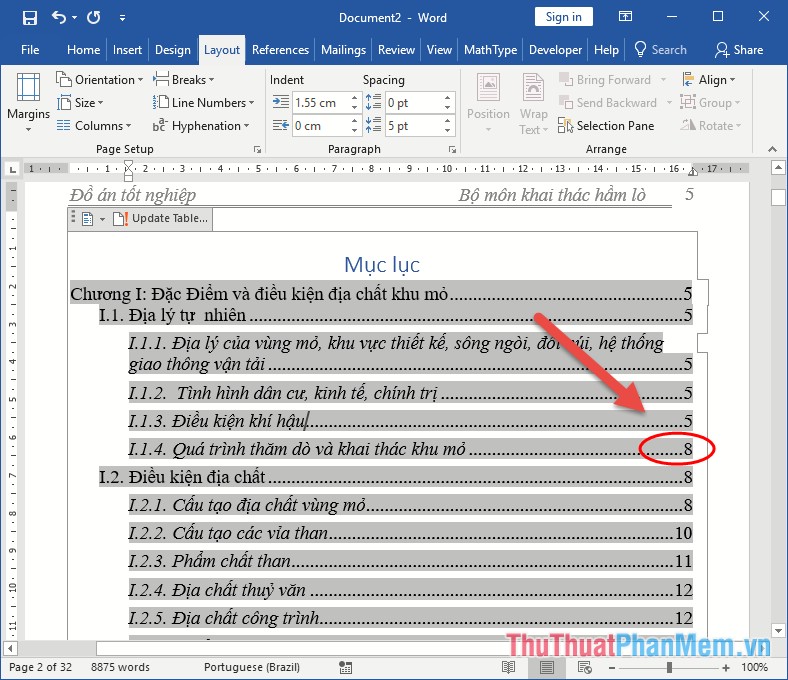
This way you can create an automatic table of contents for your text. Good luck!
FAQ
What should I know about Do Automatic Table of Contents in Word 2013, 2016?
Focus on the key features, requirements, limitations, and practical use cases explained in this guide.
How do I get the best results with Do Automatic Table of Contents in Word 2013, 2016?
Follow the recommended steps, use current software or information, confirm compatibility, and review settings before major changes.
Are there any risks or limitations?
Potential limitations depend on compatibility, data quality, cost, privacy, support, and how the product or method is used.
Related Articles
 How to Create an Automatic Table of Contents in Word 2019/2016/2010/200712 minutes read
 Create Automatic Table of Contents in Word for Word 2007, Word 20106 minutes read
 Create Automatic Table of Contents in Word 20039 minutes read
 How to Create Automatic Table of Contents in Word 20133 minutes read
 How to Create Automatic Table of Contents in Word 20078 minutes read
 Instructions on How to Create Automatic Table of Contents in Word Quickly6 minutes read
Reader Comments 0
Sign in with email or Google to join the discussion.