Table of Contents
This updated guide explains how to Disable the 'Low Disk Space' Warning in Windows through clear steps, practical examples, and important checks that help prevent common errors.
Why Does the 'Low Disk Space' Warning Appear?
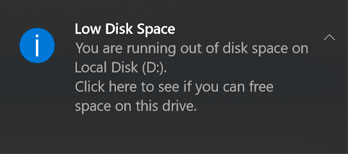 Low Disk Space alerts appear in the lower right of the screen
Low Disk Space warning is a prompt that appears in the Windows operating system to notify users of a specific location of the hard drive about to run out of space. When this message appears, users need to take some action to resolve this error message, otherwise it will continue to appear regularly. In addition, the low disk capacity warning indicates that the hard drive is in bad condition and needs urgent improvement.
How to Disable the 'Low Disk Space' Warning in Windows 10/8/7
1. Press Win+ key R to open Run command box, type regedit and press Enter.
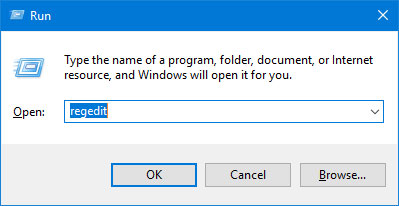 Open the Registry Editor window
2. This will open the Registry Editor window. Navigate to the following key:
HKEY_CURRENT_USERSOFTWAREMicrosoftWindowsCurrentVersionPoliciesExplorerRight-click an empty area to the right and select New> DWORD (32-bit) Value .
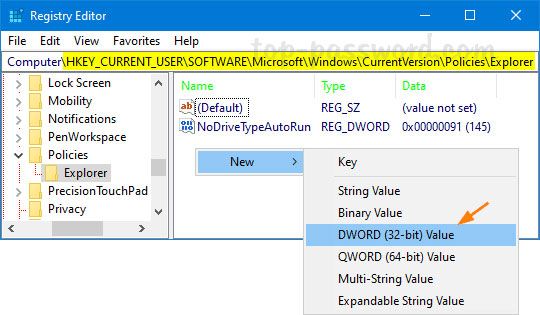 Right-click an empty area to the right and select New> DWORD (32-bit) Value
3. Name the value NoLowDiskSpaceChecks and double-click it to modify. In the Value Data box, enter 1 and click OK.
 Name the value NoLowDiskSpaceChecks, enter a value of 1, and then click OK
4. Close Registry Editor and restart the computer. Windows will stop giving you low disk space warnings. If you may need to enable low disk space notifications later, just right-click the NoLowDiskSpaceChecks value and delete it.
FAQ
What is the easiest way to Disable the 'Low Disk Space' Warning in Windows?
Start with the requirements in this guide, then follow each step in order. Check the result after every major change so problems are easier to identify.
Can beginners follow these instructions?
Yes. The process is organized into practical steps, and you can repeat any step before moving forward.
What should I check if the method does not work?
Confirm your software or device version, permissions, settings, file format, and internet connection when the task depends on online services.
Related Articles
 4 Best Disk Capacity Analysis Tools on Windows 108 minutes read
 How Much Disk Space Does Windows 10 Take?4 minutes read
 How to Check and Manage Disk Space in Linux8 minutes read
 Free Up Hard Drive Space Automatically on Windows 10 with Disk7 minutes read
 How to View Files Taking up Disk Space on Windows 114 minutes read
 Disk Quotas Configuration in Windows 20037 minutes read
Reader Comments 0
Sign in with email or Google to join the discussion.