Table of Contents
This updated guide examines File: How to Create Svg Images and organizes the essential facts, background, and practical takeaways in clear American English.
Method 1of 2:
Using Convertio JPG to SVG Converter
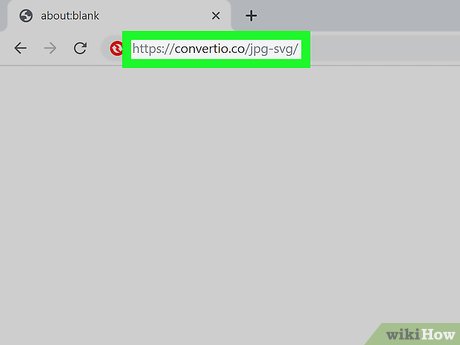 Open your Web browser and go tohttps://convertio.co/jpg-svg/. This takes you to the page for Convertio's JPG to SVG Converter, which is free to use.
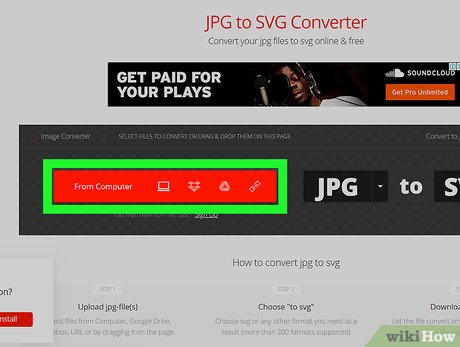 Select the source for your JPG image. At the top of the converter menu, you should see a red toolbar listing different sources you can access to upload a JPG image file to be converted to SVG.
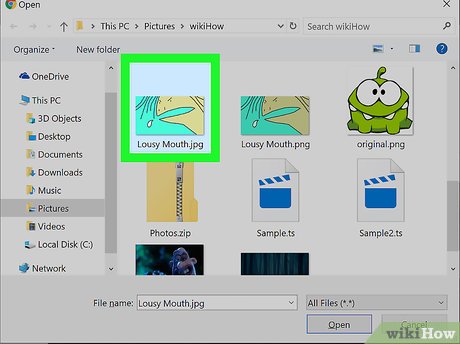 Navigate to the file you want to convert. Once you've selected a source, a dialog box should pop up with the library of your computer's folders. From there, navigate to the folder with the file you want to convert and select the file.
 ClickConvert. Once the file has been uploaded, a red button will appear in the lower-right corner of the menu screen. This will start the conversion process, which may take a few minutes depending on the file size.
 ClickDownload. Once the file is done being converted, a blue button will appear to the right of the file name in the Converter menu. Once you click it, the image will then be downloaded onto your computer as an SVG file.
Method 2of 2:
Using Adobe Illustrator
 Open Adobe Illustrator. Adobe Illustrator is a graphic design app that lets you create your own art using a variety of tools and features.
 Create your image. Once you have Illustrator opened, you can select any of the tools in the toolbar on the left side of the screen to get started with designing your image.
 Apply SVG effects to certain layers of your image. If you want to add any custom effects to your image, you can select a layer and then click Effect > SVG Filters > Apply SVG Filter . Then, just click the Edit SVG Filter button, edit the default code, and click OK to save your SVG effects.
 Click theFiletab. This is located in the top-left corner of the screen.
 SelectExportin the menu. To have your SVG file ready for viewing and using outside of Illustrator, you'll need to export it.
- You can also select Save As... , though this will save the file so that it can only be viewed and edited in Illustrator.
 ClickExport As.... This pulls up a new menu where you can export the file from Illustrator into the format of your choice.
- You can also select Export for Screens... to have your SVG image saved in a way that can be accessed on iOS or Android devices.
 SelectSVGin the list of file types. Illustrator offers a variety of file types for you to choose from, including web-ready SVG files.
 ClickSave. Your image will now be available to use as an SVG file.
FAQ
What is File: How to Create Svg Images about?
It provides a structured overview of file, explains the main context, and highlights practical takeaways for readers.
Why does this topic matter?
Understanding the main concepts helps readers evaluate the issue, avoid common mistakes, and make better-informed decisions.
How should readers use this information?
Use the guidance as a practical starting point, confirm details that may have changed, and follow current product, safety, or security recommendations.
Related Articles
 How to Create GIF Images with Google's Gboard Keyboard on iPhone5 minutes read
 How to Create Images Using Copilot on PC and Phone, Creating Images Using AI4 minutes read
 Instructions for Creating GIF Images on YouTube Do Not Need Software7 minutes read
 How to Create Gif Images from Videos with Workflow on iPhone6 minutes read
 5 Effective Online GIF Image Creation Tools4 minutes read
 How to Use Image+ to Create Images with AI Technology3 minutes read
Reader Comments 0
Sign in with email or Google to join the discussion.