Table of Contents
This step-by-step guide explains how to delete files on mac directly without the trash trash. It covers the required setup, the main actions, and the checks that help prevent common problems.
Deleting files on OS X has never been an easy process. Have to wait until the most recent version of Mac users can delete files permanently by deleting files in Trash trash and then proceed to clean the trash.
However, to save effort, you can delete files permanently with just one step like Windows. Fortunately on El Capitan, users can delete files permanently with just one step.
If you have multiple files to delete, just select the files you want to delete, then select File Menu . Normally when you will find the Move to Trash option , however, if you press and hold the Option Key, the option will change to Delete Immediately.
At this time, the dialog box appears asking you to confirm whether you want to delete the files or not?
Select Delete To confirm deletion.
Alternatively you can use keyboard shortcuts to manipulate faster. Select one or more files you want to delete, then press Option + Command + Delete . At this time, a confirmation dialog box appears. Select Delete To delete the files permanently.
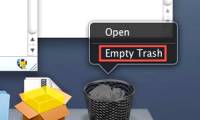
Also you can delete files in the traditional way by dragging the files into the Trash trash and then cleaning the trash.
However, if you want the process to go faster, you can skip the confirmation dialog by clicking Menu Finder And then choosing Preferences .
On the Finder Preferences interface, switch to the Advanced Tab, then leave the Show warning before emptying the Trash option Finished.
Refer to Some of the Following Articles
-
How to Choose Antivirus Apps for Windows and Mac
-
Tricks to Hide Files or Folders on Windows, Mac OS X and Linux
-
How to Fix "Wi-Fi: No Hardware Installed" Error on Mac OS X
-
How to Connect and Share Android Phone Data with Mac
FAQ
What should I check before following these steps?
Confirm device and software compatibility, save important data, and make sure you have the required permissions, files, and account access.
Why might the process not work?
Common causes include outdated software, missing permissions, incompatible hardware, an unstable connection, or completing a step in the wrong order.
Can I undo the changes if necessary?
That depends on the tool or setting. Use built-in restore options when available, keep a backup, and record the original configuration first.
Related Articles
 How to Delete Files on Mac - Empty Trash or Secure Empty Trash?6 minutes read
 How to Add Trash to Permanently Delete Files on Windows 10/118 minutes read
 Permanently Delete Files on macOS Without Sending to Trash: How-To Guide6 minutes read
 How to Delete Trash Automatically on Mac3 minutes read
 Delete the Most 'Stubborn' Files on Windows10 minutes read
 How to Recover Deleted Files Permanently in the Trash3 minutes read
Reader Comments 0
Sign in with email or Google to join the discussion.