Table of Contents
This article provides a clear overview of Calculate by Cell Background Color in Excel, with the main facts, useful context, and practical details organized for easy reading.
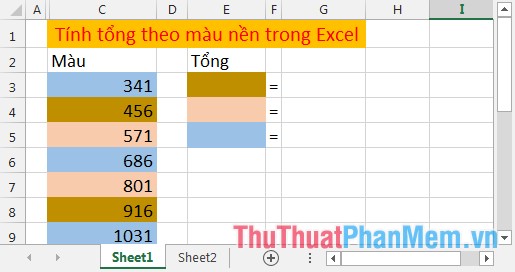
Example
The colors have corresponding values. Sum the values corresponding to the cell's background color.
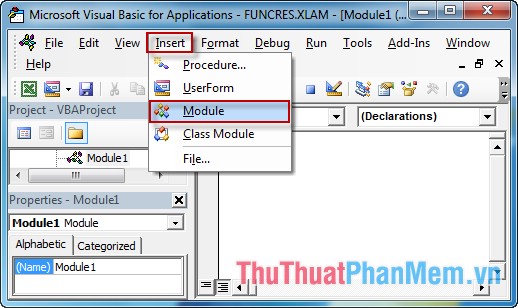
Step 1: Press the key combination Alt + F11 to open VBA 's working window -> Go to Insert tab -> Module .
Step 2: Build the function to calculate the total by color (named SumByColor ). Enter the following code into the newly created Module:
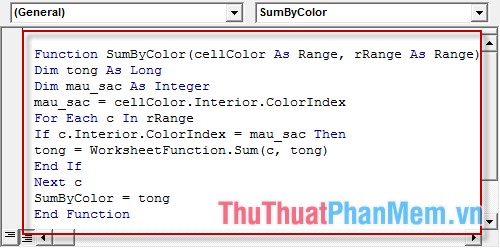
Function SumByColor (cellColor As Range, rRange As Range) Dim tong As Long Dim mau_sac As Integer mau_sac = cellColor.Interior.ColorIndex For Each c In rRange If c.Interior.ColorIndex = mau_sac Then tong = WorksheetFunction.Sum (c, tong) End If Next c SumByColor = tong End Function
Note: Remember the name of the function you just created.
Step 3: Go back to the Excel File to calculate and select the SumByColor function as shown below:
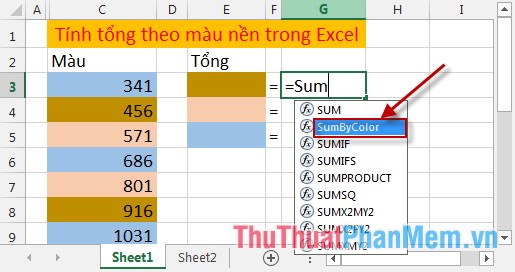
Step 4: The SumByColor function (cellColor, rRange) has 2 arguments that are the color value of the cell and the data range to be calculated -> Enter the statement as shown:
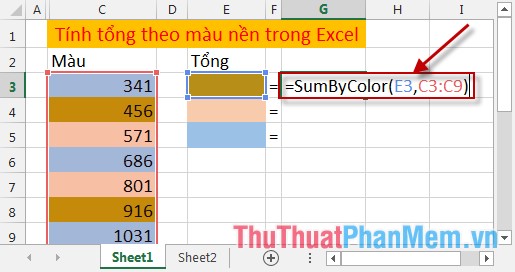
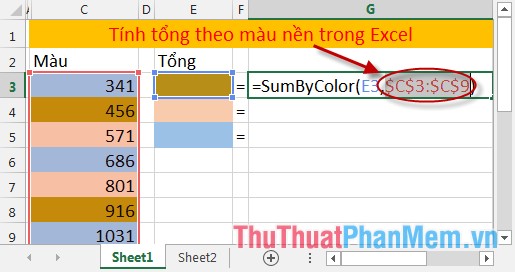
Step 5: Convert the cell address to absolute address, highlight the address area and press F4. (You should do this step to avoid errors).
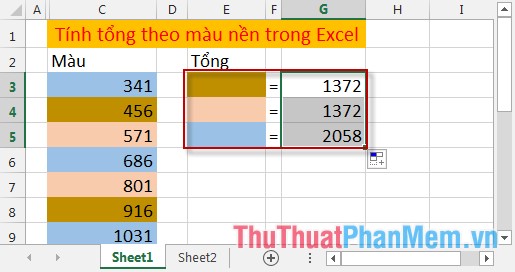
Finally Copy the formula to the remaining cells -> Result:
FAQ
What is the main focus of Calculate by Cell Background Color in Excel?
The article explains the most important facts, context, and practical details related to Calculate by Cell Background Color in Excel.
Who may find this information useful?
It is useful for readers who want a clear overview, practical context, and a better understanding of the subject.
What should readers verify before taking action?
Check current product versions, official requirements, regional availability, and any details that may have changed since the original publication.
Related Articles
 Instructions to Change the Cell Background Color (Cell) in Excel4 minutes read
 How to Color the Background, Table Color in Word, Excel3 minutes read
 Complete Tutorial of Excel 2016 (Part 5): Basics of Cells and Ranges11 minutes read
 Hide the Contents of Any Cell in Excel3 minutes read
 How to Change Spreadsheet Color Lines in Excel4 minutes read
 Excel 2016 - Lesson 5: Basic Concepts of Cells and Ranges12 minutes read
Reader Comments 0
Sign in with email or Google to join the discussion.