Table of Contents
3 Ways to Convert CSV to Excel Successfully brings together practical options worth considering. Below, you'll find clear explanations, useful context, and tips for deciding which choices best match your needs.
Key Takeaways
- Follow the steps to open CSV files directly in excel.
- Follow the steps to open CSV files using windows explorer.
- Follow the steps to import CSV data into excel as external data.
1. How to Open CSV Files Directly in Excel
This way the CSV file in Excel when opened will not change the file format, i.e. It will not convert your CSV file to Excel.XLS or.XLSX file.
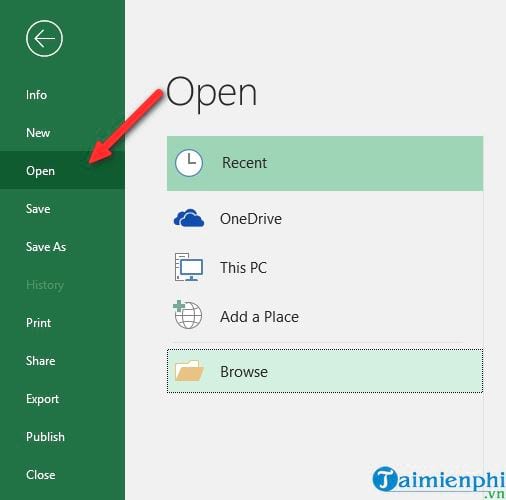
Step 1: Open the Excel you are using -> open the File tab -> click Open.
Step 2: The Open interface appears -> select Text Files (*.prn, *.txt, *.CSV) to display the list of CSV files you want to open.
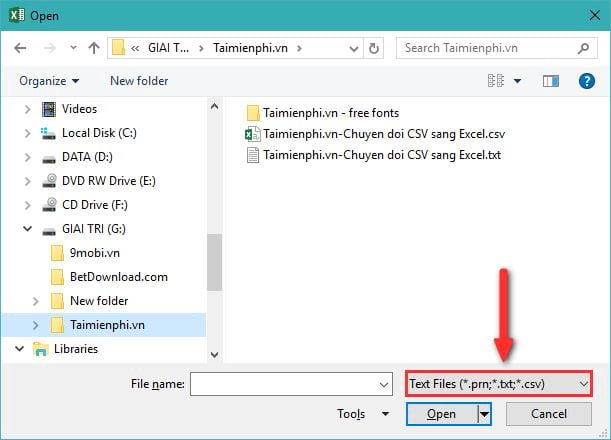
Step 3: Find the CSV file and select to open the CSV file:
- If the file is in.CSV format, Excel will open it and display the opened data in a new spreadsheet.

- If the CSV file is not in.CSV format, such as a.txt text file, Excel will display the Import Text Wizard interface.

* Some notes:
- When Excel opens a CSV file, it uses a default data format to know exactly how to import each column of text data. - If your data contains one of the following characters or content, you should open the CSV via the Import Text Wizard:
+ Different delimiters are used in CSV files. + CSV files contain different date formats. + You want to convert with leading zeros and want to keep the leading zeros in an Excel spreadsheet. + In case you want to see a preview of your CSV data before importing it into Excel. + In case you want to customize it your own way.
- To open CSV via Import Text Wizard, you need to convert CVS format to TXT, you can use Advanced CSV Converter before opening via Open on Excel.
2. How to Open CSV Files Using Windows Explorer
This is probably the fastest way to open a CSV file in Excel. Follow these steps to open a CSV in Windows Explorer.
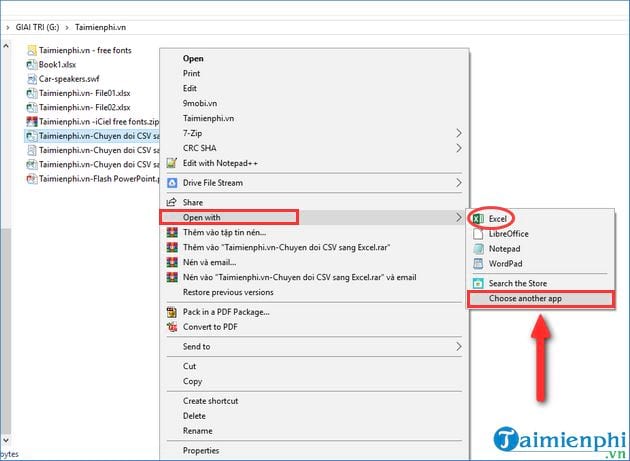
Step 1: Right-select the.CSV file -> then select Open with -> Select Excel if you see this application in the list. If not, select Choose another app from the list of options.
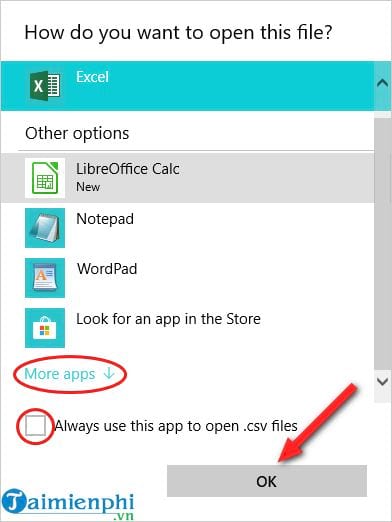
Step 2: Find the Excel application to open. Click More Apps to find the application you want to open if you don't see it. You can tick Always use this app to open.csv files for the next time if you still open it with that application -> then select OK and you have completed opening CSV in Excel.
3. How to Import CSV Data into Excel as External Data
Using this third method you can convert data from an external CSV file into your existing spreadsheet or a completely new Excel spreadsheet.
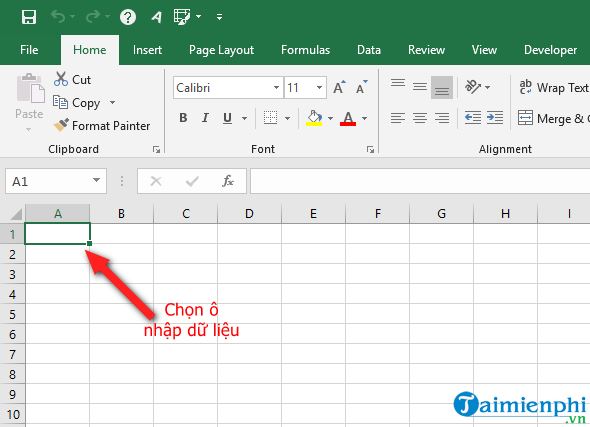
Step 1: With a new spreadsheet or an open spreadsheet -> select the cell where you want to import data from CSV or txt file.
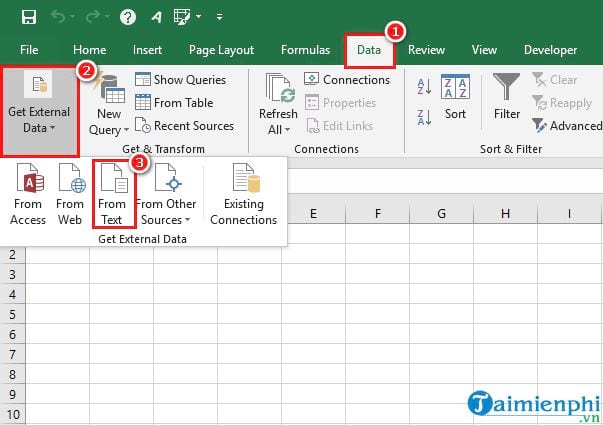
Step 2: Open the Data tab -> select Get External -> then select From Text.
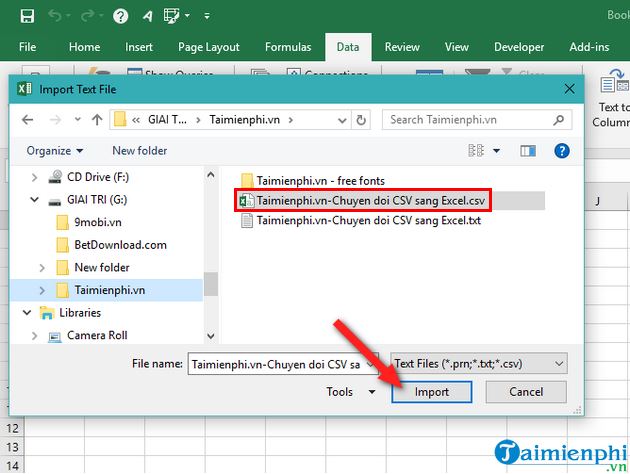
Step 3: Find the CSV file you want to convert -> then click the Import button (or double-click).
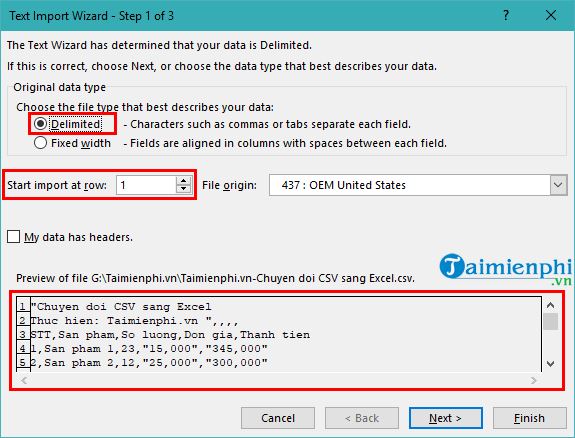
The Import Text Wizard interface appears -> you follow the next small steps below:
- Select the file type and number of rows to import data. Normally, you select Delimited and Start import at row 1 respectively. Below is a preview window displaying the first items of the CSV file.
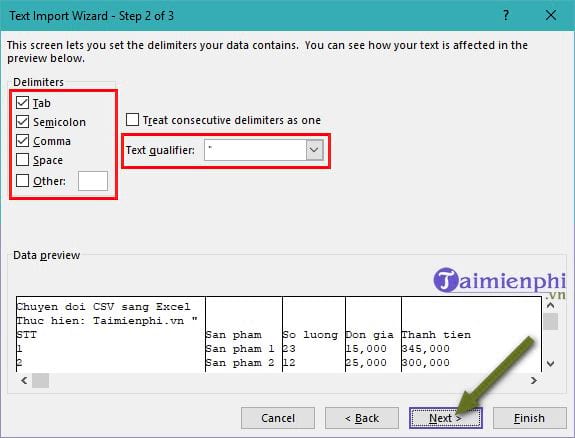
- Next, you select Delimiters and Text qualifier. In which Delimiters are the characters that separate the values in your CSV file.
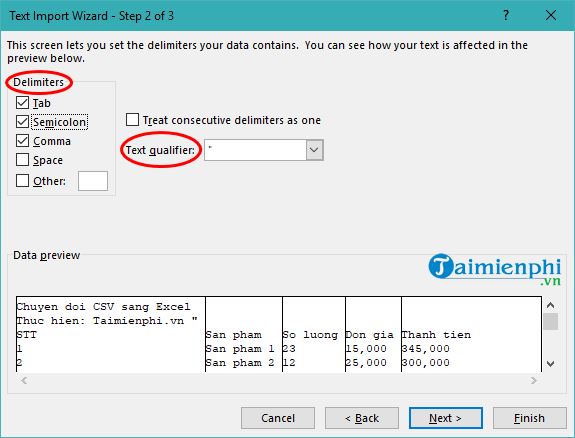
- You select and see that the selection is OK with the previewed data -> you click Next to continue.
- Open Step 3 of 3 -> Select the columns containing leading zeros and change the column format to Text. This will help the CSV to Excel conversion retain all leading zeros -> If you see that the selection is ok, click Finish to complete.

- Finally, you choose the location to import the converted data -> then click OK to finish importing CSV to Excel.
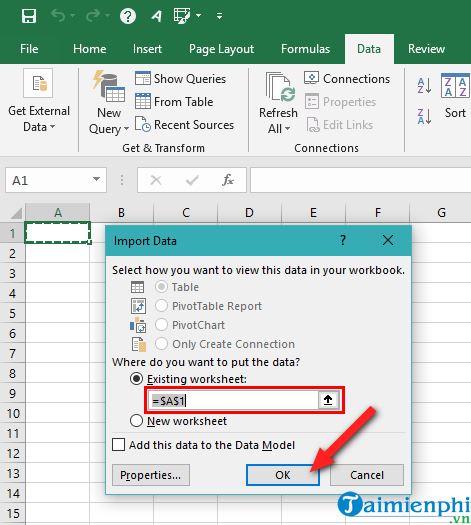
* Some notes:
- If your CSV file contains numbers or dates, Excel will not be able to convert these values correctly.
- To change the format, select the cell or column you want to change in Excel -> then right-click and select Format cells to reformat the data.
With the above three methods, you can easily convert CSV to Excel without worrying about data loss or format errors. Choose the method that best suits your needs to work more efficiently.
Try using Power Query or VBA to optimize your work if you need to work with large data sets or automate the process of importing CSVs into Excel. Good luck!
Final Thoughts
The most reliable way to handle ways to convert CSV to excel successfully is to follow the process in order, verify each important setting, and test the result before moving on. Use the guidance above as a practical reference, then adjust the details for your device, software version, or specific goal.
FAQ
What should I know first about Ways to Convert CSV to Excel Successfully?
Converting CSV to Excel makes it easier to work with your data.
How do I get the best results with Ways to Convert CSV to Excel Successfully?
Use current software or equipment, follow the steps in order, review the recommended settings, and test one change at a time so you can identify what improves the result.
What should I do if Ways to Convert CSV to Excel Successfully doesn't work as expected?
Check compatibility, permissions, connectivity, and version-specific settings. Restart the relevant device or app, then repeat the process carefully before trying a more advanced fix.
Related Articles
 Simple Way to Convert Excel Files to PDF: Exel to PDF8 minutes read
 5 Ways to Convert Numbers to Words in Excel8 minutes read
 2 Ways to Convert Lowercase to Uppercase in Excel8 minutes read
 Convert PDF to Excel, Change PDF File to XLS for Free Without Font Errors8 minutes read
 2 Ways to Convert JPG Image File to PDF: JPG to PDF3 minutes read
 3 Simple Ways to Convert Excel Files to Word That You Should4 minutes read
Reader Comments 0
Sign in with email or Google to join the discussion.