Table of Contents
This updated guide examines Select: Six Steps to Minimize Desktop Icons and organizes the essential facts, background, and practical takeaways in clear American English.
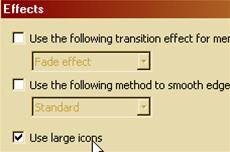 Step two : Right-click on the taskbar (the bar that contains the system clock), select Properties , Start Menu tab, select the Start Menu item, press the Customize key, the General tab, select Small Icon instead of Large Icon. Click OK twice to confirm the selection.
Step three : Now, although the Icon has been scaled down but to have a Desktop as desired, you should do one more step: Right-click on the desktop, select Properties , Themes tab - theme item, select Windows Classic / Apply . Switch to the Appearance tab, press the Advanced key, the Item line press the ▼ key, select: a) Icon : Reduce the Size to 16. Then switch to the font, select Arial - this is the biggest typeface of Window. Finally, increase the size of the text to 9, press the B key next to highlight the font. b) Icon spacing ̣ (Horizontal) : Lower the size to 30. c) Icon spacing ̣ (Vertical) : Increase the size to 50. Finally click OK twice to confirm the selection.
Step four : Right-click on Desktop, select Refresh . 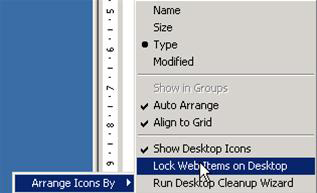 Step five : Right-click the Desktop, select Arrange Icons By / Lock WebItems on Desktop , Auto Arrange and Align to Grid . Step six : Press Ctrl + Alt + Delete , the Windows Task Manager window pops up, Processes tab , press Image Name key to sort the names of programs in alphabetical order. Search for the explorer.exe program, select it, click Delete / Yes , then go back to File / (New Task) Run. , type exeplorer.exe, click OK , wait a few seconds. Now, you try to look back at your screen very neatly and save a lot of space. Vuong Thanh Truc
FAQ
What is Select: Six Steps to Minimize Desktop Icons about?
It provides a structured overview of select, explains the main context, and highlights practical takeaways for readers.
Why does this topic matter?
Understanding the main concepts helps readers evaluate the issue, avoid common mistakes, and make better-informed decisions.
How should readers use this information?
Use the guidance as a practical starting point, confirm details that may have changed, and follow current product, safety, or security recommendations.
Related Articles
 Shrink Icon Size: How to Resize Desktop Icon on Windows?6 minutes read
 How to Hide and Unhide All Desktop Icons on Windows2 minutes read
 7 Websites to Download Free Desktop Icons for Windows 105 minutes read
 Scroll: How to Change Vista Icon Size2 minutes read
 How to Hide Desktop Icons on Ubuntu 20.043 minutes read
 How to Fix the Position of Icons on the Windows 11 Desktop3 minutes read
Reader Comments 0
Sign in with email or Google to join the discussion.