Table of Contents
Explore powerpoint 2019 (part 15): image formatting, including the key concepts, practical examples, important considerations, and useful guidance.
How to crop an image
When you crop an image, a portion of the image is removed. Cropping can be useful when an image has a lot of content and you only want to focus on a part of it.
1. Select the image you want to crop. The Format tab will appear.
2. On the Format tab, click the Crop command.
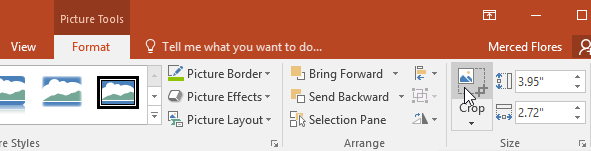
3. Handles will appear around the image. Click and drag one of the handles to crop the image.

4. Click the Crop command again . The image will be cropped.
How to crop an image to your desired shape
1. Select the image you want to crop, then click the Format tab.
2. Click the Crop drop-down arrow . Hover over Crop to Shape , then select the desired shape from the drop-down menu that appears.
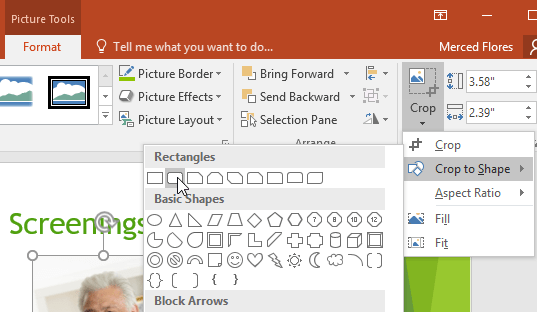
3. The image will be cropped to the desired shape.

You might want to crop the image to your desired size before cutting it into another shape.
How to add a border to an image
1. Select the image you want to add a border to, then click the Format tab.
2. Click on the Picture Border command. A drop-down menu will appear.
3. From here, you can choose the color, border thickness, and whether to use a solid or dashed line.
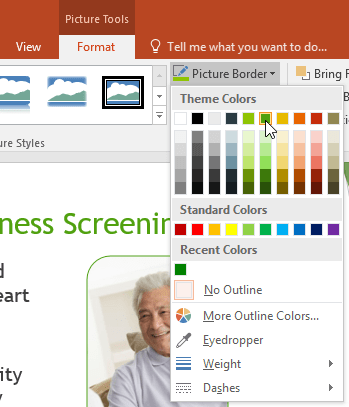
4. A border will appear around the image.

Adjust the image
PowerPoint offers several options for changing how images appear in your slideshow. For example, you can add frames, edit images, change the color or brightness of images, and even add some stylish artistic effects. These options are located in the Adjust and Picture Styles group on the Format tab.
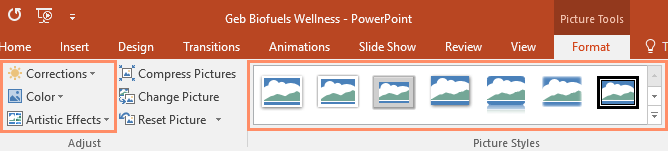
When you're ready to make adjustments or experiment with the image's appearance, select the image and choose one of these options from the Format tab.
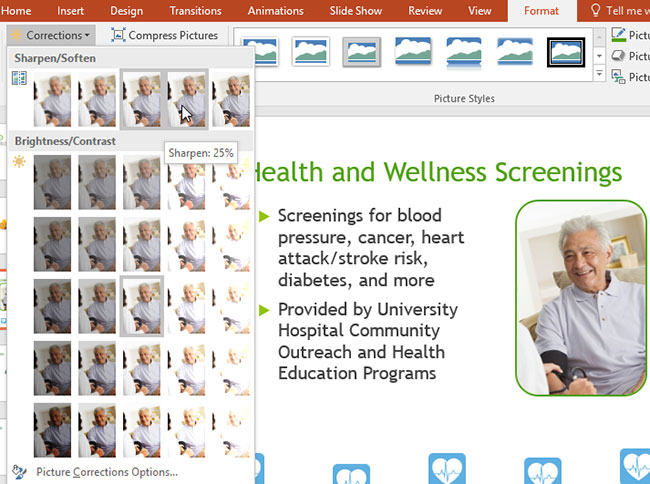
- Corrections: This command is located in the Adjust group. From here, you can sharpen or soften the image to adjust the level of blur or clarity. You can also adjust brightness and contrast, which control the brightness or darkness of the image.
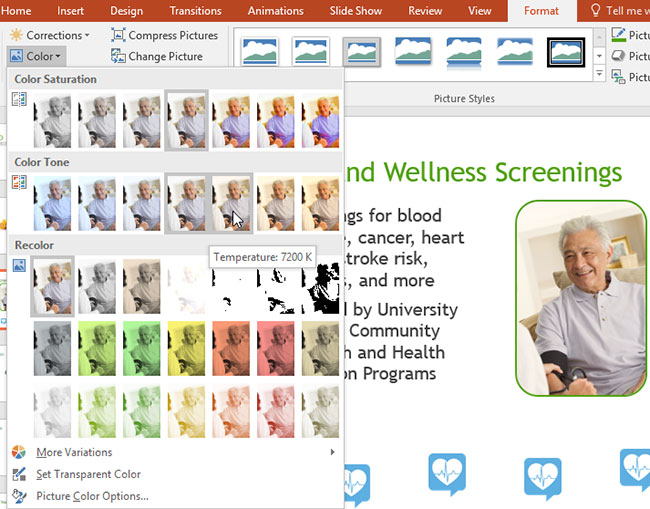
- Color: This command is located in the Adjust group. From here, you can adjust the image saturation (how vibrant the colors look), tone (image temperature, from cool to warm), and hue (change the overall color of the image).
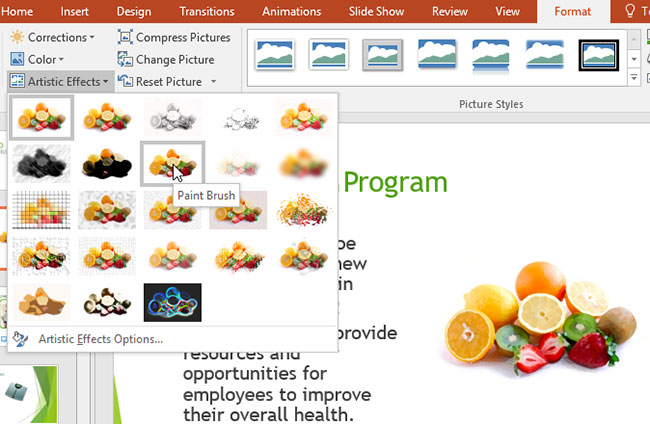
- Artistic Effects: This command is located in the Adjust group. From here, you can add artistic effects such as pastel, watercolor, and glowing edges.
- Picture Styles Group: This group contains various styles that you can apply to your photos, including frames, borders, and soft edges.
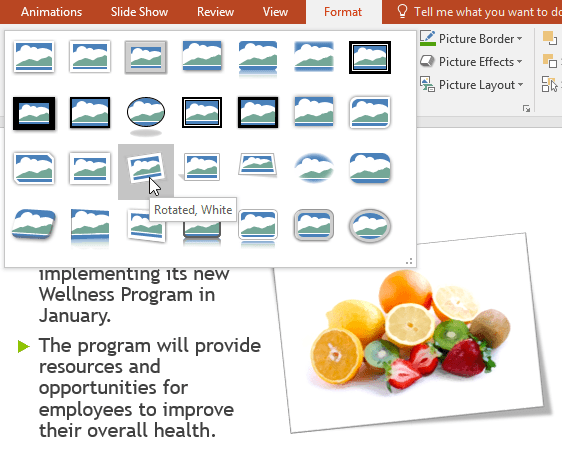
Image compression
If you want to email a presentation containing images, you'll need to be mindful of its file size. Large, high-resolution images can quickly make your presentation very large, which can make it difficult or impossible to attach to an email. Additionally, cropped image areas are saved with the presentation by default, which can increase the file size. PowerPoint can reduce file size by compressing images, reducing their resolution, and removing cropped areas.
How to compress images
1. Select the image you want to compress, then click the Format tab.
2. Click on the Compress Pictures command.
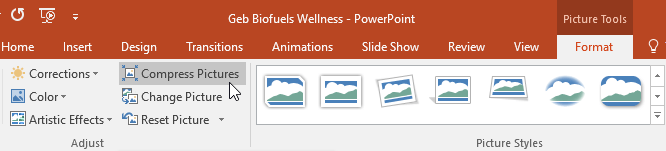
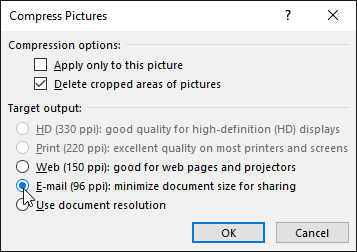
3. A dialog box will appear. Place a checkmark next to the "Delete cropped areas of pictures" option. You can also choose to apply the settings only to this image or to all images in the presentation.
4. Choose a target output. If you plan to email the presentation, select Email ; this option produces the smallest file size. When you're finished, click OK.
Compressing images in PowerPoint may not reduce file size as much as you'd like. For better results, you can use an image editing program to resize the images before inserting them into your presentation.
Final Thoughts
Understanding powerpoint 2019 (part 15) makes it easier to evaluate the information and apply the most relevant recommendations. Focus on the key points above and verify details that may change over time.
FAQ
What is powerpoint 2019 (part 15)?
Explore powerpoint 2019 (part 15): image formatting, including the key concepts, practical examples, important considerations, and useful guidance.
What key points does this article cover?
The article focuses on How to crop an image, How to crop an image to your desired shape, How to add a border to an image, with practical explanations and examples.
How can you use this information in practice?
Use the explanations to compare options, verify important details, and make a more informed decision. Apply the recommendations that best match your goals and situation.
Related Articles
 PowerPoint 2016: Image Formatting in PowerPoint7 minutes read
 PowerPoint 2019 (Part 16): Shapes: Explained7 minutes read
 How to Skew Images in PowerPoint3 minutes read
 How to Insert a Picture Below Another Picture in PowerPoint3 minutes read
 How to Create Image Borders in PowerPoint: Step-by-Step Guide5 minutes read
 PowerPoint 2019 (Part 1): Getting Started with PowerPoint: Explained7 minutes read
Reader Comments 0
Sign in with email or Google to join the discussion.