Table of Contents
This guide provides a practical overview of Manipulating Tables Editing, including its main features, benefits, limitations, and important considerations.

1. Insert rows and columns in tables:
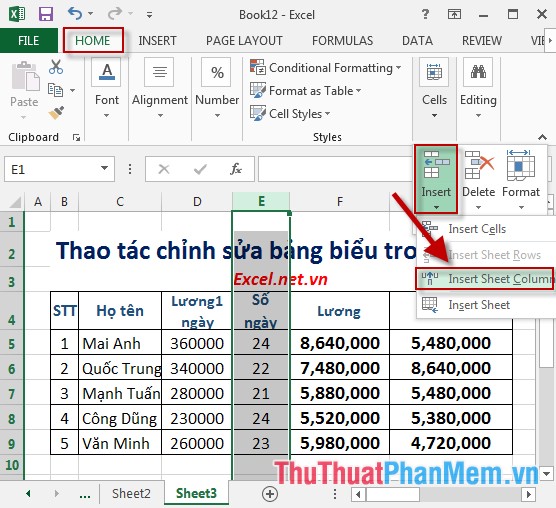
- For example, you want to insert 1 column after salary column 1 day:
Step 1: Select the Number of days column -> Go to the Home tab -> Cells -> Insert -> Insert Sheet Column:
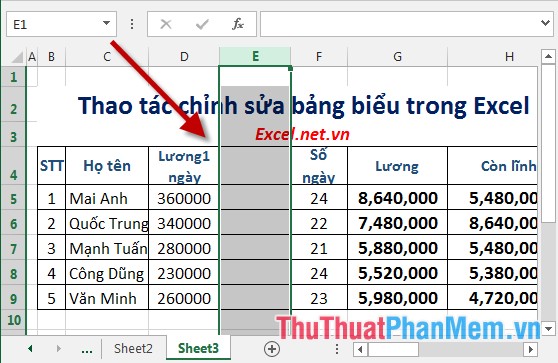
Step 2: After selecting the new column is inserted in the desired position. Notice the column is inserted to the left of the selection column:
- Example inserting 1 row after the 2nd row in ordinal number:
Step 1: Select the 3rd row of the employee Manh Tuan -> Go to the Home tab -> Cells -> Insert -> Insert Sheet Rows:

Step 2: After selecting the new row is inserted. Notice that the new row is inserted above the selected row:

2. Merge cells in Excel.
Step 1: Select the cells to merge
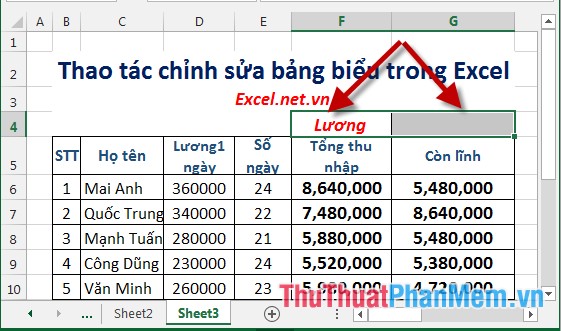
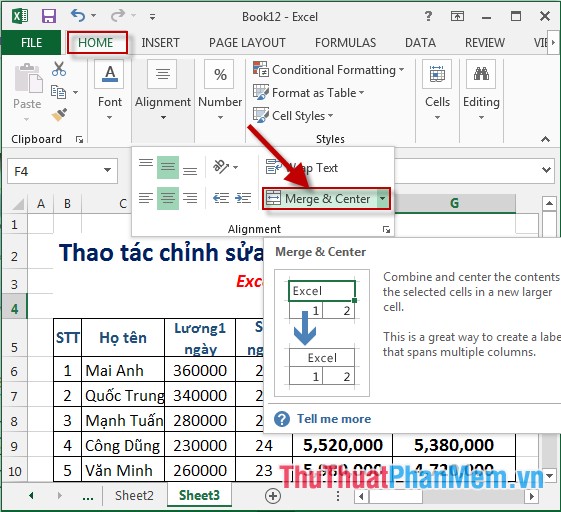
Step 2: Go to the Home tab -> Alignment -> Merge & Center ( or you can choose other types of Merge in the dialog box ):
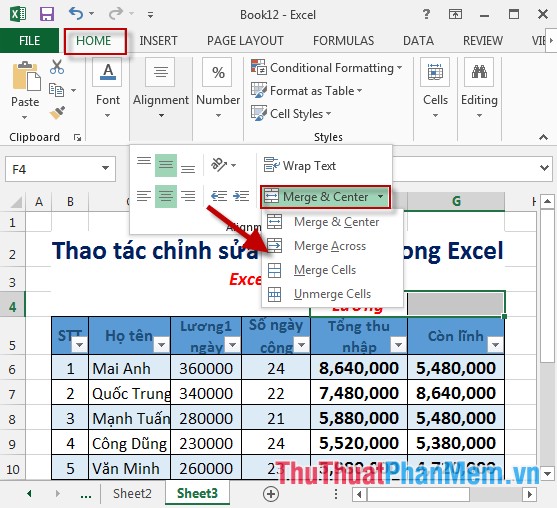
Step 3: After selecting the combined cells, the results are:
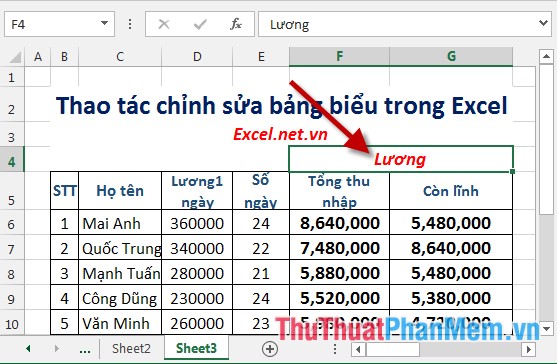
- In case you want to split multiple cells back to the old state, do as follows: Go to Home tab -> Alignment -> click Merge & Center again:
3. Align the text position in the data box:
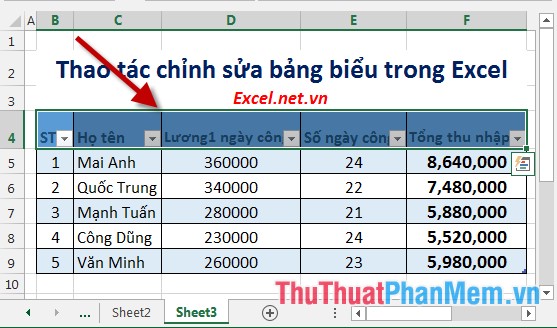
For example, the column header text lines at the bottom and the left, want to align so that the text is in the middle position compared to the cell in the table.
- Method 1:
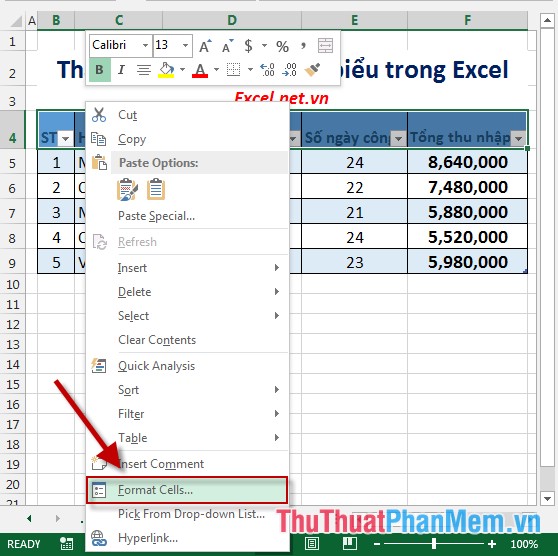
Step 1: Select the headline to format -> right-click and select Format Cells:
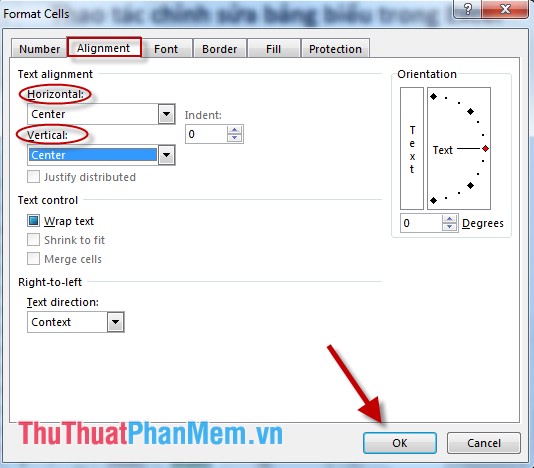
Step 2: The Format Cells dialog box appears, select the Alignment tab in the section:
+ Horizontal: Select Center.
+ Vertical: Select Center.
Finally, click OK to complete:
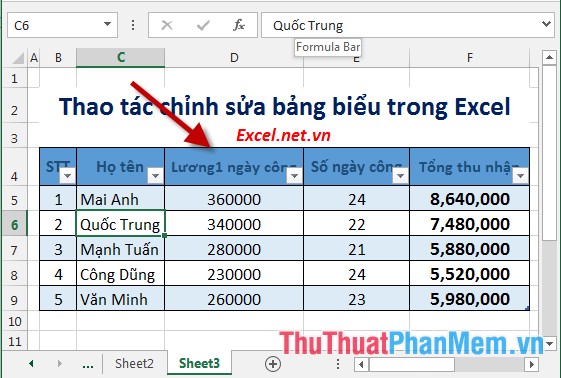
Step 3: After clicking OK, the text is edited to fit the size of the cell:
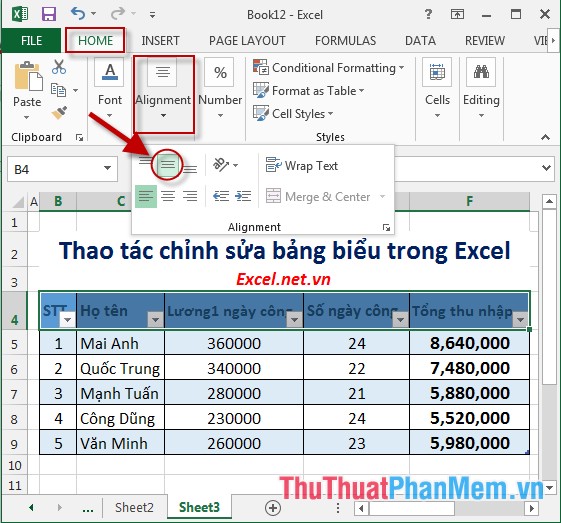
- Option 2: Select the subject line to align -> Home -> Alignment -> click on the Middle Align icon :
The above is a detailed guide for manipulating table editing in Excel 2013.
Good luck!
FAQ
What should I know about Manipulating Tables Editing?
Focus on the key features, requirements, limitations, and practical use cases explained in this guide.
How do I get the best results with Manipulating Tables Editing?
Follow the recommended steps, use current software or information, confirm compatibility, and review settings before major changes.
Are there any risks or limitations?
Potential limitations depend on compatibility, data quality, cost, privacy, support, and how the product or method is used.
Related Articles
 Manipulating Tables in Excel2 minutes read
 Manipulating Tables in Word3 minutes read
 Instructions on How to Create Diagonal Lines in Excel Box5 minutes read
 How to Create an Excel Table, Insert a Table in Excel7 minutes read
 How to Create and Delete Tables in Excel4 minutes read
 How to Format Borders and Background Colors for Excel Tables5 minutes read
Reader Comments 0
Sign in with email or Google to join the discussion.