Table of Contents
Follow the instructions below to uninstall apps on iPhone, iPad efficiently and safely. Each section focuses on the actions, settings, and troubleshooting details that matter most.
Removing, deleting or uninstalling iPhone applications is not difficult. If you do not need to use any application or want to release more memory, just remove them from the device. The way to uninstall this application is also applicable on the iPad.
- Instructions to restart iPhone when the device hangs
- How to retrieve messages sent on iPhone?
- Sync iPhone contacts with Gmail
How Uninstall Apps on iPhone, iPad Works
If you do not know how to remove software, applications on iPhone, iPad, please refer to our guide below.
You touch and hold any icon on the screen until the icons vibrate and An X Appears in the upper left corner.
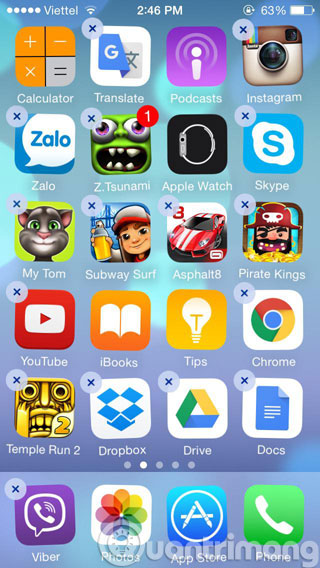
Go to the app or application to uninstall then click the X, then a dialog box appears asking when needed to remove it, you choose Delete.

Once completed, the app's icon will disappear on the iPhone.
You connect iPhone to computer via cable and open iTunes and then click iPhone icon, select Apps
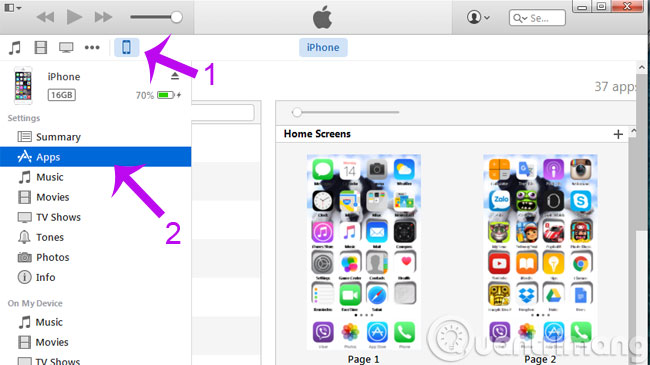
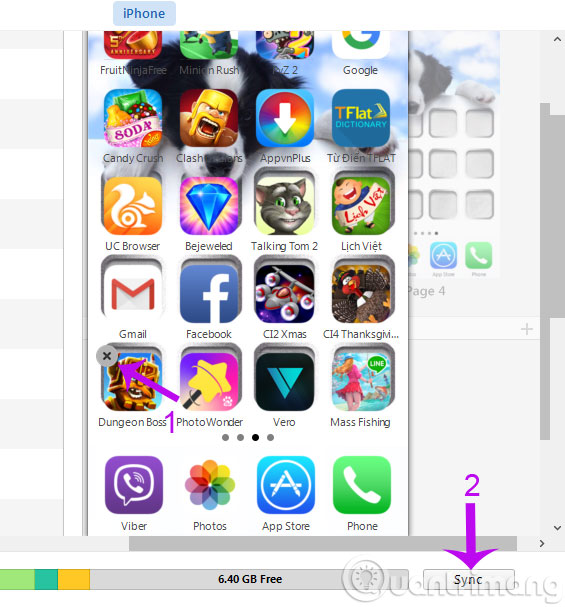
Next, double-click any Page In the Home Screens In the right-hand window and click The X To remove the app you want.
Another way to delete apps on iOS devices is from the Settings app. In iOS 11, tap Settings> General> iPhone Storage . You will see a list of applications at the bottom of the screen, which can take a few minutes to load all applications. This list is useful because it shows the storage capacity of each application. In addition, this list may have app files and attached data. If you need to release a certain amount of space, this is a great place to delete the app.
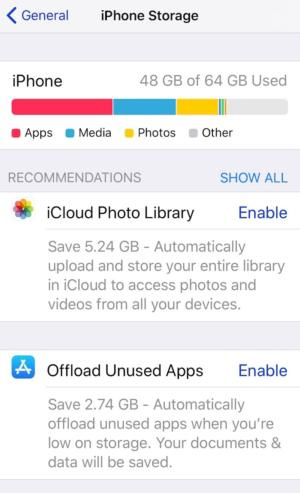
To delete the app, tap the app name, then Delete App . In addition, users can view the settings above the app list called Offload Unused Apps . This setting will remove unused applications when memory is needed. Document and data related to the app will be saved and the app can be reinstalled as needed. You can also access this setting in iOS 11 via Settings> iTunes & App Stores .
This is for those who haven't upgraded to iTunes 12.7 on a Mac. With iTunes 12.7, Apple removed the iOS App Store and managed the iOS app.
For iTunes 12.7, when deleting the app from an iOS device, iTunes will not copy the app's data to the device so you can synchronize it later. Therefore, the above methods are great when needed to remove the app from a specific device but still keep their information in the iTunes library.
On the other hand, when needed to completely remove the app (application and its related data), go to iTunes and select the Apps library. Select an application, then press the Delete Key, the dialog box appears asking for confirmation. You can remove applications from the iTunes library, but keep them in a folder on your Mac If something goes wrong.

To see the list of applications in the iTunes library, click the View Menu, then select View As> List . Click the Purchase Date Title to sort by the app purchase date. If you don't see the Purchase Date title, click the View Menu and select Show View Options , then in the pop-up window look in the Stats Section and select the Purchase Date Box. Alternatively, you can right-click a blank title in the iTunes list and select Purchase Date in the pop-up menu. (Purchase Date is also the date of the latest application or update date). See which apps have the longest buying date to decide to delete or keep it.
Another way to remove applications from the iTunes library is through updating the app with iTunes on a Mac. In the iTunes update, you will see a list of new versions of the downloadable application. When you see an application in the Update window that you no longer use, delete it. To do this, right-click the app icon and select Delete From the Library. This will remove the app from the iTunes library and will also delete the update notification. The next time you synchronize your iOS device deleted from the iTunes library will be deleted from the device.
Wishing the successful implementation!
FAQ
What should I prepare before I uninstall apps on iPhone, iPad?
Review the requirements in the guide, confirm that your device or software is compatible, and save important work before changing settings related to uninstall apps on iPhone, iPad.
Why might uninstall apps on iPhone, iPad not work as expected?
The most common causes are incompatible versions, missing permissions, incorrect settings, or an interrupted internet connection. Recheck each step and restart the app or device when appropriate.
Can beginners follow these uninstall apps on iPhone, iPad steps?
Yes. Follow the steps in order, avoid skipping confirmation screens, and compare your interface with the screenshots because labels may differ slightly between versions.
Related Articles
 How to Uninstall iPhone Apps on Mac M14 minutes read
 8 Apps Cost VND 550,000 Being Free for iOS6 minutes read
 How to Fix Crashes Apps on iPhone, iPad7 minutes read
 6 Simple Ways to Fix the Situation of iPhone and iPad Crashes While6 minutes read
 How to Run iPhone Apps on Mac3 minutes read
 Steps to Remove Installed Apps from Store on Windows 105 minutes read
Reader Comments 0
Sign in with email or Google to join the discussion.