Table of Contents
How to Turn on Suggestions for Finding Files on Windows 10 is easier to understand when the core ideas are paired with practical examples. The sections below explain the topic clearly, highlight useful steps, and point out details that can prevent common errors.
When we search for data on File Explorer or the Run dialog, you need to remember the entire folder name or path of the file. We can't just enter the Device Manager type or some specific name in the File Explorer address bar to open this application. If remembering directory paths is not easy for you, you can turn on the Autocomplete feature for File Explorer on Windows 10.
- How to fix Working On It on File Explorer Windows 10
- Wipe Recent Files search history on File Explorer Windows 10
- Restore lost File Explorer icons on Windows 10 Start Menu
How to use Autocomplete for File Explorer Windows 10
Step 1:
Press the Windows + R key combination to open the Run dialog box and enter the regedit keyword and access.

Step 2:
In the Registry Editor interface, users access the directory according to the path below.
- HKEY_CURRENT_USERSOFTWAREMicrosoftWindowsCurrentVersionExplorerAutoComplete
Step 3:
In case the computer does not have an AutoComplete entry , create it by right-clicking a few Explorer select New> Key .
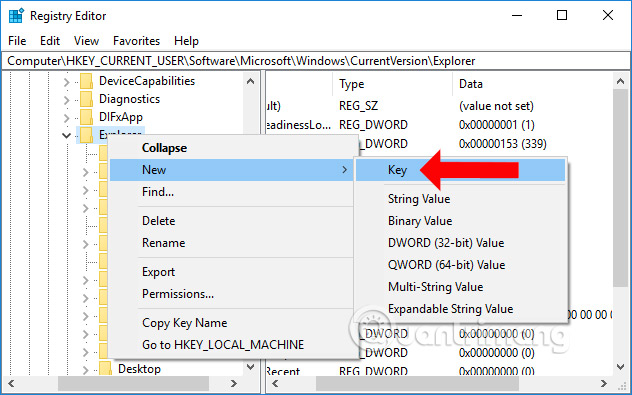
Then name the newly created folder AutoComplete .

Step 4:
Click AutoComplete then look to the right, right-click and select New> String Value .
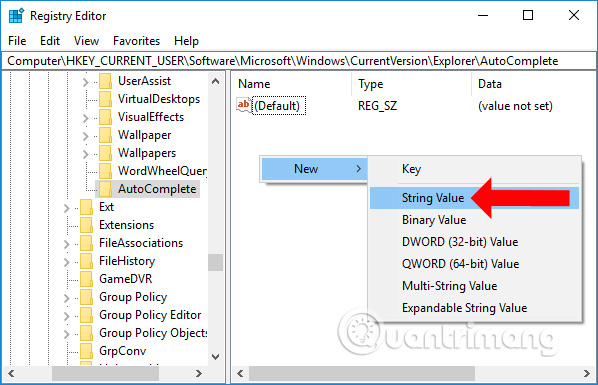
Also rename the newly created AutoSuggest value .
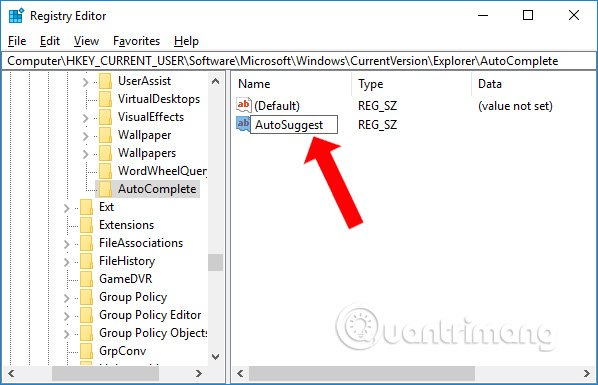
Step 5:
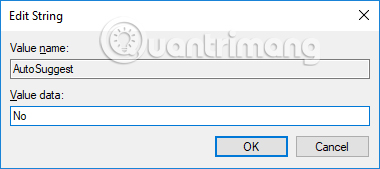
Continue to double-click AutoSuggest and change the data value in the Edit String dialog interface. If you want to turn on Autocomplete when searching for files in Explorer, enter Yes in the Value data bar and click OK.
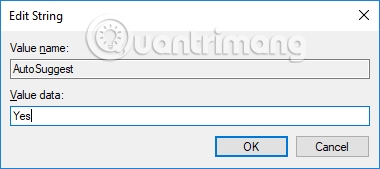
If you no longer want to use this search feature, transfer Value data to No, or you can right-click AutoSuggest and press Delete to delete. However, you should choose No instead of deleting the value completely.
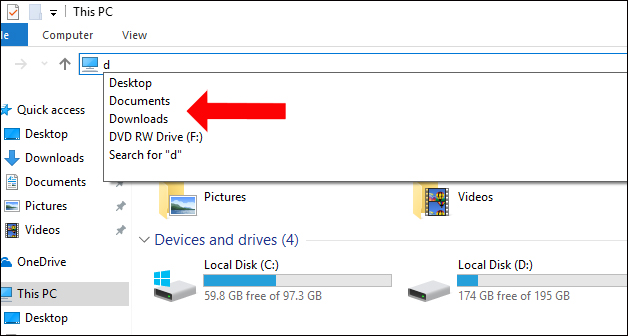
Now go back to File Explorer on your computer, at the address bar, enter any application name and get a hint like the one below. Just click on the right application you need and then we will be moved to the right place to store the application, or that folder.
- Unlock and improve Windows 10 features with 5 Registry tricks
- Fix Windows 10 error with just one click with FixWin
- Activate Dark Theme on Windows 10
I wish you all success!
FAQ
What is How to Turn on Suggestions for Finding Files on Windows 10?
When we search for data on File Explorer or the Run dialog, you need to remember the entire folder name or path of the file.
Why is How to Turn on Suggestions for Finding Files on Windows 10 important?
A clear understanding of How to Turn on Suggestions for Finding Files on Windows 10 helps you make informed decisions, avoid common mistakes, and use the relevant tools or techniques more effectively.
How should beginners approach How to Turn on Suggestions for Finding Files on Windows 10?
Start with the fundamental concepts, follow the examples step by step, and test each change in a safe environment before applying it to important systems or data.
Related Articles
 Instructions on How to Turn Off Suggestions (Suggested Apps) on6 minutes read
 How to Turn Off Text Suggestions in Windows 11: Step-by-Step Guide4 minutes read
 How to Turn Off Website Suggestions on Windows 11 Start Menu4 minutes read
 How to Turn Off Add-on Suggestions on Firefox3 minutes read
 How to Turn Off Content Suggestions on Excel3 minutes read
 How to Enable or Disable Text Suggestions on Windows 103 minutes read
Reader Comments 0
Sign in with email or Google to join the discussion.