Table of Contents
Overview
This guide explains how to delete recent files on Windows 11 in clear, practical terms. It covers the key concepts, recommended steps, common limitations, and useful checks so you can make a better-informed decision.
Deleting Recent Files on Windows 11 is a quick solution to clean up data on Windows computers. In this guide, Software Tips shares with you how to delete Recent Files on Windows 11 quickly.
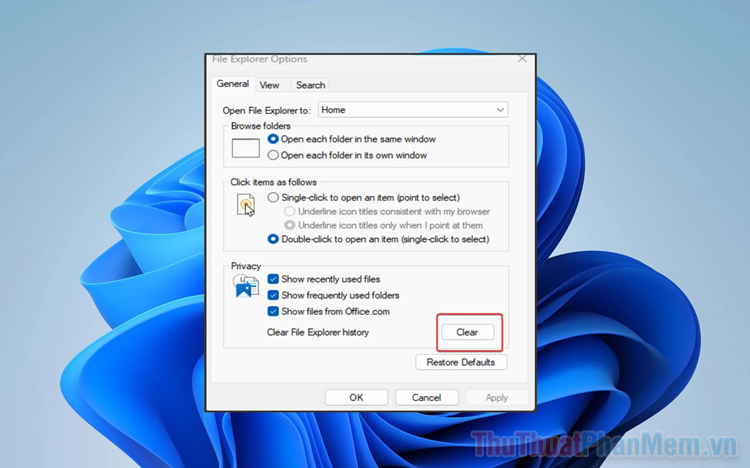
1. What is Recent Files on Windows 11?
Recent Files – Recently opened is a folder that allows users to quickly view recently opened documents and folders in This PC. In the This PC section on the computer, Recent Files is considered a feature that helps users quickly open recent documents, but for many others, Recent Files is a nuisance. Recent Files provides a list of recently opened files, frequently opened files to support users in the process of using Windows.
Recent Files – Appears directly in This PC, this is the data management section in folders on the computer. While using Windows, users can delete Recent Files if they need to clean up data on the computer or do not want recently opened files to appear on This PC.
2. How to delete Recent Files on Windows 11
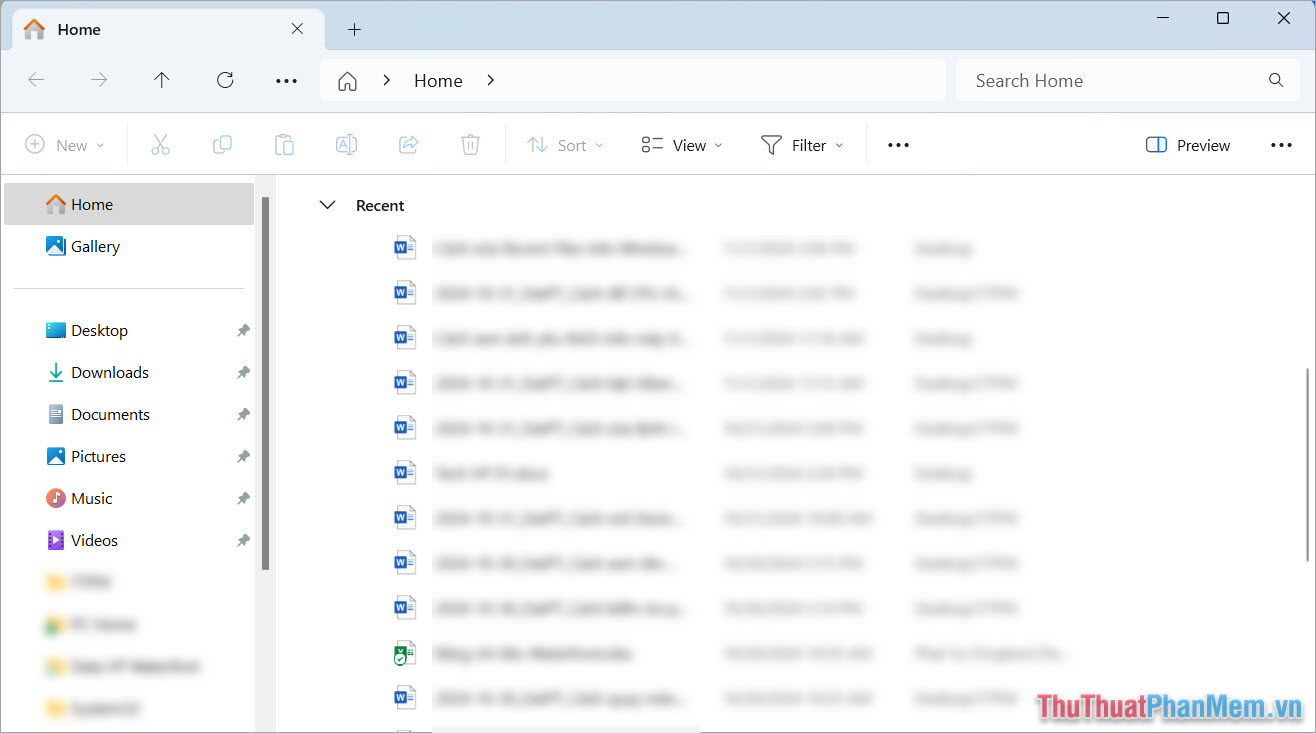
To delete Recent Files on Windows 11 you will need to adjust in File Explorer. The Recent Files section is always displayed in This PC and File Explorer, so turning off and deleting Recent Files history is also done here.
Step 1: Open This PC or any Recent Files/Folder on your Windows 11 computer.
Next, select the Home tab to see all Recent Files on your computer.

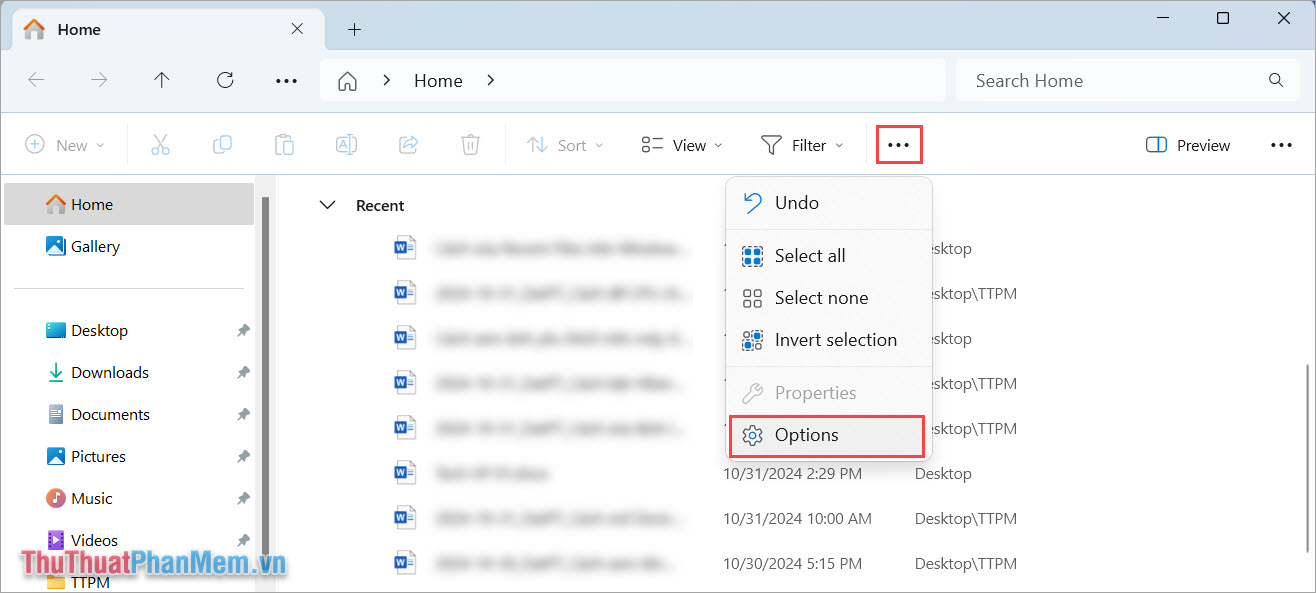
Step 2: Next, select the Three Dots icon → Options to set up File Explorer on your computer.
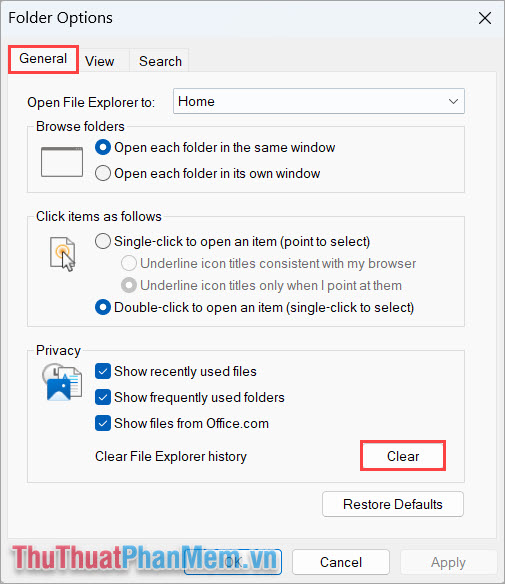
Step 3: To delete Recent Files history on Windows 11 computer, select General and select Clear to delete all previous Recent Files history on the computer.
3. How to turn off Recent Files on Windows 11
In case you are bothered by Recent Files and do not want to use them in the future, you can turn off Recent Files on your Windows 11 computer. To completely turn off the recent file opening history feature on Windows 11, do the following:
Step 1: Open This PC or any Recent Files/Folder on your Windows 11 computer.
Next, select the Home tab to see all Recent Files on your computer.
Step 2: Next, select the Three Dots icon → Options to set up File Explorer on your computer.
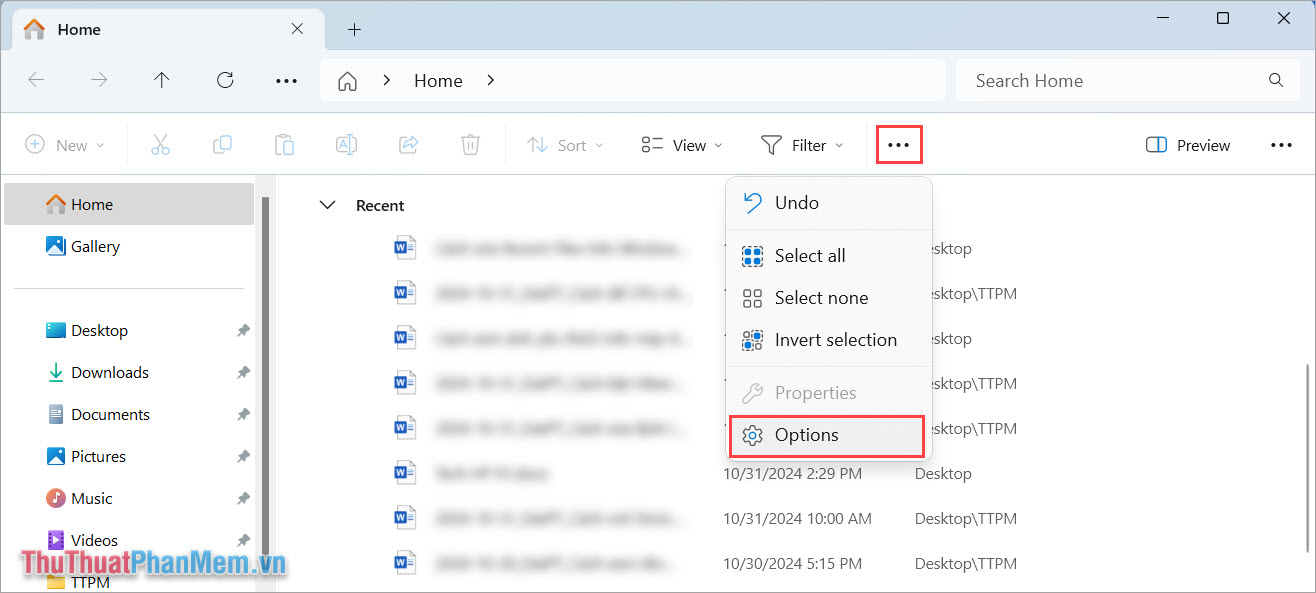
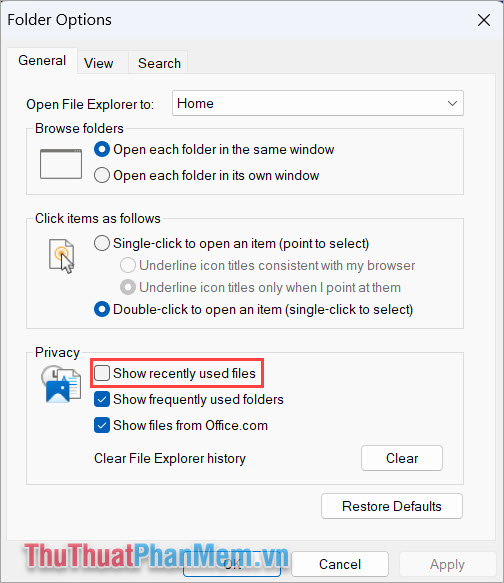
Step 3: To turn off Recent Files on Windows 11, select General and uncheck Show recently used files to turn off the feature of displaying recently opened files on the computer.
Finally, select Apply → OK to complete.
In this guide, Software Tips has shared with you how to delete Recent Files on Windows 11 quickly. Have a nice day!
Key Takeaways
Use the guidance above as a practical reference for how to delete recent files on Windows 11. Check compatibility, follow the steps carefully, and verify important details with official documentation when software, security, accounts, health, or purchases are involved.
FAQ
How do I delete recent files on Windows 11?
Follow the steps in this guide in order, confirm each setting before continuing, and save, restart, or reconnect the device when the instructions require it.
What should I check before I begin?
Confirm the correct device, account access, software version, compatibility, and a current backup whenever the process could affect files, settings, or security.
What should I do if the process does not work?
Repeat the steps carefully, check for model or version differences, install available updates, and consult the manufacturer's official support documentation.
Related Articles
 3 Ways to Delete Recent Files and Folders in Windows: Recommended Choices7 minutes read
 Wipe Recent Files Search History on File Explorer Windows 103 minutes read
 Delete the Most 'Stubborn' Files on Windows10 minutes read
 How to Fix Quick Access Windows 11 Error Not Showing Recent Files6 minutes read
 How to Turn Off Recent Files and Quick Access on Windows 103 minutes read
 How to Delete Files on Mac Directly Without the Trash4 minutes read
Reader Comments 0
Sign in with email or Google to join the discussion.