Table of Contents
This practical guide walks through how to speed up Windows 10 for maximum performance when it, explains the main requirements, and highlights common issues that may appear along the way.
For Windows 10, the computer startup and shutdown was faster than previous operating systems. However, after installing Windows 10, if you are still not satisfied with the system's boot, to optimize the operation of this operating system, readers can also perform the following small tips to Win 10 speed up, make the system work better.
1. Speed up Win 10 by disabling transparent icon
The transparent interface is quite beautiful, but also so that the computer has to pay more resources for it. If you love classic simplicity, you can disable this function by.
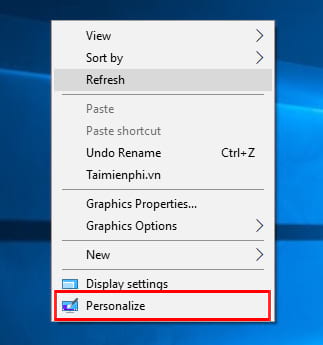
Step 1: Right-click on the desktop and select Personalize
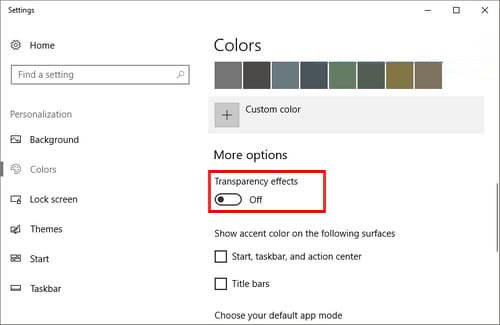
Step 2: Next, choose Color in the left column.

Step 3: In the right column you scroll down and find the option Transparency effects and then switch the switch to Off as shown below to turn off transparency effects on Windows 10.
2. Speed up Windows 10 by shutting down background programs
One of the reasons that Windows 10 runs sluggishly cannot help but mention background programs. For unnecessary applications, you should disable it from running in the background to save computer resources using Windows 10.
Step 1: Right-click the Start button in the lower left corner of the screen and select Task Manager.

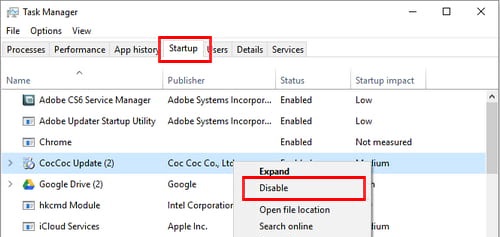
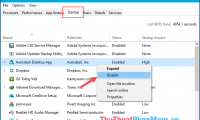
Step 2: The dialog box Task Manager appears, you switch to the Startup tab and find the program to be disabled in the background.
3. Set the modes for best performance
This option dates back to the time of Win XP, and is still applicable today on Win 10. With this option you can turn off effects, ghosting, and image previews system-wide.
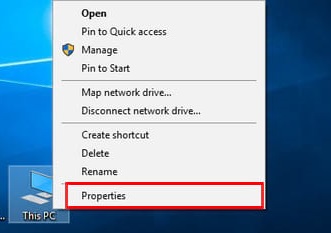
Step 1: Right-click This PC on the desktop and select Properties.
Step 2: Next, click the Advanced system settings button and move to the Advanced tab.
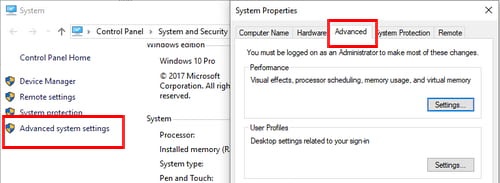
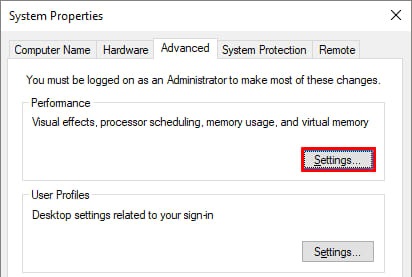
Step 3: Select the Settings button in the Performance section.
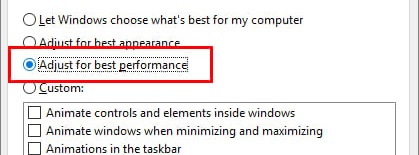
Step 4: Then click the Adjust for the best performance button to get the best performance.
4. Uninstall unused applications to Speed up Win 10
Though you seldom open unused applications or software. However, these programs more or less still use your computer's resources. To remove unused applications, follow the steps below.
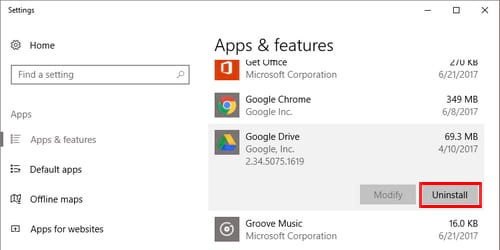
Step 1: Right-click on the Windows icon in the lower left corner of the screen, then select Apps and Features

Step 2: Next, search for an application to uninstall and select Uninstall.
5. Defragmenting your hard drive is also a way to speed up Windows 10
For those of you who are using the hard drive, you can use the built-in defragmentation function on Win 10. Accordingly, your hard drive will slow down if fragmented, this is how to reform. Windows 10 performance improvement is quite effective.
Step 1: Double-click This PC or open File Explorer, then right-click any hard drive partition on your computer and select Properties.
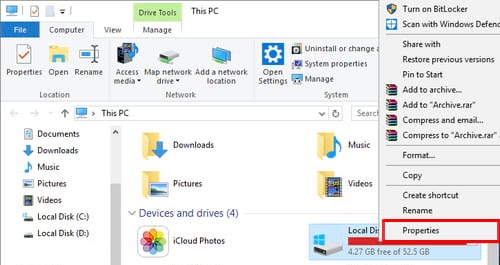
Step 2: Click on the Tools tab then choose Optimize in Optimize and Defragment Drive.

Step 3: The Optimize Drives dialog box appears, select the partition to optimize the drive and click Analyze.
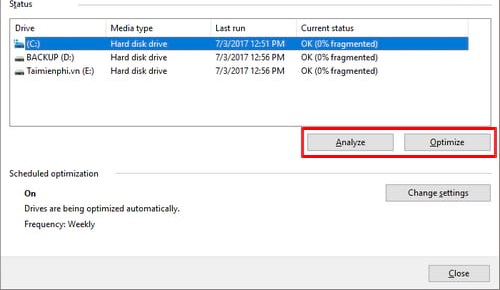
Note: To pre-analyze the drive in turn in each different partition to find the disk fragmented files before optimization. If the results show less than 10% fragmentation, then you may not need to optimize the drive.
If the files stored on your Windows computer's hard drive are more scattered all over the drive, defragmentation is necessary, and then click Optimize to start defragmenting the fragmented files. Note how long defragmentation takes depends on the number of files and the size of the drive. Defragmentation can take a while to complete.
6. Speed up Win 10 by disabling System Restore
To turn off System Restore on Windows 10, right-click This PC> Select Properties> Select Advanced system settings> select the tab System Protection, in default mode, this mode is enabled with Protection = On
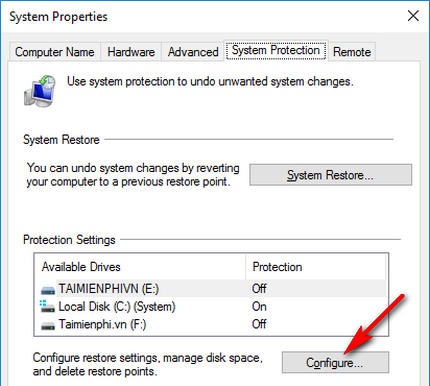 Click the Configure button, the next window appears, select Disable system protection, Finally click OK to turn off the System Restore function.
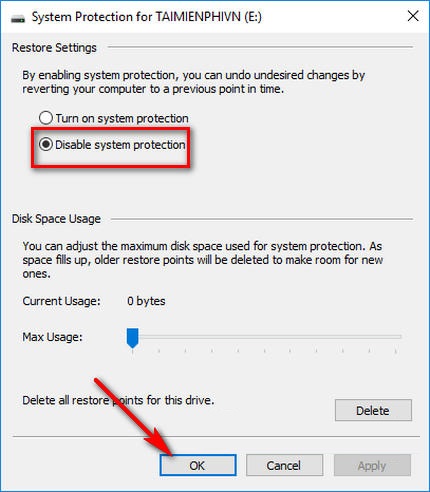
Check the result:
On the System Protection tab, if the Protection property on drive C is System Protection = Off >>, you have successfully turned off System Restore.
7. Turn off OneDrive and other applications that start at the same system startup.
To turn off OneDrive while Windows starts, open Task Manager, select the Startup tab
Right-click on OneDrive and select Disable >> So you have turned off OneDrive starting with the system.
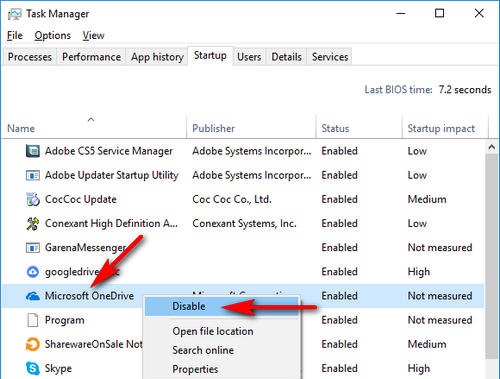
With other software, you disable (Disable) similar to OneDrive, leaving only some necessary software for the system.
8. Speed up Win 10 by disabling Windows Defender
Refer to how to disable Windows Defender in the detailed article "How to disable Windows Defender"
9. Speed up Win 10 by disabling Firewall
If your computer has important data, you should not turn off the firewall to prevent others from "interfering". However, To disable the firewall on Windows 10 please read the detailed article "How to disable the firewall on Windows 10"
10. Reduce computer boot time
To reduce computer boot time, speed up Windows 10, do the following:
Step 1: Right-click This PC, select Properties, then continue to select Advanced system settings.

Step 2: On the Advanced tab, click Settings . in the Startup and Recovery section.
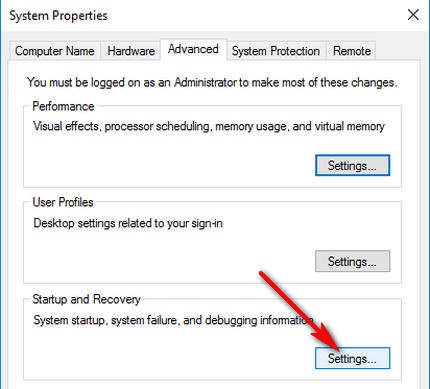
Step 3: Here, you can reduce the time to display list of operating systems to 10 seconds or you can uncheck this section to skip the display. Then click OK to save the settings.

11. Turn off Windows 10's instructions
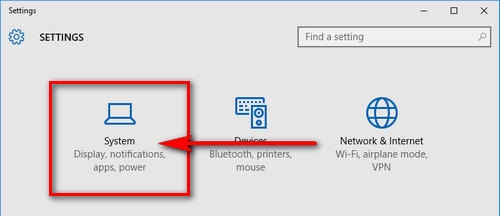
Step 1: Press the Windows + I key combination to open Windows Settings, where you select the System item to set up the notification and guidance system.
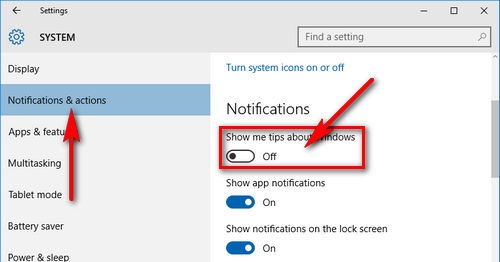
Step 2: Select the Notifications & actions section, then in the right pane you scroll down and deactivate the tab of Show me tips about Windows or Get tips, tricks, and suggestions as you use Windows.
12. Upgrade, replace the HDD with an SSD.
The SSD hard drive has extremely fast data processing speed, deserving to replace the hard drive on your computer. Currently, the price of the SSD drive is not too expensive as before, so if the machine is slow, replace the HDD with an SSD hard drive to bring high efficiency in the working process.
So TipsMake just introduced to you ways to speed up Windows 10, improve Windows 10 performance, process in Windows 10. In essence, the above methods can also be used to speed up your computer on Win 7 and Win. 8. The ways to speed up Windows 10 above are we made the experience on Windows 10 laptop and desktop computers with quite good results.
Good luck.
Key Takeaways
Use the information above as a practical reference for how to speed up Windows 10 for maximum performance when it. Review each step carefully, confirm any requirements, and choose the option that best fits your situation.
FAQ
What does this guide explain about Speed up Windows 10 for Maximum Performance When It?
It explains the main concepts, practical considerations, and useful steps related to speed up Windows 10 for maximum performance when it without requiring advanced knowledge.
Who can benefit from learning about Speed up Windows 10 for Maximum Performance When It?
This information is useful for readers who want a clear overview, practical guidance, and reliable steps related to speed up Windows 10 for maximum performance when it.
What should I check before applying this information?
Review the requirements, confirm that your device, software, or situation matches the instructions, and back up important data before making major changes.
Related Articles
 How to Speed up Windows 10, Optimize Windows 10 for Maximum Performance6 minutes read
 This Is Why the Dashboard Usually Displays a Maximum Speed Above the Threshold That the Car Can Run5 minutes read
 Optimize Windows 10 for Maximum Performance When Operating8 minutes read
 05 Simple Steps to Help Windows Regain 'Form'3 minutes read
 How to Increase the Maximum Download Speed on Computers and6 minutes read
 How to Speed up Your Computer, Improve Windows Performance6 minutes read
Reader Comments 0
Sign in with email or Google to join the discussion.