Table of Contents
This practical guide walks through how to recover Overwritten Files on Your Computer. It organizes the required steps, settings, and checks so you can complete the task with fewer mistakes.
Are you wondering how to restore and retrieve overwritten files and data? So let's continue reading this guide to learn more details. Several ways to recover overwritten files on your computer, such as through Windows System Restore or using third-party software.
Method 1: Use System Restore to Restore Overwritten Files
Suppose if the overwritten files include system files, in this case you can use Windows System Restore to restore files. Follow the steps below to recover overwritten files:
Step 1 : Open Control Panel.
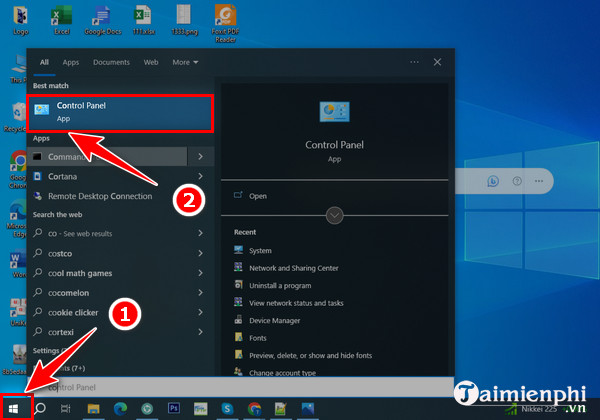
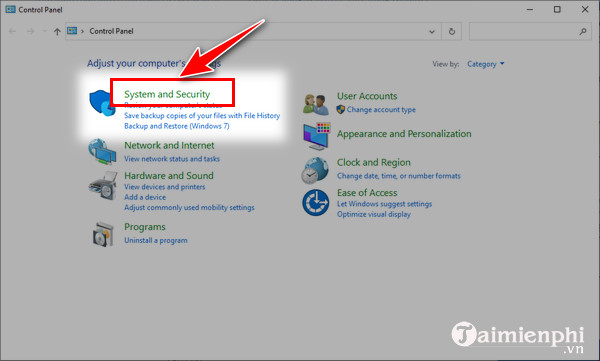
Step 2: Find and select System and Security .
Step 3: On the System and Security window, find and select System.

Step 4 : select The System Protection link.

Step 5 : select the System Restore button.

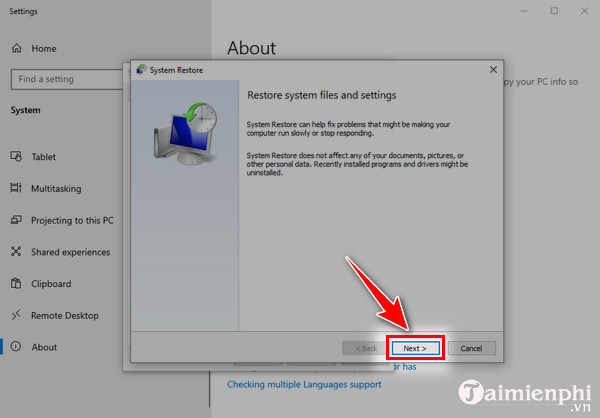
Step 6 : Select a restore point you want to use, then choose Next And follow the on-screen instructions to start the process.
If you want to restore recording files on iPhone, you can use this guide:
Method 2: Restore Overwritten Files from Previous Versions
If Windows Backup is active on the system, you can restore overwritten files from the previous version. To do this, follow the steps below:
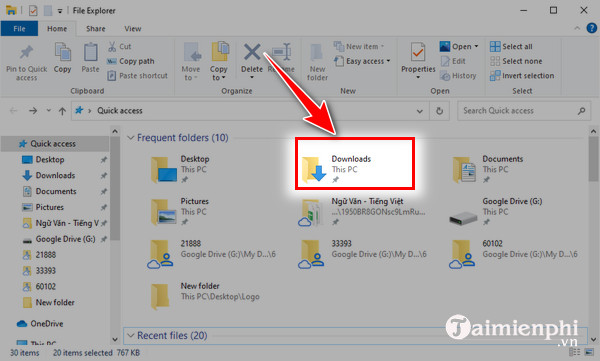
Step 1: Open File Explorer.
Step 2: Navigate to the file or folder containing the files you want to restore.
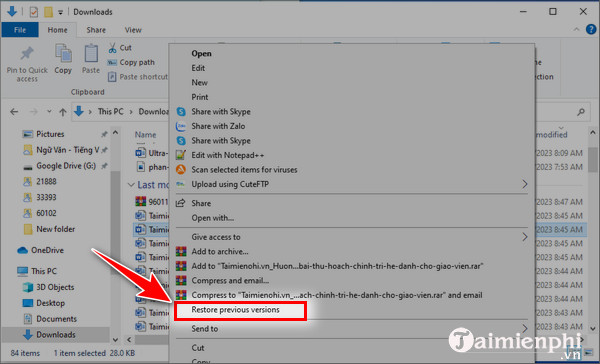
Step 3 : Right-select it, select Restore previous versions.
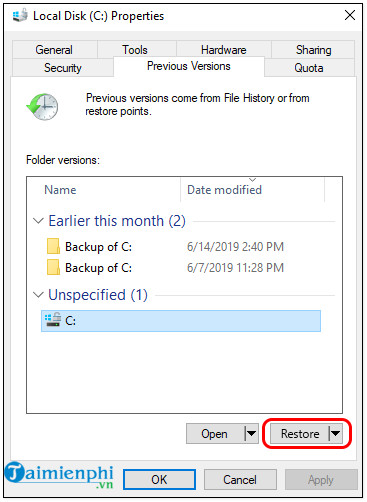
Step 4: Select the version you want to restore from the list.
Step 5: Select The Restore button To restore the file.
Method 3: Recover Overwritten Files Using Disk Drill
Another way to recover overwritten files is to use Disk Drill. This tool uses advanced scanning algorithms to perform quick or deep scans of hard drives containing overwritten and recovered files.
Step 1: Download Disk Drill to your computer and install.

If the overwritten files you need to restore are on your hard drive, you should download and install the application to another location, preferably using a USB drive to avoid damaging the files before restoring.
Step 2 : Open the application you just installed.
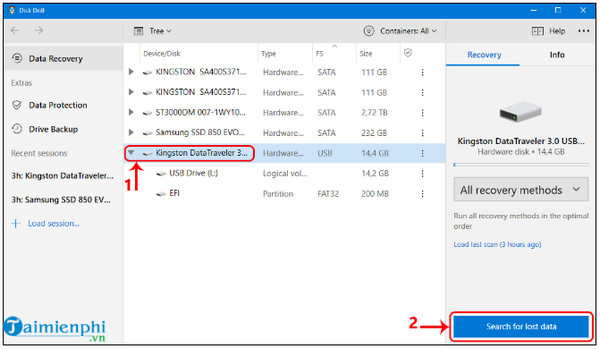
Step 3 : Select the hard drive or partition containing the overwritten files you want to restore from the list.
Step 4 : select the Search for lost data button to scan and search for recoverable files.
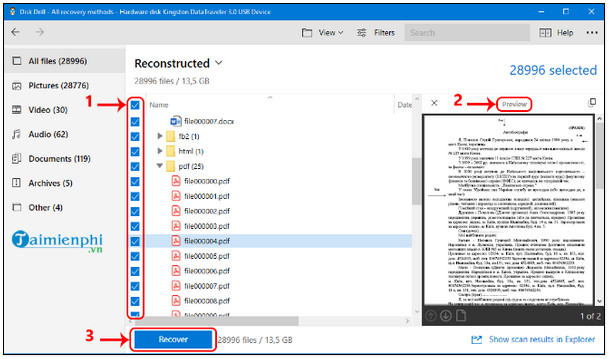
Step 5 : The screen will now display a list of recoverable files, try looking through the list.
Step 6 : Select the files you want to restore and the location to save the files.
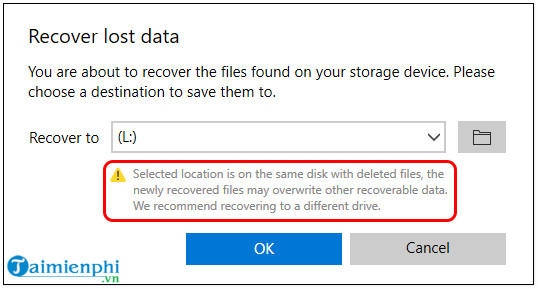
Note: Do not save recovery files in the same location to avoid file corruption or corruption.
Step 7 : select the Recover button to restore the files.
Above TipsMake has just shown you some ways to recover overwritten files. Hopefully these useful little tricks will help you get your valuable data files back. Good luck!
FAQ
What do I need before I recover Overwritten Files on Your Computer?
Prepare the required device, software, account access, and any files mentioned in the steps. Back up important data before changing system settings.
Why does the process look different on my device?
Menus and options can vary by operating system, app version, device model, or region. Use the closest matching setting and check the official documentation when needed.
What should I do if a step does not work?
Restart the app or device, confirm permissions and connectivity, update the software, and repeat the step carefully. Avoid unofficial downloads or tools.
Related Articles
 How to Recover Overwritten Word Files? DETAILED ANSWER: Complete Guide6 minutes read
 How to Recover Overwritten Files: Step-by-Step Guide10 minutes read
 How to Recover Overwritten Data: Complete Guide10 minutes read
 How to Recover Files from a Completely Corrupted Computer8 minutes read
 How to Retrieve an Overwritten Word File4 minutes read
 How to Restore Deleted Multimedia Files and WhatsApp Messages on8 minutes read
Reader Comments 0
Sign in with email or Google to join the discussion.